

Sin From God’s Point of View (Old Testament, New Testament, and Why We Don’t Stone)
If we define sin the way our culture does, we’ll usually land on “personal mistakes” or “breaking our own values.” That sounds gentle, but it’s not how Scripture speaks. In the Bible, sin is measured by God’s will, not our mood, our background, or whatever feels fair in the moment.
So why does sin look like it gets harsher treatment in the Old Testament than in the New Testament? And why did Israel have penalties like stoning, while Christians don’t do that today?
To answer that, we need to use the Bible’s own terms (Hebrew and Greek), keep the covenant context in view, and remember one big truth: God hasn’t changed, but the covenant administration (how God governs His people in history) has.

What “sin” means in the Bible’s original languages (God’s point of view)
When we read the Bible in English, one word, “sin,” can hide several related ideas. That’s why looking at original-language terms helps. It doesn’t replace plain reading, but it prevents us from shrinking sin into only “rule-breaking.”
A simple way to say it is this: sin is going against God’s good will, and that includes our actions, our motives, and our loyalties. It’s not only a bad choice; it’s a relational rupture.
If you want a quick overview of the main Biblical vocabulary, resources like Greek and Hebrew words for sin can help you see the range of terms without getting lost.
The Testament of God: Why Old and New Testaments Exist
Before we go any further, we need to understand why the Old Testament and the New Testament aren’t two different Bibles, they’re two parts of the same Bible telling one unified history. The “Old” is the covenant history of Israel, the Law, the prophets, the promises, and the steady drip of hope after human transgression; the “New” is the fulfillment of those promises in Jesus the Messiah (Luke 24:27).
Same God, same voice, same plan, just moving from shadow to substance. And yes, both testaments are written mainly by Jews, Moses, David, Isaiah, and the prophets on one side, then Jewish apostles and Jewish witnesses like Matthew, John, Peter, and Paul on the other. That matters because the New Testament doesn’t show up to cancel Israel’s Scriptures, it shows up to explain them, quote them, and say, “This is what God was talking about” (Romans 1:1-2).
God doesn’t change personalities between pages, He’s still holy, still merciful, still committed to forgiveness through sacrifice, and still stubbornly faithful to His own promises (Malachi 3:6).
In the Old Testament, you get the patterns leading up to Jesus, the altar, the blood, the priesthood, the Passover, the prophetic warnings, and the promise of a coming Servant who bears sin (Isaiah 53), and in the New Testament you get the Lamb, Jesus, standing in the spotlight as the answer (John 1:29).
So when people act like the Old Testament God is angry and the New Testament God is nice, that’s a misread, judgment and mercy are in both, and grace and commands are in both. The whole thing is one long redemption timeline, creation, fall, covenant, rescue, exile, return, cross, resurrection, and the coming restoration of all things, all driven by the same God who keeps writing the history until it’s finished.
If you want a clear example of how the Bible holds together across both testaments, check out Old Testament Prophecies of the Son of God and notice how the promise and the payoff fit like one narrative, not two competing books.
Old Testament Hebrew words for sin: missing, rebelling, and twisting
The Old Testament gives us a thick, realistic picture of sin. Three key Hebrew ideas show up again and again:
1) ḥāṭā’ (often “sin” or “miss the mark”)
This word family is commonly explained as “missing the mark.” The point isn’t archery trivia; it’s failure to do what’s right according to God’s standard. We were made for God’s purposes, and sin is choosing something else.
2) pešaʿ (rebellion, transgression)
This is sin with a raised fist. It isn’t ignorance; it’s covenant disloyalty. God rescued Israel, then called them to live as His people. Pešaʿ is treating that covenant like it doesn’t matter.
3) ʿāwōn (iniquity, a bent or twisted wrong)
This word carries the idea of crookedness and guilt. It highlights how sin distorts what should be straight. It also hints that sin has “weight” to it, consequences that cling and spread.
That “spreading” picture is early in the Bible. In Genesis 4:7, God warns Cain that sin is crouching at the door and wants to rule him. That’s not just poetry. It’s a spiritual diagnosis: if we don’t deal with sin, it won’t stay small.
For a clear, story-driven explanation of how “sin, iniquity, and transgression” relate, we also like the way BibleProject frames it in What Are Sin, Iniquity, and Transgression in the Bible?
New Testament Greek words: sin as lawlessness and a power that enslaves
The New Testament keeps the Old Testament moral backbone, but it turns the lights up brighter. It also explains how sin operates inside us and across society.
Hamartia (ἁμαρτία) is the common Greek word for sin. Like ḥāṭā’, it carries the sense of failing to reach God’s purpose. If you want the lexical detail, Strong’s Greek 266 (hamartia) lays out the basic meaning and usage.
But the New Testament doesn’t stop at “you did wrong.” It also calls sin:
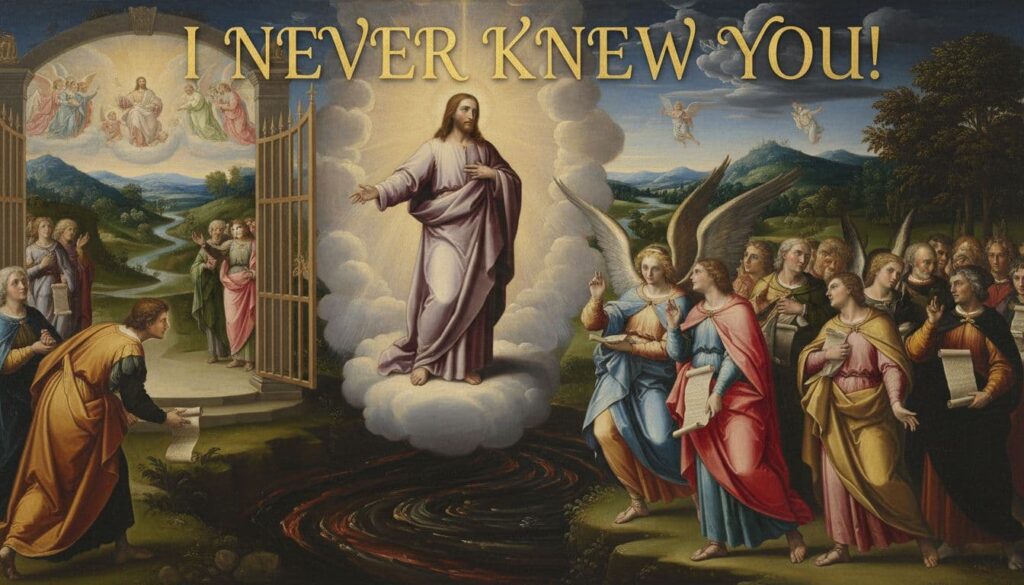
Lawlessness (1 John 3:4). Sin isn’t only personal preference; it’s refusal of God’s rightful authority, and Jesus even said not everyone who calls Him Lord will enter the Kingdom of Heaven. Jesus said many religious people who have done great things in ministry for the church won't even make it into the Kingdom of Heaven when they die. Instead, Jesus will say to them, "I never knew you; depart from Me, you who practice lawlessness!" This is explained in our article here:
The New Testament also calls sin:
A power that enslaves (Romans 6 and the surrounding context). Paul talks about sin as something that can “reign.” That’s why we can’t treat sin like a few bad habits we’ll fix when life calms down. Apart from Christ, sin doesn’t just trip us; it trains us.
So the continuity is real: same holy God, same moral center. The difference is that the New Testament spotlights the deeper problem (the heart) and the fuller cure (the cross and resurrection).
The main takeaway we need to understand apart from Yahweh God coming down from Heaven in a human body He chose before He ever even created us physically, although His mind was always on us from eternity, is the promise of our changed hearts.
The Law in the Old Testament could not change hearts, it could only point out sin and cause repentance, but it could not take away the desire to sin. That is the same with many in religion today, they know about God, but their religion is flawed. They don't have a personal relationship with God so they don't change.
Many go to church but are still wrapped up in the same sins. Some will hide their sin while pretending to be holy while others will have a strong desire to stop their sin but will not be able to stop. So, as Christians fall from grace and their transgressions get found out, other people judge them and use their example as an excuse to judge all Christians and stay away from church.
That thinking only harms the person not going to church. They will never understand the truth about God if they don't purse Him, how He came to earth as Jesus, God with a human personality, so He could have a relationship with us. It is only this relationship we have with God that keeps us on a righteous path. Will we fall? Yes. Will we get back up? Yes.
God promised Israel a long time ago that He will put His law in their minds, and write it on their hearts. (Jeremiah 31:33) Way too many Christians don't understand what God is talking about here, and way too many Jews are still waiting for this to happen, but it has already happened.
Too many Christians do not read their Bibles, instead they rely on others to tell them what it says, and the interpretation they get is not always the truth. Entire congregations are told the Old Testament does not matter anymore and it is never read, let alone studied in many churches.
The fact is that Jesus came to die for our sins, yes, and raise from the dead to conquer death for us so we will be saved from hell, yes, but what those caught up in religion do not understand is Jesus also did all of this to change our hearts so we can resist sin by His help, as explained in or article here:

The same God who wrote on stone is ready to write on your heart so He doesn't have to write on your wall.
Why Old Testament punishment for sin was often severe (and why God was still good)
When people say, “The Old Testament God is angry, and the New Testament God is nice,” they’re reacting to real texts, but drawing the wrong conclusion.
A better frame is this: in the Old Testament, Israel is a nation under God’s direct kingship. That means some sins were not only moral evil, they were also national crimes with legal penalties.
It helps to distinguish three categories that overlap in the Law:
Moral law: God’s unchanging standard of right and wrong.
Civil law: case laws for Israel as a theocratic nation (courts, penalties, restitution).
Ceremonial law: worship, purity, sacrifices, priesthood, and temple life.
Severe penalties often show up in the civil law context, because God was forming a distinct nation in a violent, idol-filled world. He wasn’t building a private spirituality club; He was governing a people.
For an accessible discussion of why the Old Testament law includes stiff penalties, see Why Does the Old Testament Law Have Such Stiff Penalties?
Covenant context: Israel was a nation under God’s direct rule
At Sinai, God bound Israel to a covenant with real-world blessings and curses (see Deuteronomy’s covenant pattern). This covenant shaped national life: land, courts, worship, and identity.

So when Israel publicly embraced certain sins (especially idolatry, occult practices, and covenant treason), it wasn’t “personal lifestyle choice.” It threatened the whole community, including the vulnerable. It also threatened the promised line through which the Messiah would come.
We should also say this plainly: not every sin got the death penalty. Many situations required sacrifice, repentance, restitution, or some other form of justice. The Old Testament includes mercy and patience all over the place, especially through God’s repeated calls to repent via the prophets.
Justice, mercy, and the “training” purpose of the Law
The Law functioned like a tutor. It taught Israel (and us) that sin leads to death, not because God enjoys punishing, but because sin is anti-life. It destroys trust, poisons worship, and eventually devours communities.
Sacrifices also preached a message: forgiveness costs something. The worshiper didn’t come saying, “My sin isn’t a big deal.” They came saying, “I need cleansing, I need mercy, and I can’t fix this on my own.”
God’s patience in the Old Testament is often overlooked. He warns, He sends prophets, He delays judgment, and He calls people back. The storyline isn’t “God loses His temper.” It’s “God keeps telling the truth, and people keep choosing darkness.”
The same God in both Testaments: Jesus is the eternal Word who reveals the Father
Some people say, “The Old Testament is the Father, the New Testament is Jesus.” We get why that idea pops up, but it splits what God has joined.
Both Testaments are the Word of God. And Jesus is not a late arrival who softens the Father. Jesus is “the Word” (John 1), meaning He perfectly communicates God. He doesn’t replace the Father’s character; He reveals it.
If we want to understand sin from God’s point of view, we can’t treat the Bible like two competing personalities. It’s one God telling one history.
Both Testaments are God’s Word, and Jesus has always made God known
Jesus didn’t begin existing at Bethlehem. He is eternal, the Son who has always been the Father’s self-expression and self-revelation.
So when God spoke through Moses, through the prophets, and through Scripture’s history, He wasn’t speaking “against Jesus,” that was actually Jesus speaking through them as the Word of God, revealing the will of the Father, before Jesus received His human body to sacrifice Himself on the cross for our sins. He was speaking in a way that prepared the world for Himself. "The testimony of Jesus is the spirit of prophecy.” (Revelation 19:10)
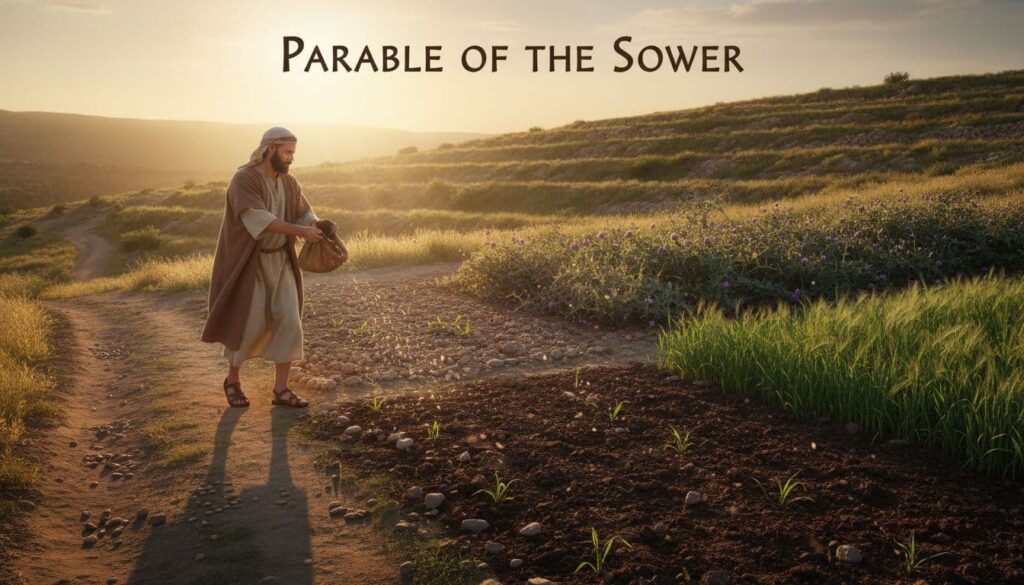
That same Word of God speaks to us today. Another reason God came to this earth as Jesus was to soften our hearts, to prepare our soil to receive God's Seed so we can be empowered by the Holy Spirit for ministry, yes, but also so we can have a relationship with Him, just like the Old Testament prophets had a relationship with Him. God wants to do more than take away our sin, He wants to guide our everyday life as our Best Friend.
This is one reason we should be careful about pitting Old against New. The New Testament constantly quotes and affirms the Old. Jesus Himself treats the Old Testament as God’s voice.
We can also deepen our grasp of the Spirit’s work across both Testaments, since the Spirit is the one who applies God’s Word to God’s people. A helpful overview is Who is the Holy Spirit explained.
Why we call the Bible inerrant, and how God wrote through human authors by the Holy Spirit
When we say the Bible is inerrant, we mean something basic: Scripture is truthful in everything it intends to teach. God doesn’t mislead.
The Bible describes itself as “God-breathed” (2 Timothy 3:16), and it explains that human authors spoke from God as they were carried along by the Holy Spirit (2 Peter 1:21). That’s not robotic dictation, and it’s not mere human opinion. It’s God speaking through real people in real history.
If you want a deeper defense of that doctrine, The Authority and Inerrancy of Scripture lays out the concept in a structured way.
This matters for our definition of sin because it means we don’t guess God’s will. He put His will directly in the Bible so we can read His mind. We receive it. We can learn it. We can trust it.
If sin is going against God’s will, how do we learn God’s will, and why we do not stone people today?
Here’s where everything connects.
Since sin is rebellion against God’s will, we need a reliable way to know God’s will. And we need clarity on how God’s will applies under the New Covenant (New Testament).
God’s moral will does not change. But the covenant setting does. Ancient Israel was a nation-state under the Sinai covenant. The church is not.
God’s will is revealed in Scripture: God’s mind for faith and life
We learn God’s will by reading the whole Bible with Jesus at the center.
That includes:
God’s character: holy, just, merciful, faithful.
God’s moral instruction: love God, love neighbor, tell the truth, protect life, reject idolatry, practice sexual integrity.
God’s Gospel call: repent, believe, follow Jesus, walk by the Spirit.
Scripture doesn’t only list commands; it shows what sin does to people. It shows what repentance looks like. It shows forgiveness, reconciliation, and new life.
That’s why discussions about sin are never meant to end in shame. They’re meant to lead to confession and healing. If you want a practical discussion of how Scripture speaks about forgiveness as part of God’s answer to sin, our article What the Bible says about forgiveness is a solid companion read.
Why Christians do not stone sinners now: covenant shift, fulfillment, and a different kind of Kingdom
We don’t stone people today for four simple reasons.
1) Stoning belonged to Israel’s civil law under the Sinai covenant.
Those penalties were tied to Israel’s courts, land, and national identity as a theocracy. We are not ancient Israel.
2) Jesus fulfilled the Law and established the new covenant.
The Law’s goal was never random violence; it was holiness, justice, and a protected people leading to the Messiah. In the New Covenant, Jesus bears sin’s penalty for all who trust him. God’s justice didn’t disappear; it fell on Christ for believers, or it will be faced at final judgment. Jesus said, "Do not think that I came to destroy the Law or the Prophets. I did not come to destroy but to fulfill." (Matthew 5:17)
3) The church is not a nation-state with the sword.
In the New Testament, the church corrects sin through preaching, repentance, forgiveness, and when needed, church discipline. That discipline is spiritual and communal, not lethal. The state has criminal courts; the church has shepherding, teaching, and accountability.
4) God’s Kingdom advances by witness, not coercion.
Jesus’ people overcome by truth, love, prayer, and endurance. That doesn’t minimize sin. It shows a different kind of power.
When we keep the covenant context straight, “we don’t stone anymore” isn’t compromise. It’s obedience to the way God has ordered his people in this era.
We also want to stay alert to how easily we can drift from God’s will by reshaping Scripture around our preferences. In that sense, sin can look “religious” while still resisting God’s Word. If that topic hits home, our article Biblical signs of an apostate church is worth reading slowly.
Conclusion
From God’s point of view, sin isn’t just a mistake. It’s missing God’s good aim, rebelling against His rightful rule, and twisting what’s meant to be true and life-giving.
Old Testament penalties often look severe because Israel was a covenant nation with God as King, with civil laws meant to guard holiness, restrain evil, and protect the redemptive storyline leading to Christ. The New Testament doesn’t “go softer” on sin; it goes deeper, exposing sin’s slavery and offering a fuller rescue.
The same God speaks in both Testaments, and Jesus, the eternal Word, has always revealed the Father. Because the Bible is God’s trustworthy Word given through the Holy Spirit, we can learn God’s will from it, and we don’t stone people today because we live under the new covenant, where Christ has completed the sacrifice and the church fights sin with spiritual weapons. Let’s take sin seriously, then run to Jesus just as seriously.
