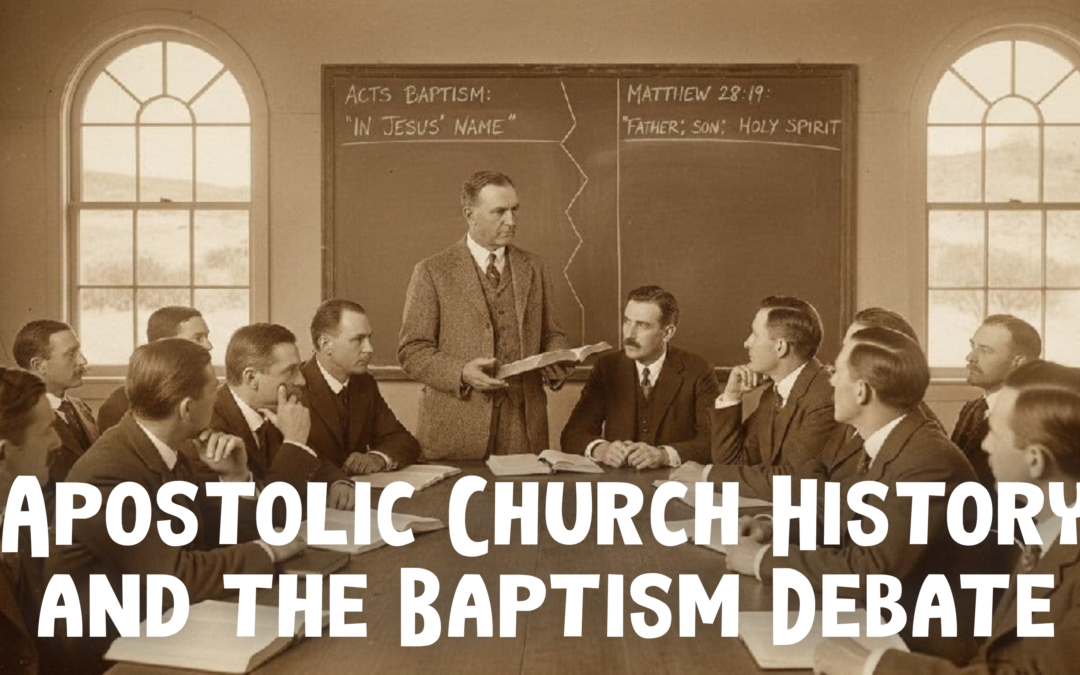

Apostolic Church History, Oneness, and the Baptism Debate
The Apostolic Church claims to be a return to New Testament faith. That sounds bold, but bold claims deserve open Bible, not blind trust.
So where did it come from? Who started it? And do its main teachings on God, baptism, and salvation actually hold up when you read the Scriptures in context?
This matters because the movement is not small. It has shaped millions of Christians, and it still sparks strong debate. Let's test its history, its founders, and its Bible arguments without pretending the questions are simple.

Where the Apostolic movement came from and how it grew
The Apostolic or Oneness movement did not begin in Acts. It grew out of early 20th-century Pentecostalism in North America, after the Azusa Street revival helped ignite a hunger for tongues, healing, holiness, and New Testament power. That revival created fertile ground for fresh questions, and baptism became one of them. A solid overview of that split is traced in Christianity Today's history piece on dividing over Oneness.
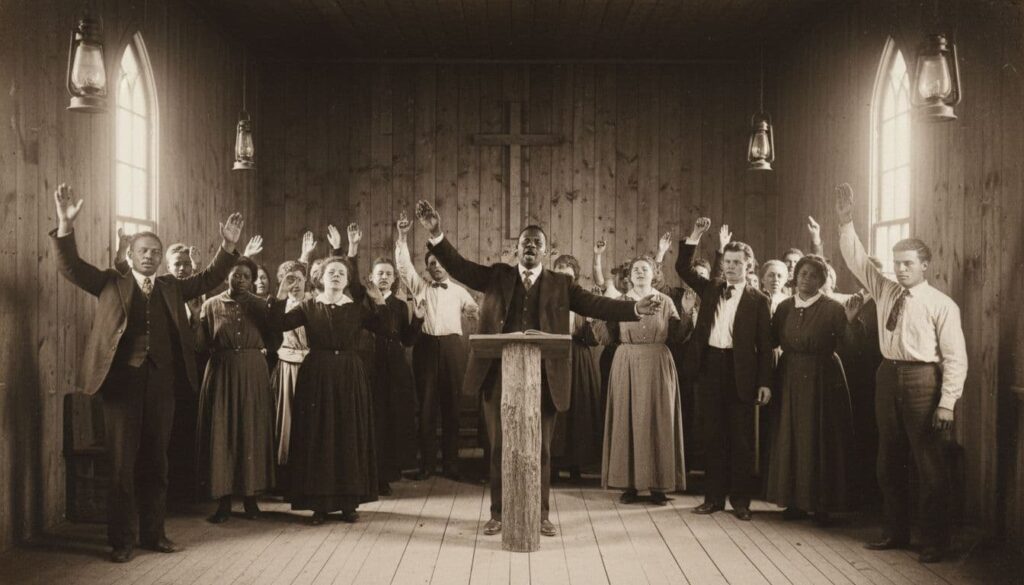
From the Azusa-era revival to the 1913 baptism debate
In 1906 to 1909, Pentecostals weren't yet fighting over Oneness, they were chasing Scripture, prayer, tongues, and the kind of power they saw in the Book of Acts. That mattered for the Apostolic Church, because the Apostolic Church was being shaped by hunger before it was shaped by debate. People wanted Acts 2, Acts 10, Acts 19, and they wanted a real Apostolic Church that sounded like the New Testament, not a group busy arguing over later labels. That early atmosphere, especially in the Apostolic Church movement, kept the focus on repentance, holiness, Spirit baptism, and the expectation that God would still do what He did in Scripture.
Then came the 1913 Arroyo Seco meetings, where R. E. McAlister questioned the usual baptismal formula. He noticed that Acts often records baptisms "in Jesus' name," while Matthew 28:19 names Father, Son, and Holy Spirit. That question cracked the door open.
The 1914 break that turned a teaching into a movement
By 1914, public Jesus-name baptisms were spreading fast, and the teaching wasn't staying in the back room anymore. In the Apostolic Church, people were hearing Acts 2:38 from the pulpit, then watching it happen in front of them, at revival meetings, in church services, and even in rivers and tanks where believers were baptized "in the name of Jesus Christ" instead of only using a general formula.
That's why the Apostolic Church started to feel like an identity, not just a new opinion. A preacher would tell the congregation that baptism in Jesus' name mattered, then whole groups would step forward and do it openly. Early Pentecostal voices like Frank Ewart and Glenn Cook made that message public in Los Angeles, and the Apostolic Church pattern spread from there, because once people saw it done, they didn't treat it like a side issue anymore. It was a confession of faith, plain and public.
That is why 1914 is usually treated as the birth year of the Apostolic Church. It was the point where a baptism debate turned into a separate movement with its own language, leaders, and loyalties. Oneness Pentecostalism profiles usually date the movement from this era, not from the first century.
Why the 1916 Assemblies of God decision mattered
In 1916, the Assemblies of God rejected Oneness doctrine and removed ministers who held it, and that split mattered because it forced people to choose sides, plain and simple. If you stayed with the Assemblies of God, you had to reject the Oneness view of God and stay with the Trinitarian position; if you held Oneness, you were pushed toward the Apostolic Church path, where baptism in Jesus' name and the message of Acts 2:38 were central.
Men like G. T. Haywood, A. D. Urshan, and J. C. Kelly moved away from the Assemblies of God and identified more openly with the Apostolic Church and the broader Apostolic, Oneness stream, while leaders like E. N. Bell, Stanley Frodsham, and C. H. Mason stayed in the Assemblies of God circles and kept preaching against Oneness doctrine. That's the point, really, the same Pentecostal world was pulling in two directions, and the names tell the story.
After that, Oneness believers began building their own networks and churches. The movement stopped being a quarrel inside Pentecostalism and became a distinct camp.
The people who shaped the Apostolic Church
The history of the Apostolic Church is tied to a handful of names, not one lone genius. Frank J. Ewart is usually treated as the best-known founder, but he did not work in a vacuum. Britannica's entry on R. E. McAlister is helpful here because McAlister was the spark, even if others carried the flame.
Frank Ewart was born in Australia in 1876, served in Baptist circles, moved through Canada, and later entered Pentecostal ministry in Los Angeles. After hearing the baptism discussion, he was rebaptized and began pushing the message that Jesus' name should govern Christian baptism. His writing, especially Meat in Due Season, helped spread the doctrine.
Check out our Bible Study on Why was Jesus Baptized? Here is the link to our Bible Study and you can watch its video below.

Frank J. Ewart’s life, preaching, and turning point
Ewart's real importance was not just biography. It was influence. He helped turn a local controversy into a printable, repeatable message.
He was one of the first to present Oneness as more than a baptism issue. For him, it was the shape of the whole Gospel. That is where the movement found its backbone.
Frank J. Ewart's main belief in Oneness was pretty direct: God is one, and Jesus Christ is the full revelation of that one God, not a separate second person beside Him. He pushed back hard against the classic Trinitarian idea of three distinct Persons, because he believed that model split God up in a way the Bible doesn't teach. For Ewart, the names Father, Son, and Holy Ghost are not three gods or three centers of consciousness, but ways the one God is known and revealed in Scripture.
That's a big point, and he didn't treat it like a side issue. He also put a lot of weight on baptism in the name of Jesus Christ, since he read Acts 2:38 as the pattern the apostles followed, and he believed that Jesus' name baptism mattered for salvation, not just as a symbol. The Holy Spirit, in his view, was not another Person in the Godhead, but the Spirit of the one God at work in believers.
He tied all of this to repentance, water baptism, and receiving the Holy Spirit, since those were the steps he thought the New Testament clearly taught. Ewart also believed the early church had this same Oneness understanding before later creeds changed the language. That's why his teaching wasn't just about doctrine in the abstract, it was about restoring apostolic faith and practice. If you want the short version, Ewart said God is one, Jesus is that one God revealed in flesh, and the church should worship and baptize in that truth.
You can read our Bible Study here: God is One and/or watch its video below:

R. E. McAlister and the message that sparked the controversy
McAlister was not trying to start a denomination. He was asking a Scripture question. Still, questions have a way of changing rooms.
At the 1913 meeting, he pointed straight at the tension between Matthew 28:19, where Jesus says to baptize "in the name of the Father, and of the Son, and of the Holy Ghost," and the repeated baptism language in Acts, where people are baptized in the name of Jesus Christ or in the name of the Lord Jesus. That was a simple observation, but it hit hard, because it forced the Apostolic Church to ask a plain question, why does the pattern in Acts keep sounding different from the wording in Matthew?
Once that question was out there, it didn't stay in one place for long. It moved through the Apostolic Church by preaching, testimony, and Bible study, and people repeated it because it was easy to remember and hard to ignore. Then it got refined, because the Apostolic Church didn't just want a sharp argument, it wanted a full Biblical case, so teachers started connecting the baptism texts with Acts 2:38, Acts 8:16, Acts 10:48, and Acts 19:5. That process mattered, because repeated language in Scripture starts to shape conviction when people keep seeing the same pattern instead of treating each verse in isolation.
What began as an observation became a teaching point, then a doctrinal line, and the Apostolic Church began to speak about baptism in a more defined way. By the time the message settled, it wasn't just a passing discussion from that 1913 meeting, it had become part of how the Apostolic Church read the New Testament and explained obedience to the Gospel. And that's the real history here, a question was raised, the text was tested, and the Apostolic Church turned what it saw in Scripture into doctrine.
Other early leaders who built the Apostolic Church movement
Other names matter too, like Glenn Cook, G. T. Haywood, Andrew Urshan, Howard Goss, and Robert C. Lawson. Their ministries pushed the doctrine across racial and regional lines, which is important because the Apostolic church movement was never just one community talking to itself.
Over time, it organized into groups like the Pentecostal Assemblies of the World and, later, the United Pentecostal Church International. Today the UPCI reports about 1.1 million constituents in the U.S. and Canada and about 6.18 million worldwide in its 2025 statistics. That is a large footprint for a movement that began as a dispute over baptism.
Biblical baptism explained the way God intends us to practice it
In Acts 2:38, the key phrase is "for the remission of sins," and in the original Greek, that is "eis aphesin hamartiōn," with aphesin meaning release, pardon, or forgiveness, and hamartiōn meaning sins. The big question is this: does Peter mean baptism is the thing that removes sin, or is he telling people to be baptized because their sins are already being forgiven as they turn in faith?
We think the context answers that pretty clearly, because Acts 2 is a response to the crowd being "pricked in their heart" after hearing the Gospel, which means they already believed Peter's message before he even told them to be baptized. That matters a lot, because repentance and faith are front and center in the sermon, and baptism comes after that response, not before it.
So when Peter says "be baptized ... for the remission of sins," the word "for" doesn't have to mean "so that you can get" in a cause-and-effect sense, it can also mean "because of" or "in relation to" the forgiveness they are already receiving through belief. That fits the rest of the New Testament too, where forgiveness is tied to faith in Christ, not to the water itself, and baptism is the outward confession of what has already happened inside.
If we're looking for Biblical examples of people believing and then getting baptized, Acts gives us a whole chain of them, and it's not hard to spot the pattern.
1. On Pentecost, the crowd heard Peter's sermon, were cut to the heart, believed the message about Jesus, and then about 3,000 were baptized that same day (Acts 2:41).
2. In Samaria, Philip preached Christ, the people believed what he said, both men and women, and then they were baptized, which is a pretty clear sequence of faith first, baptism second (Acts 8:12). In Acts 8:12-13, the key point is that the Samaritans "believed Philip as he preached good news about the Kingdom of God and the name of Jesus Christ," and then they were baptized.
In the Greek, the order matters: belief comes first, baptism follows, so the text does not say baptism is the thing that saves them by itself. It shows the normal response to the Gospel, not a magical ritual. When Luke says they were baptized "in the name of Jesus Christ," he means they were baptized under Jesus' authority and confession, not in John's baptism or some other name, but into allegiance to Christ Himself.
When Jesus gave us the Great Commission, He started out by saying, "All authority has been given to Me in heaven and on earth." (Matthew 28:18) That authority was given to Jesus. Who gave Jesus that authority?
Jesus was speaking about authority given to Him by God the Father. Jesus did not take that authority for Himself, and He didn't need to, because the Father had already appointed Him as Lord over heaven and earth. That's why the Great Commission carries so much weight, Jesus is sending His followers under the authority that the Father gave Him, and that makes His command clear, final, and worth taking seriously.
So yes, baptism matters, a lot, but Acts 8:12-13 ties salvation to faith in the preached word, with baptism as the public, obedient response to that faith, not the cause of salvation apart from it. Biblically, the clearest answer is that salvation comes by faith in Christ, not by baptism as a required extra step, because passages like Ephesians 2:8-9 and Romans 3-4 say we're saved by grace through faith apart from works, while baptism is the outward response of someone who has believed.
In the Great Commission, Jesus says, "Go therefore and make disciples of all nations, baptizing them in the name of the Father and of the Son and of the Holy Spirit" (Matthew 28:19-20). That matters because baptism is clearly a command, not an optional extra. But look at the order, Jesus says "make disciples" first, then baptize, then teach. A person becomes a disciple by responding to Christ in faith, and baptism is the public act that follows that faith. So baptism is important, even obedient, but it's not the thing that saves you, Christ saves you by you believing in His work at the cross, and baptism is how a believer says, "I belong to Him."
That said, baptism is still important, and the New Testament treats it seriously, which is why you see verses like Mark 16:16, Acts 2:38, and 1 Peter 3:21 tied to it, but those passages don't cancel out the many places where faith is the means of salvation. So the simple answer is this, faith saves, baptism follows as obedience and public identification with Christ.
3. The Ethiopian eunuch is another simple one, because after Philip explained Isaiah and preached Jesus to him, he believed, asked to be baptized, and went down into the water right away (Acts 8:35-38). Philip starts with Isaiah 53, the passage the Ethiopian eunuch was reading, and he explains that it's talking about Jesus, the suffering Servant who was rejected, led like a lamb to the slaughter, and took on sin for others.
That's the big thing here, Philip doesn't just give him a random lesson, he shows him how the Scriptures point to Christ and His work of forgiveness and redemption. The eunuch believes because the prophecy finally makes sense in light of Jesus, and once he sees that, he asks to be baptized right away. Why? Because baptism was his immediate response of faith and obedience, a public confession that he now belonged to Jesus, not just as someone who understood the text, but as someone who believed the One the text was talking about.
4. Saul of Tarsus is also important, since after his encounter with the risen Christ, Ananias told him to rise, be baptized, and wash away his sins while calling on Jesus' name, which ties belief and baptism together very tightly (Acts 9:17-18, 22:16). In Acts 22:16, the phrase "wash away your sins" comes from the Greek idea of being cleansed, and Ananias is speaking to Paul right after his conversion, in the middle of a baptism scene.
The point isn't that water itself removes guilt like soap removes dirt, because the New Testament treats forgiveness as something God gives through Jesus. So what does it mean exactly? It means Paul is being told to respond to Christ in obedient faith, to be baptized while calling on the name of the Lord, and to receive God's forgiveness and cleansing from sin. The washing is real, but it's spiritual cleansing, not a claim that the water has magical power. That's why the verse ties baptism, calling on Jesus' name, and forgiveness together, all in one moment.
Also in Acts 22:16, the phrase "calling on the name of the Lord" comes from the Greek "epikalesamenos to onoma autou", and in this context it means invoking Jesus as Lord in faith, appeal, and submission, not just saying His name out loud.
Ananias is telling Saul to rise, be baptized, and wash away his sins while he is "calling on" Jesus, which fits the Biblical pattern where calling on the Lord means turning to Him for mercy and deliverance (think of Joel 2:32 and Acts 2:21). So the idea isn't a casual phrase or a magic formula. It's a direct act of faith, a sinner appealing to the risen Christ for forgiveness and cleansing, with baptism tied to that response as the outward step that goes with repentance and trust.
5. Cornelius and his household believed Peter's message about Christ, received the Holy Spirit, and then Peter commanded them to be baptized, so even the Gentiles were brought into this same pattern (Acts 10:43-48). In Acts 10:43, Peter says that "through His name [Jesus] whoever believes in Him will receive remission of sins," and in the Greek, that's tied to the idea of authority and saving power, not just a spoken label.
"Through His name" is saying by means of Jesus Himself, by His person and what He has done, since in Scripture a name often carries identity, authority, and honor. The word for "believes" is pisteuō, which means to trust or rely on Him, not just to agree with facts about Him. And "remission" is aphesis, the release or forgiveness of sins, a real letting-go of guilt and debt. Peter's point is plain: the prophets pointed to this, and now it's announced to everyone, Jew and Gentile alike, that anyone who trusts in Jesus receives forgiveness of sins through the authority of His name.
6. Lydia believed what Paul said beside the river in Philippi, and then she and her household were baptized, which shows how quickly faith moved into obedience (Acts 16:11-15). In Acts 16:14-15, Lydia is introduced as "a seller of purple" from Thyatira, and that detail tells us a lot right away. Purple cloth and purple dye were expensive in the ancient world, since the color came from a costly dye process, often connected with shellfish dye and royal or elite clothing, so Lydia was almost certainly a woman of means, someone tied to a serious trade. Thyatira was known for its business guilds and textile work, so she likely had real commercial standing, not just a small side trade.
Luke also says she was "a worshiper of God," which means she was already attached to the God of Israel and living in reverence toward Him, even before she understood the Gospel of Jesus Christ. Then comes the key line, "The Lord opened her heart" (Acts 16:14). That's how Scripture talks about conversion, not as human effort or self-generated insight, but as the Father drawing a person by the Holy Spirit so they can hear, believe, and receive the Son. Lydia listened to Paul, but the real work was God's work, opening her heart so the message of Christ actually took root.
In the New Testament, conversion isn't presented as a person waking up one day and figuring God out on their own, it's the Father drawing them by the Holy Spirit so they can actually hear, believe, and receive the Son. Jesus says it plainly, "No one can come to me unless the Father who sent me draws him" (John 6:44), and again, "No one can come to me unless it is granted him by the Father" (John 6:65).
The Greek word for "draws" there is helkō, and in context it shows God's active initiative, not a passive invitation waiting on human ability. That fits with John 16:13-15, where the Spirit guides into truth and glorifies Christ, and with 1 Corinthians 2:14, where the natural person does not accept the things of the Spirit of God because they're spiritually discerned.
So when someone comes to faith, Scripture doesn't give the credit to self-generated insight, it points to the Father drawing, the Spirit opening the heart, and the Son being received by faith, just like Lydia in Acts 16:14, whose heart the Lord opened so she paid attention to Paul's message.
7. The Philippian jailer is another strong example, because he heard the word of the Lord, believed, and was baptized that very night with his whole household after asking what he had to do to be saved (Acts 16:25-34). In Acts 16:30-34, the jailer asks, "What must I do to be saved?" and in Greek the answer is direct: "Pisteuson epi ton Kyrion Iesoun," "Believe on the Lord Jesus," not in a vague religious way, but trust Him as Lord, the risen one who saves.
Then Paul adds, "and you will be saved, you and your household." That phrase does not mean the jailer's family was saved automatically because he believed, as if bloodline did the work. The context fixes that. Paul and Silas first speak "the word of the Lord" to everyone in the house, and the whole scene ends with rejoicing because the jailer had believed in God.
So "your household" points to the promise going out to the whole house, not just to one man in isolation. That matches Acts 2:39, where Peter says, "the promise is for you and for your children and for all who are far off, everyone whom the Lord our God calls to Himself." The promise is the Gospel promise, forgiveness of sins and the gift of the Spirit through Christ, and it reaches beyond one person to families, children, and even outsiders, but always through the Lord's call and response of faith.
8. Crispus, the ruler of the synagogue in Corinth, believed in the Lord with his household, and many of the Corinthians heard, believed, and were baptized too (Acts 18:8). The Greek text says that "Crispus, the synagogue ruler, believed in the Lord with all his household, and many of the Corinthians, hearing, believed and were baptized." The phrase "believed in the Lord" is more than mental agreement, it means they placed their trust in Jesus as Lord, the one Paul had been preaching in Corinth.
And "the Corinthians, hearing, believed" matters too, because Luke ties their faith to the hearing of the message, not to some private insight or emotional moment. They heard the word about Christ, they believed it, and that belief showed up in baptism. So the verse is plain about the order: hearing the Gospel, believing the Lord, then responding in open obedience.
9. Then in Ephesus, people who had only known John's baptism heard Paul's fuller teaching about Jesus, believed, and were baptized in the name of the Lord Jesus (Acts 19:1-5). Paul is speaking to men in Ephesus who had only received John's baptism, and his question, "Did you receive the Holy Spirit when you believed?" gets straight to the issue, because in the New Testament faith in Christ and reception of the Spirit belong together. Their reply, "We have not so much as heard whether there is a Holy Spirit," is better understood in context as, "We have not even heard that the Holy Spirit has been given," not that they had never heard the Spirit exists at all.
Paul then explains that John's baptism was "a baptism of repentance," a call to turn from sin and prepare for the One John pointed to, Jesus Christ. So when they heard this, "they were baptized in the name of the Lord Jesus." That phrase means their baptism was now tied to Jesus' authority, person, and saving work, not just to John's preparatory message. It was a public identification with Christ, a confession that the One John announced had come, and that their faith was now directed to Him.
In the original language and context, "they were baptized in the name of the Lord Jesus" in Acts means they were baptized under Jesus' authority, confessing faith in Him as the risen Lord, not necessarily that the words spoken at baptism had to be only "Jesus" and nothing else. Luke often uses that phrasing to distinguish Christian baptism from John's baptism or from pagan washings, and the point is allegiance, identity, and confession.
So does that cancel out Jesus' words in Matthew 28:19, "baptizing them in the name of the Father and of the Son and of the Holy Spirit"? No, because Jesus gives the full baptismal command there, and the singular word "name" matters, it points to one divine authority, not three separate gods. In other words, Acts and Matthew fit together, not against each other.
The early church baptized in the name of Jesus because that name identifies the one through whom the Father saves, the Son redeems, and the Spirit applies that salvation, so the safest reading is that Christian baptism belongs to the triune name of God, with "in Jesus' name" in Acts stressing who Jesus is and whose authority the baptism carries.
The "triune name of God" points to Matthew 28:19, where Jesus tells His disciples to baptize "in the name of the Father and of the Son and of the Holy Spirit." In Greek, "name" is singular, not plural, which matters. Jesus doesn't say "names," he says "name," and then gives three Persons together in that one divine name. That's why Christians see this as strong Trinitarian language, not just a list of titles. In the Jewish world, "name" also carried authority, character, and identity, so this isn't a loose phrase, it's a direct statement about who God is and how His people are to be marked out.
The "triune name of God" is not one secret word, but the singular "name" of the one God, given in the threefold form "Father, Son, and Holy Spirit." In Greek, the word is onoma ("name"), and it's singular, which matters, because Jesus doesn't say "names." He says "name."
In Biblical usage, a name is more than a label, it means authority, identity, and presence. So the triune name is the one divine identity shared by Father, Son, and Holy Spirit, not three separate gods. If you're asking, "What is the Name?" in the baptismal sense, the New Testament points to that one triune confession, and Acts ties baptism to the name of Jesus as the one revealed Lord who brings that triune reality into view.
The "triune name of God" isn't a phrase you'll find in the Hebrew text itself, but a theological way of talking about the one God who reveals Himself as Father, Son, and Holy Spirit. In the Old Testament, the personal name given is Yahweh, written in Hebrew as YHWH, and that's the covenant name God uses when He speaks to Israel, especially in passages like Exodus 3:14-15. So if someone asks what God's name is in the original Biblical context, the answer is Yahweh. The triune language comes later as Christians read the whole Bible and see that the one Yahweh is revealed in three Persons, not three gods.
Check our Bible Study below on YHWH:

So if you ask whether the New Testament gives examples of belief before baptism, the answer is yes, over and over again, and the point is plain, faith in Christ comes first, then baptism follows as the outward act of that faith.
People don't get baptized in order to force God to forgive them, they get baptized because they've already believed the Gospel and their sins have already been pardoned through that faith. That's why baptism makes sense as a public testimony, a visible answer to an invisible work of grace, not as the thing that creates forgiveness in the first place.
If you read Acts 2:38 with the Greek and with the flow of the chapter, the point is not "get in the water so your sins will go away," but "because you believe and have turned to Christ, be baptized as the response of a forgiven person." That keeps the text tied to the actual context instead of turning baptism into a work that saves, and it preserves the simple order Peter is preaching, belief first, forgiveness first, then baptism as the outward step that follows.

What the Apostolic Church believes, and where those beliefs come from
Apostolic Church believers usually confess one God, Jesus as the full revelation of God, repentance, baptism in Jesus' name, and receiving the Holy Spirit with tongues as evidence. That package comes straight from their reading of Acts, especially Acts 2:38.
The core claim is simple. God is one person who reveals Himself as Father in creation, Son in redemption, and Holy Spirit in regeneration. If that sounds close to modalism, that is because it is.
Apostolic Church view of God, Jesus, and the Holy Spirit
This is where the debate gets serious. Oneness teaching says the Father, Son, and Holy Spirit are not three distinct Persons. They are roles or manifestations of the one God, fully seen in Jesus.
But Scripture does not always sound that flat. Jesus prays to the Father. The Father sends the Son. The Spirit descends at Jesus' baptism. Those are not easy lines to squeeze into one-person language without doing some real stretching.
The New Testament keeps showing the Father, the Son, and the Spirit in clear relation to each other, not as the same person acting in different moods, but as distinct Persons working together. Jesus prays to the Father in passages like Luke 3:21, where He is baptized and "was praying," and in John 17, where the Son speaks to the Father directly throughout the whole prayer.
The Father sends the Son in texts like John 3:16-17, "For God so loved the world, that He gave His only Son," and Galatians 4:4, "God sent forth His Son," which in the Greek puts the sending language front and center, the Son is the one sent, and the Father is the sender.
Then at Jesus' baptism, the Spirit descends in Matthew 3:16, Mark 1:10, and Luke 3:22, where the Greek says the Spirit came "like a dove" and "descended upon" Jesus, while the Father's voice from heaven says, "You are my beloved Son" (Mark 1:11). That scene matters because all three are present at once, the Son is in the water, the Spirit descends, and the Father speaks, so the baptism gives a simple, public picture of the triune work of God in the opening of Jesus' ministry.
Do you ever wonder if baptism is necessary for salvation? Check out our Bible Study on that subject here and watch its video below.

Why Acts 2:38 became the center of their salvation message
Acts 2:38 is the verse Apostolics lean on most: repentance, baptism in Jesus' name, and the gift of the Holy Spirit. In their ears, that is the clearest salvation pattern in the Bible.
The Greek text does matter here. Acts 2:38 in Greek does use "on the name of Jesus Christ" language, and that is powerful. Still, the verse is a command in a specific sermon, not a full theology textbook.
Peter says to repent and be baptized "on the name of Jesus Christ," and that phrase is strong, plain, and important. But you still have to read it in context. This is Peter preaching a specific sermon to a specific crowd on Pentecost, not writing a full theology textbook that lays out every detail of baptism, forgiveness, and the name of Jesus in one neat paragraph. So yes, the Greek matters, but the context matters too, and you don't want to pull a command out of the sermon and make it carry more weight than the passage itself is giving it.
The Bible verses they use most often, and how to test them in context
They also use Deuteronomy 6:4, John 1:1 and 14, Colossians 2:9, Acts 4:12, and the baptism scenes in Acts. Those texts matter. The question is how they fit together.
That means reading original wording, grammar, and context, not just stacking proof-texts like bricks. One verse can be true and still be misused.
Does the Bible really teach Jesus-name baptism only?
This is where the fight gets hot. Apostolics say the name matters because baptism is about authority and identity, and Jesus is that name. Other Christians say the New Testament gives a pattern, not a rigid spoken script.

What Acts says about baptism in Jesus’ name
Acts 2:38, 8:16, 10:48, and 19:5 all tie baptism to Jesus in some way. That is real. Nobody should pretend otherwise.
But the key question is whether those verses record an exact formula or a shorthand for Christian baptism under Jesus' authority. The Greek phrase can mean baptism grounded in His name, not necessarily a spoken phrase repeated word for word. Acts 19:2 and Holy Spirit baptism helps show how closely Acts links baptism, repentance, and reception of the Spirit.
Why the Father, Son, and Holy Spirit wording still matters
Matthew 28:19 is the sticking point because it names Father, Son, and Holy Spirit together. Apostolics answer that the singular "name" proves one divine name, Jesus. Trinitarians answer that Jesus commands baptism into the one name of the three.
Both readings try to honor the text. The difference is whether Acts is correcting Matthew or explaining it.
Is their baptism view correct, incomplete, or overbuilt?
Our judgment is careful but plain. Jesus-name baptism is Biblical, meaningful, and rooted in apostolic practice. The claim that it is the only valid baptismal wording goes beyond what the texts strictly prove.
That means the Apostolic view is partly right, but overbuilt when it turns a Biblical pattern into a hard legal formula for salvation.
Is Oneness Biblical, or does it create confusion in the church?
Here is the heart of it. The Bible teaches one God. No serious Christian disagrees with that. The real issue is whether the Bible presents that one God as one person wearing different masks, or one God who exists eternally as Father, Son, and Spirit.
What the Bible means when it says God is one
Deuteronomy 6:4 and Isaiah 45 are strong monotheism texts. God is one. Period.
That is where Oneness theology starts correctly. The problem starts when it tries to explain that oneness without leaving room for the personal distinctions the New Testament keeps showing us. John 14:26 and the Spirit's teaching role is one place where those distinctions matter.
Why Trinity language was developed from Scripture
Trinitarian language did not come from nowhere. It came from trying to hold together the Bible's full witness: Jesus is God, the Father is God, the Spirit is God, and yet they are not the same person in every scene.
John 1:1 says the Word was with God. That phrase matters. It shows relationship, not just role. Colossians 2:9 says the fullness of deity dwells in Christ bodily, and that is glorious. But it does not erase the Father or the Spirit.
In Colossians 2:9, Paul writes in Greek, "en autoi katoikei pan to pleroma tes theotetos somatikos," which means "in him all the fullness of deity dwells bodily." The key word is theotetos, meaning true deity, not just a godlike quality or some borrowed divine power, so Paul is saying Christ fully shares in God's own nature. And katoikei is present tense, which means this fullness doesn't come and go, it lives in Christ permanently. The word somatikos matters too, because it means bodily or in a real embodied way, not as a vague spirit or a temporary appearance.
In the context of Colossians, Paul is pushing back against teachings that treated Christ as less than fully divine, and he's making it plain, if you want to know who Jesus is, you don't stop short at prophet, teacher, or messenger, because all the fullness of God dwells in Him bodily.
Does Oneness protect truth or weaken it by flattening the text?
Oneness protects one truth, God's unity. Yet it can flatten the text when it turns every distinction into a costume change. That is the tension.
Does it create division? Yes, often it does, because it usually treats its reading as the only faithful one. But division does not automatically mean falsehood, and sincerity does not automatically mean truth.
How to judge the Apostolic founders’ study method
The early Apostolic Church leaders did one thing well. They took Scripture seriously. They wanted the Bible, not dead tradition, and that hunger should not be mocked.
But their method was narrow. They leaned hard on Acts, then built broad doctrine from a few repeated phrases. That can turn into proof-texting fast.
Proof-texting is when someone pulls a verse out of its context and uses it to "prove" a point the passage may not actually be making. It's common in Bible discussions, and it can sound convincing at first, but context matters a lot. If you ignore the chapter, the book, and the original audience, you can make Scripture say almost anything you want it to say.
That's why a verse like Philippians 4:13, for example, when Paul wrote, "I can do all things through Christ who strengthens me," shouldn't be treated like a blanket promise that a person can do any task they set their mind to, because Paul is talking about contentment in hardship, not personal achievement. Contentment in hardship is not pretending the pain is small, and it's not acting like loss doesn't hurt. It's learning to say, even here, God is still good, and He's still enough.
That's why Paul could write about being content whether he had much or little (Philippians 4:11-13), because his peace wasn't tied to comfort, money, or easy circumstances. It was tied to Christ. So when life gets hard, contentment looks like trust, not denial. It looks like praying honestly, obeying faithfully, and refusing to let suffering become the loudest voice in the room. That's not weak faith. That's steady faith.
So if you hear a verse quoted, ask a simple question: what is the passage saying before and after that verse? That question usually separates careful study from proof-texting.
A better method asks harder questions. What genre am I reading? Who is being addressed? Is this narrative, command, or theology? What does the whole Bible say, not just one strong verse?
The Apostolic Church founders were not careless scribblers. They were earnest Bible readers. Still, their conclusions often outran their evidence.
Conclusion
The Apostolic movement is about 112 years old as a distinct branch, and it came out of early Pentecostal revival, not the book of Acts itself. Its founders were serious people, and they were asking real Bible questions.
It gets some things right. It honors repentance, holiness, Jesus' name, and the need for spiritual power. But its baptism formula and Oneness theology often go beyond what the full text of Scripture actually says.
So, is Oneness a doctrine of demons? Biblically, that label is too strong. But that does not make it correct. The safer judgment is this: test every doctrine by the whole counsel of Scripture, not by one verse pulled away from its context.
Oneness theology is not the same thing as an "antichrist doctrine" either in the strict Biblical sense, but it does depart from historic Trinitarian Christianity in a major way because it denies the eternal distinction between the Father, the Son, and the Holy Spirit. That matters.
1 John 2:22-23 uses "antichrist" language for those who deny the Father and the Son, and for those who deny that Jesus Christ came in the flesh, so the category is tied to a real denial of who Christ is, not just a church label.
John says, "Who is the liar but he who denies that Jesus is the Christ? This is the antichrist, he who denies the Father and the Son. No one who denies the Son has the Father. Whoever confesses the Son has the Father also." John isn't talking about a future headline figure here, he's talking about people who reject the Son, and by doing that, they also reject the Father. If you want the broader context, 1 John 2:18 also mentions "many antichrists," which helps show how John uses the term in this letter.
So if someone teaches that Jesus is truly the only God and rejects the Trinity, that teaching is unorthodox and serious, but calling every Oneness believer "antichrist" goes beyond what Scripture actually says. The better question is, does the teaching confess the Biblical Christ, or does it reshape Him into something else?
Check out our Bible Study on what is an antichrist: