
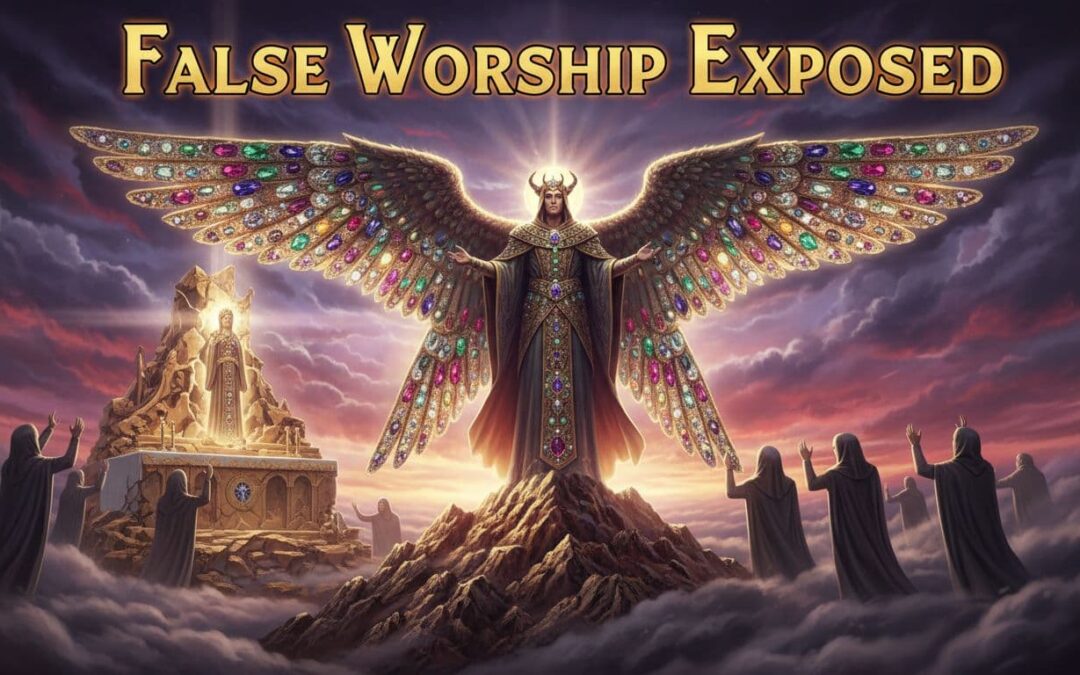

Lucifer, Satan, and Worship: What the Bible Actually Says
A lot of people grow up hearing “Lucifer was the worship leader in Heaven,” and they picture a full biography of Satan tucked neatly into a few verses. The Bible’s approach is trickier than that. Some key passages (especially Isaiah 14 and Ezekiel 28) are written as prophetic taunts aimed at real human kings, yet the language often sounds bigger than any one man.
So what’s going on?
In the original language and in context, “Lucifer” isn’t a personal name God gave an angel in Hebrew Scripture. Still, many Christians see these texts as pulling back the curtain and showing a deeper spiritual rebellion behind earthly pride. This matters because it connects to worship: what God deserves, what pride tries to steal, and why praising God in hard seasons messes with the enemy’s playbook.

Who is “Lucifer” in the Bible, and what does the name mean?
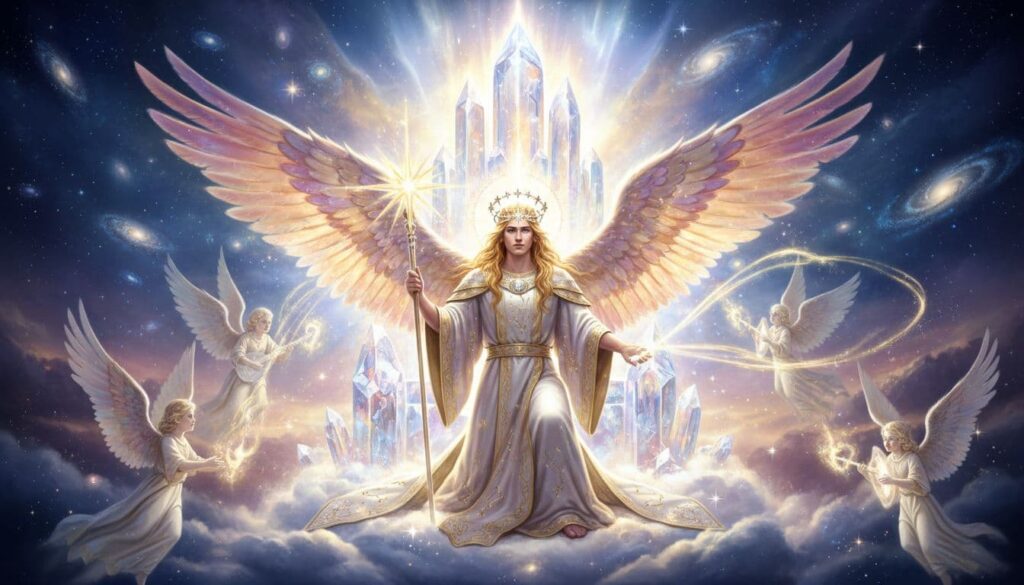
The word “Lucifer” comes from Latin, not Hebrew. In Latin, lucifer means “light-bearer” (from lux, light, and ferre, to carry). It showed up in Latin Bible tradition as a way to translate Isaiah 14:12.
In Isaiah 14:12, the Hebrew phrase is הֵילֵל (helel), often understood as “shining one” or “morning star” (a poetic image, like Venus in the dawn sky). The verse isn’t introducing “Lucifer” as a named character the way “Moses” or “David” is introduced. It’s using a powerful picture: a bright one that falls hard.
If you want to read Isaiah 14 in a clear study format with notes and cross references, the NETBible page for Isaiah 14 is helpful for context.
Isaiah 14 in context: a taunt against the king of Babylon, with a bigger warning about pride
Isaiah 14:12-15 sits inside a longer passage that directly calls itself a “taunt” against the king of Babylon (Isaiah 14:4). In simple terms, it’s God saying, “You thought you were untouchable, but you’re going down.”
The heart of the taunt is the famous set of “I will” boasts:
- “I will ascend to heaven.”
- “I will raise my throne above the stars of God.”
- “I will make myself like the Most High.”
That’s the sound of pride talking. It’s self-exaltation that doesn’t just want success; it wants God’s place.
Then comes the crash: “But you are brought down to Sheol” (the realm of the dead). The point is clear even at an 8th-grade level: when a person tries to climb by stepping on God’s glory, they don’t rise, they fall. Learn more about Sheol in our article here:
Why do many teachers also see a shadow of Satan here? Because the language reaches beyond normal politics. It’s like the Holy Spirit is saying, “Yes, I’m judging a king, but I’m also exposing the spiritual DNA behind his arrogance.”
In Ephesians 6:12, Paul says our fight (the Greek word palē, a close, sweaty kind of wrestling) isn’t “against blood and flesh,” meaning the real enemy isn’t human bodies, human parties, or human tribes, even when people are doing evil.
The wording matters, because Paul stacks up terms that sound political and governmental, archai (rulers) and exousiai (authorities), then intensifies it with kosmokratores (world-rulers), a rare term that points to dominating powers that sit over “this darkness,” not just private temptation. You can see the Greek text laid out plainly in Ephesians 6:12 in the original Greek, and that vocabulary is exactly why many readers hear more than a vague “spiritual struggle,” it reads like a hierarchy.
Paul isn’t saying senators, kings, and generals aren’t responsible for their sins, he’s saying the drama behind corrupt rule goes deeper than what you can see with your eyes.
In the first-century world, politics and religion weren’t separated, Ephesus was packed with temple power, magic practices, civic pressure, and imperial loyalty, so “authorities” and “world-rulers” would naturally land in the listener’s mind as the kind of forces that shape public life. That’s why this verse is often read as a claim that hostile spirits work through systems, propaganda, coercion, and state violence, even when the human actors think they’re just doing “normal” governance.
The phrase “spiritual forces of wickedness in the heavenly places” doesn’t mean outer space, it means the unseen sphere where rebellious powers operate and influence what happens on earth. Put it together and Paul’s saying something blunt, kingdoms can be steered by invisible personal evil, and when politics turns predatory, you’re not only watching human ambition, you’re seeing organized darkness at work through human structures.
That understanding also explains why the next paragraph doesn’t tell Christians to pick up swords, it tells us to stand firm with truth, righteousness, faith, and prayer, because you don’t beat spiritual rulers with the weapons of the flesh. If you want a quick overview of how common translations unpack the verse and its chain of “rulers” language, this summary of Ephesians 6:12 tracks the basic sense without pretending the struggle is merely psychological.

(For a careful, more academic look at Isaiah 14’s background and imagery, see Michael Heiser’s paper: The Mythological Provenance of Isaiah 14:12-15.)

Meaning of Lucifer vs meaning of Satan: “shining one” compared to “adversary/accuser”
Here’s the simple contrast:
- Lucifer (Latin lucifer, tied to Hebrew helel): a description of brightness, splendor, and elevated status, at least in the poetic picture.
- Satan (Hebrew שָׂטָן, śāṭān): “adversary,” and by usage also “accuser.”
One word speaks of created glory (light, shine). The other speaks of chosen hostility (opposition, accusation). In other words, “Lucifer” points to what he was like in beauty, “Satan” points to what he became in behavior.
If you want a practical look at Satan as the accuser and how that shows up in daily spiritual pressure, see Who Is the Accuser of Our Brethren? (Revelation 12:10).

What God created him to be: the anointed cherub, beauty, and a job near God’s presence

Ezekiel 28:12-19 is another big passage in this discussion. Like Isaiah 14, it begins as a message about a human ruler (the king of Tyre). But then it starts describing things that don’t fit an ordinary man’s life story: Eden language, a “holy mountain,” and the title “anointed cherub.”
A cherub in Scripture is not a cute baby angel. Cherubim are connected to God’s holiness and glory (think of the cherubim guarding Eden in Genesis 3:24, and the cherub imagery around the ark). This reads like a being placed close to God’s presence, not a random messenger.
The safest way to say it is this: Ezekiel is judging a proud king, yet the description seems to pull from a deeper spiritual pattern that many Christians connect to Satan’s original state.
Ezekiel 28:12-19 is written as a qînâ (a funeral dirge) over the “king of Tyre,” and in its plain, historical setting it’s a prophetic takedown of a real ruler whose heart “was lifted up” because of wealth and trade power (Tyre was that kind of city).
The Hebrew hits hard: “You were the seal of perfection” (a claim to completeness), “full of wisdom,” “perfect in beauty,” and the point isn’t that he really was flawless, it’s that he thought he was, and God’s irony is doing the work. Then Ezekiel stacks imagery that no normal human biography can hold: “You were in Eden, the garden of God,” covered in every precious stone, and called an “anointed guardian cherub,” language tied to sacred space and temple symbolism, not just royal bling.
In the original context, that’s a prophetic way of saying, “You had an exalted placement near God’s presence (like a cherub near the Holy Place), you were set on God’s ‘holy mountain,’ and you still blew it,” because the text says he was “blameless” until “unrighteousness” was found in him. The word-pairing matters: “blameless” (tamim) plus “until” sets up a fall, and the fall is traced to inner corruption, “your heart was proud because of your beauty,” which matches the Bible’s repeated theme that pride is the root sin behind rebellion.
So how is this tied to Satan exactly, without turning the chapter into a free-for-all? It’s tied by typology (and many Christians also read it as a “double reference”): Ezekiel is pronouncing judgment on a human king, but he describes that king with an Eden-and-cherub template that points past the man to the spiritual power behind arrogant kingdoms, the same way later Scripture talks about rulers and also “powers” at work behind them.
The “cast you to the ground” language, the profaning of sanctuaries, and the move from honored proximity to violent expulsion fits the Bible’s broader portrait of Satan as a glorious created being who fell through pride and was driven from his position, which is why readers have long connected Ezekiel 28 with passages like Isaiah 14 even while still admitting the immediate target is Tyre (you can see the interpretive tension laid out in resources like Got Questions on Ezekiel 28 and the king of Tyre).
If you keep the original setting in view, the tie to Satan isn’t a random “Satan insert,” it’s that Ezekiel uses temple and Eden imagery to expose the same rebellion pattern, a creature trying to climb into God’s space, claiming godlike status, then getting brought down in public ruin, and that pattern is exactly what the Bible later frames as satanic. That’s why the passage can be read as judgment on a proud king and as a window into the kind of pride and fall we associate with Satan, as long as you don’t erase the historical king Ezekiel was actually confronting (a helpful overview of the competing readings is summarized in discussions like Isaiah 14 and Ezekiel 28 Interpretation).
Ezekiel 28 explained simply: blameless until iniquity was found, then cast out
Ezekiel 28 contains three ideas that matter a lot:
- Created beauty and high placement: “You were the signet of perfection… full of wisdom and perfect in beauty.”
- Original blamelessness: “You were blameless in your ways from the day you were created.”
- A turning point: “Till iniquity was found in you.”
That phrase matters. Evil isn’t described as God’s design in him. Corruption appears later. Something twisted inside.
Then comes the consequence: “I cast you as a profane thing from the mountain of God.” It’s removal from access, from place, from privilege. A fall from nearness.
Was Lucifer the worship leader in Heaven? What the Bible suggests, and what it does not
People often say Lucifer was Heaven’s worship leader. The passage most used is Ezekiel 28:13, which in some translations sounds like musical settings or instruments (“timbrels” and “pipes,” depending on the version). Some interpret that as built-in musical capacity.
Here’s the honest balance:
- Scripture does present a being of extraordinary glory near God’s presence, where worship is central.
- Scripture does not hand us a clear job title like “chief worship leader of Heaven.”
So it’s fair to say his original role was connected to reflecting God’s glory, and anything close to the throne is connected to worship by nature. It’s not fair to claim details the Bible doesn’t plainly state.
Ezekiel 28:13 sits inside a prophetic taunt against the “king of Tyre,” but the language is so exalted (Eden, cherub imagery, holy mountain) that many Christian readers take it as a double-layered portrait, the human ruler on the surface, and Lucifer’s pride and fall behind him. In that flow, “The workmanship of your timbrels and pipes was prepared for you on the day you were created” (wording found in older English Bibles) gets read as saying this figure’s glory included built-in music, like he was made for splendor and worship before corruption set in.
The catch is the Hebrew words behind “timbrels and pipes” are debated: the text has tuppêkā (only appears one time in Scripture) and neqābekā (also only appears once in Scripture), which sound close to terms for percussion and wind instruments (so KJV-style “tabrets/timbrels” and “pipes”), but they can also be tied to craftsmanship language, like settings, sockets, or mountings (jewelry, not a band). That’s why some modern translations drop the “instruments” idea and go with something like “settings and sockets,” since the whole verse lists gemstones and reads like a description of ornamentation, not a worship setlist.
Words that appear one time are difficult to interpret. When Jesus said, “Give us this day our daily bread,” in the the Lord’s prayer, no one in recent history knew what that actually meant until the last 100 years.
Most people do not know what Daily Bread means. It is one word and this was the only time this word was used in the Bible and researchers had no reference to translate the word. Recently, during excavations in Israel, archeologists found ancient shopping lists. On these shopping lists was the word Daily Bread.
This was bread with ingredients that would rot by the end of the day, just like Manna. It was known as Poor Man’s Bread. So, Jesus was saying we need to get fed fresh from God every day or our spiritual man will begin to decay. From our article Beware What Does The Bible Say About Forgiveness? Matthew 6:14
So why did “timbrels and pipes” show up at all? Part of it is translation history, older interpreters connected the consonants to familiar music words and that fit a popular Lucifer narrative, and part of it is that Hebrew roots can overlap in ways that force translators to choose a lane. In other words, it’s not that newer translations are “hiding” music, it’s that they think the context pushes hard toward jeweled craftsmanship, and they translate the rare words in a way that matches the gemstones.
You can see people working through the Hebrew options and why the verse comes out differently in a thread like “Ezekiel 28:13, Musical Satan?”, where the discussion keeps circling back to context and lexical uncertainty. The interpretive point still lands either way: the figure is portrayed as intentionally designed for beauty and status “on the day you were created,” which is exactly why the pride theme hits so hard when the oracle turns to downfall.
If you want to compare how readers defend the older “tabrets and pipes” reading versus the “settings and sockets” reading, the debate is on full display in “What are the tabrets and pipes of Ezekiel 28?”, and you’ll notice the argument usually turns on the same two things, the Hebrew word choices and whether you’re reading Tyre only, or Tyre plus Lucifer in the background.
Iniquity: what it means, how it grows, and why it breaks worship
“Iniquity” isn’t just “I messed up.” In Bible language, it’s more like a moral twist, a crooked bend in the inner person.
- Hebrew עָוֹן (ʿāwōn) carries the idea of crookedness, guilt that comes from something bent.
- Greek ἀνομία (anomia) means “lawlessness,” living as if God’s rule doesn’t matter.
A stumble into sin can be real and still be met with repentance. Iniquity is when sin becomes a shape inside you. It turns into a settled pattern, a hidden tilt toward self. Jesus Himself told us these type of people will not enter the Kingdom of Heaven, even if they are church folk! See our article below:
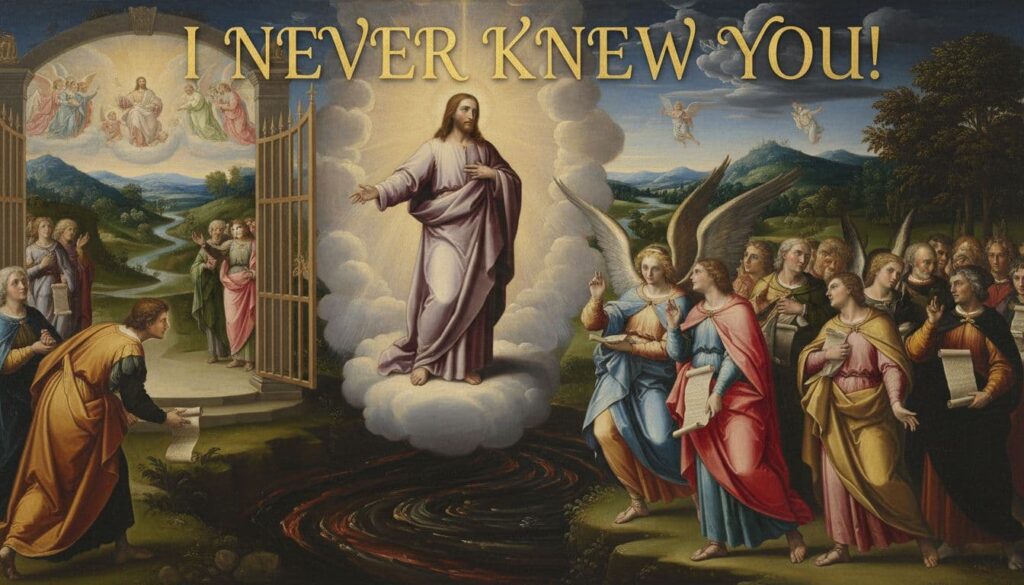
And that’s why iniquity poisons worship. It shifts the center of worship away from God. He is no longer the “why.” He becomes a prop, a platform, or a tool.
How iniquity looked in Lucifer: pride, self-exaltation, and refusing God’s place
Isaiah 14 shows pride speaking out loud: “I will ascend… I will exalt… I will make myself like the Most High.” Ezekiel 28:17 says the heart was lifted up because of beauty, and wisdom was corrupted because of splendor.
That’s the pattern: gifts become a mirror instead of a megaphone.
The core failure isn’t that he was glorious. The failure is what he did with glory. He wanted worship to terminate on himself, not pass through him to God.
Biblical people who mirrored Lucifer’s pattern and fell: Saul, Judas, and Nebuchadnezzar
Lucifer’s pattern shows up in human histories too. Different details, same inner drift.
Saul (1 Samuel 15)
Saul partially obeyed, then tried to cover it with religious talk. He feared people more than God and protected his image. When worship turns into reputation management, you’re standing on thin ice.
Judas (Matthew 26:14-16; 27:3-5)
Judas kept a secret life. Greed wasn’t just a mistake; it became a pathway. He stayed close to holy things while feeding a hidden appetite, and that split life ended in ruin.
Nebuchadnezzar (Daniel 4:30-37)
He looked at his kingdom and said, in effect, “Look what I built.” God answered by humbling him until he learned what real worship is: lifting your eyes and honoring the One who rules.
The warning is blunt: a heart that loves self can wreck any calling, even service that looks like worship.
If you want another angle on what happens when truth gets twisted and a mind hardens into settled rebellion, our article is a strong companion read: What a Reprobate Mind Is According to Scripture.

Why humans can be redeemed but fallen angels cannot, and how true worship defeats Satan’s lies
Humans and angels aren’t the same kind of creature, and Scripture treats their fall differently.
Humans sin in history, in weakness, in deception, and we can repent. We can be redeemed because Yahweh God came down to earth as Jesus, took on human nature and bore human sin. Hebrews 2:16 says Jesus helps the offspring of Abraham (humans), not angels. The Bible never presents an atonement plan offered to fallen angels.
So why can’t fallen angels be redeemed? The simplest Bible-based answer is: no Savior is provided for them. Their rebellion is also portrayed as direct and willful, not as a frail creature being tricked in the same way.
Humans are invited back, not because we’re better, but because God is merciful and Christ is our substitute. We stop sewing “fig leaves” and receive God’s covering. That’s why the Genesis history still hits so hard (and it connects straight to real worship, not self-covering). For a clear picture of “fig leaves” as human effort, see Fig Leaves and the Fall of Adam and Eve.

Lucifer’s fall and transition into Satan: from “shining one” to adversary and accuser
Put the Biblical pieces in a simple sequence:
- Created glorious (language of beauty, wisdom, high place).
- Pride rises, and iniquity is found (an inner twist).
- He’s cast down, removed from holy access.
- His identity becomes his function: Satan, the adversary, the accuser, the deceiver.
Satan is less a birth name and more a chosen role. It’s what opposition looks like when it becomes permanent.
For a readable overview of how many Christians summarize these passages together (while still rooting claims in Scripture), see The Origin and Fall of the Devil.
Worship in spirit and truth (John 4:24): why Satan never understood real worship, and why your worship matters under attack
John 4:24 is Jesus speaking and He says, “God is Spirit, and those who worship Him must worship in spirit and truth.” That sentence slices through a lot of confusion.
Worship is not mainly music. Music can carry worship, but it can also hide a cold heart. Real worship is love, surrender, trust, and obedience aimed at God because He’s worthy.
- In spirit: from the inside, by the Holy Spirit, not just mouth and motion.
- In truth: shaped by who God really is, and by what He’s actually said, not by hype or manipulation.
Satan doesn’t get that. He understands power. He understands fear. He understands how to bargain. But worship that is spirit and truth isn’t a transaction. It’s surrender.
That’s why worship in the middle of pressure is so disruptive. The enemy expects panic, self-focus, or silence. When you worship anyway, you’re refusing his main language, accusation. You’re saying, “God is still God, even here.”
And it confuses him because he treats worship like a ladder. God treats worship like love.
If you want more context on spiritual conflict language (and how Satan’s kingdom aims at control and counterfeit worship), this resource gives added background: The Spiritual Battle Against Evil.
Conclusion
Lucifer in context is tied to the Hebrew helel, a “shining one” image used in a prophetic taunt, and “Lucifer” itself is a Latin translation choice.
Satan means adversary and accuser, a title that describes what he chose to become.
Iniquity is the inner twist that turns gifts into self-exaltation, and it ruins worship by moving God off center.
Saul, Judas, and Nebuchadnezzar show how the same pride pattern can infect human hearts and destroy callings.
Humans can be redeemed through Jesus, but fallen angels have no atonement offered to them in Scripture.
When you worship God in spirit and truth, especially under attack, you expose the enemy’s biggest misunderstanding and you keep God’s worth at the center.
Choose worship that’s honest. Confess twisted motives early. Keep your eyes on God’s glory, not your own shine.
