

The Parable of the Sower Explained (Original Context, Jesus is the Seed, and Spiritual Warfare Today)
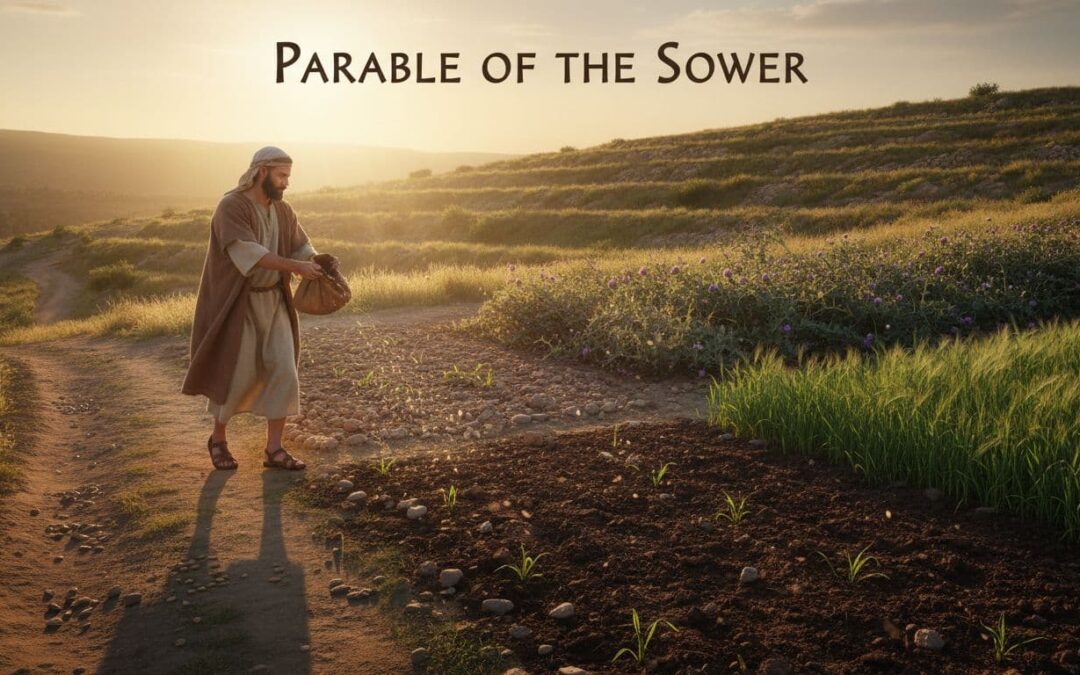
Picture a farmer with a bag of seed on his shoulder. He walks the edge of a field and tosses seed with the same motion, over and over. Some lands on a hard footpath. Some hits rocky patches. Some drops into thorny growth. Some sinks into soft soil.

That simple scene is why people still talk about the parable of the sower. Jesus used an everyday picture to explain something we all feel: why the same message from God can hit two people completely differently.
And here’s the bigger surprise. The “Word” that gets sown isn’t just advice for living better. From Genesis to the prophets, God’s message has always centered on a Person, the promised Messiah. Christians believe that Person is Jesus, the Suffering Messiah and the coming King, both in one.

The parable of the sower in its original language and setting
The parable of the sower appears in Matthew 13, Mark 4, and Luke 8. Jesus taught it to crowds in Galilee, where farming wasn’t a hobby. It was survival. People knew what hard paths, rocks, and thorns did to seed.
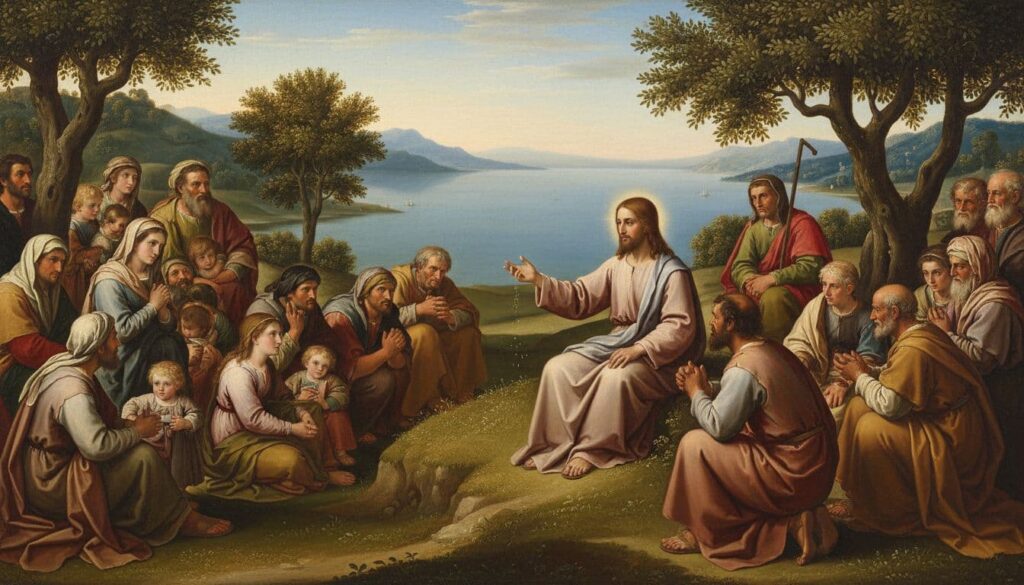
The best part is that Jesus doesn’t leave this one to guesswork. He explains it later to His disciples, which means the meaning is anchored in His own words.
A few key Greek terms help:
- σπέρμα (sperma): seed (the thing planted)
- λόγος (logos): word, message, spoken statement (God’s message)
- ἀκούω (akouō): to hear (often meaning more than sound, it includes receiving and responding)
Matthew calls it “the Word of the Kingdom.” Luke says it plainly: “the Seed is the Word of God.” Either way, the parable of the sower is about what happens when God’s message gets scattered into real human lives.
What is the “seed” and what does it mean to “hear” it?
In the parable of the sower, what’s being “sown” is what people hear. That matters because in Scripture “hearing” isn’t passive.
To “hear” in the Biblical sense often includes:
- Understanding (it clicks)
- Trusting (you lean your weight on it)
- Obeying (you act like it’s true)
That’s why two people can sit through the same sermon, read the same chapter, or hear the same Gospel conversation, and walk away with opposite results. The Seed is the same. The hearts (the soils) aren’t.
Why Jesus taught in parables: revealing and testing the heart
Parables are like sunlight. Same sun, different results. Sun melts wax and hardens clay.
Jesus taught in parables because they reveal truth to willing listeners, and they also expose when someone’s only half-listening, or listening to argue, or listening to stay in control. The parable of the sower makes this point in a way that feels almost unfair at first: the sower is generous, but the soils decide what happens next.
If you’ve ever wondered why a Bible passage felt alive one week and flat the next, you’re not alone. Jesus is describing that struggle, not ignoring it.
For a detailed walk through Matthew 13 in a Jewish context, this long-form lesson is helpful: TorahClass teaching on Matthew 13.
The four soils explained, and the spiritual warfare behind each one
Jesus names four “soils,” four heart-responses, and He also names an enemy. In Matthew’s account, the devil is “the wicked one,” the one who tries to steal what was heard before it can grow.
So the parable of the sower isn’t just about personality types. It’s about spiritual warfare, pressure, temptation, fear, and the slow fight to keep trusting God’s Word.

“By the wayside”: the wicked one steals the word before it sinks in
Jesus describes seed that falls “by the wayside.” That’s the hard-packed path where people walked. It wasn’t soft, and it wasn’t meant for planting. Birds could see the seed and grab it fast.
Spiritually, this is a heart that’s been hardened. Not always by “big evil,” either. It can be hardened by:
- pride (I don’t need this)
- pain (I can’t trust anyone, even God)
- distraction (I’m too busy to think)
- unbelief (I’ve already decided it’s not true)
In the parable of the sower, “the wicked one” is the devil, and his strategy is simple: snatch the message quickly. He uses confusion, mockery, immediate temptation, or plain busyness so the Word never gets time to settle.

Simple ways to fight back after you hear God’s Word:
Slow down: take two minutes of silence after a sermon or reading.
Pray for understanding: “Lord, make this sink in.”
Repeat Scripture out loud: it forces focus.
Ask questions: talk it through with a mature believer.
Stay close to believers: isolation makes stealing easier.
“No root in himself”: quick joy, then falling away under pressure
Next is rocky ground. There’s soil, but it’s shallow, sitting on stone. Seed sprouts fast because the soil warms quickly, but the roots can’t go down. When heat comes, the plant collapses.

Jesus says this person has “no root in himself.” In the parable of the sower, that doesn’t mean the person is fake in every way. It means the Word hasn’t gone deep enough to hold during pressure.
“Sun” in the parable is trouble: persecution, stress, disappointment, delays, unanswered questions. Shallow faith can look strong when life feels easy, but it doesn’t survive heat.
What helps grow roots before the storm hits?
- Count the cost: following Jesus includes hardship.
- Learn the basics: who Jesus is, what the cross means, what grace is.
- Stay consistent when feelings drop: roots grow quietly.
- Plant yourself in community: faith grows better with others.

Pentecost – 5 Christian Fundamentals
If you want a clear overview of how Isaiah connects Messiah’s suffering and kingship, BibleProject explains it well: Isaiah and the Suffering Servant King.
“He who received seed among the thorns”: growth choked by worries, riches, and desires
Jesus’ third soil is the busy one. The plant grows, but thorns grow too, and they choke it. He calls this “he who received seed among the thorns.”
In the parable of the sower, this isn’t immediate rejection. It’s slower. It’s the life where Jesus is “included,” but not treasured. Other things compete for oxygen.
Jesus names three big thorn-categories: worries, riches, and desires for other things.
Modern thorns can look like:
- debt stress and money fear
- endless scrolling and constant noise
- overwork that kills prayer and rest
- entertainment that dulls conviction
- chasing approval, always performing
Pruning doesn’t have to be dramatic to be real:
Simplify: cut one feed, one habit, one commitment that keeps you from God.
Confess idols: call the “thorn” what it is.
Set boundaries: time blocks for Scripture and quiet.
Give generously: it breaks greed’s grip.
Replace worry with prayer: not as a slogan, but as a practice.
“Received seed on the good ground”: a heart that understands, keeps it, and bears fruit
Finally, Jesus describes the person who “received seed on the good ground.” Luke says they “keep it” with patience. Matthew says they “understand” it. Good soil isn’t perfect soil. It’s responsive soil.
In the parable of the sower, fruit is the point. Fruit looks like real change that lasts:
- love that shows up in relationships
- holiness that grows over time
- forgiveness that’s costly but sincere
- service that blesses other people
- boldness to share the Gospel
Jesus mentions different yields (thirty, sixty, a hundred). That’s freeing. God doesn’t grade you against someone else’s harvest. He looks for genuine fruit from a heart that keeps receiving the Word.
Also, good soil can be cultivated. A person can repent, soften, and learn. You’re not trapped in your “soil type.”
The Word of God has always pointed to Jesus: the Seed, the Suffering Messiah, and the King
Once you see that the Seed is “The Word,” a bigger question follows. What is the core message God keeps sowing?
The Bible’s main history isn’t “try harder.” It’s promise and fulfillment, centered on Jesus. That’s why the parable of the sower is so tied to prophecy. The Word people hear is about God’s King and God’s rescue.
God’s “Seed” promise from the beginning: how Scripture points to one coming Redeemer
The “Seed” theme starts early.
- Genesis 3:15 promises a coming offspring (a “Seed”) who will crush the serpent (Satan). It’s a fight, and the Seed comes with suffering, the heel is bruised, which is when Jesus’ heels were nailed to the cross.
- God promises Abraham that through his “seed,” all nations would be blessed (Genesis 12, 15, 22).
- Paul later points out that Scripture aims at one ultimate Seed, the Messiah (Galatians 3:16).
So when Jesus speaks about seed and hearing in the parable of the sower, it fits a pattern God has used for a long time: He plants promise, then He fulfills it in history.
Why some Jewish teaching speaks of two Messiahs, and how Jesus fulfills both
Many Jews in the Second Temple period expected a Messiah who would defeat enemies and restore Israel. But the prophets also spoke of a figure who suffers, is rejected, and bears sin. Those two pictures can feel hard to combine.
Over time, some Jewish tradition described two messianic roles (often phrased as Messiah ben Joseph and Messiah ben David). The idea, broadly stated, is:
- A suffering, rejected figure (linked to Joseph patterns)
- A reigning King from David’s line
Christians don’t say Jews are “silly” for noticing the tension. The Hebrew Bible really does present both themes. The Christian claim is different: one Messiah, two phases. Suffering first, glory later.
And, since we are called to pick up our cross and live our life for God, a sacrifice to God, we too will suffer in this world. Jesus said, “These things I have spoken to you, that in Me you may have peace. In the world you will have tribulation; but be of good cheer, I have overcome the world.” (John 16:33)
This tribulation is the spiritual warfare that follows those who hear God’s Word. Most hear God’s Word at first through a messenger of God saying Scripture, where we take in what we hear through our hearts, this is the soil where we receive what we hear. The devil hates our heart because it can be redeemed by God, and has already been redeemed by God for those who belong to Him.
For those of you who don’t believe, but have heard the Gospel, which is the testimony of God’s Seed Jesus, you have already been introduced to spiritual warfare, which is the wayside, the world’s system, but have not recognized it. God is still hidden to you, the veil is not yet removed, and you have already fallen to the attacks of the enemy.
We all get tempted, and we all fall down, but temptation that leads to unbelief just seems like normal life to those who do not have an ear to hear what God is saying. Spiritual warfare never goes away on this earth, it just gets deeper until we go on to Glory. A righteous person falls all the time and God picks them back up, but a sinner is a person who falls one time & uses it as an excuse to keep sinning.
For a righteous man may fall seven times
And rise again,
But the wicked shall fall by calamity.
Do not rejoice when your enemy falls,
And do not let your heart be glad when he stumbles;
Lest the Lord see it, and it displease Him,
And He turn away His wrath from him. (Proverbs 24:16-18)
Jesus was tempted in every way we are also tempted, but He did not sin. “For we do not have a High Priest who cannot sympathize with our weaknesses, but was in all points tempted as we are, yet without sin.” (Hebrews 4:15)
A respectful explanation of why many Jews expected something different is here: Why Jews Thought the Messiah Would Be Different.
In Jesus, the “two-role” expectation comes together:
Jesus as the Suffering Messiah (first coming)
- Isaiah 52:13 to 53:12: the servant is despised, pierced (in effect), bears sin, and yet is exalted. (For a focused discussion, see Jews for Jesus on Isaiah 53 and the suffering servant.)
- Daniel 9:26: “Messiah shall be cut off.”
- Zechariah 12:10: mourning for the one “they have pierced.”
Jesus as the Reigning King (second coming and final rule)
- 2 Samuel 7: a Davidic throne promise.
- Zechariah 9:9: the King comes humble, riding on a donkey (fulfilled in the triumphal entry).
- Psalm 110: the Lord’s anointed reigns, with enemies made a footstool.
This is where the parable of the sower quietly points forward. The “Word of the Kingdom” is about a King. But before the crown is displayed in public, the King suffers to rescue His people.
If you want a simple explanation of the “two comings” idea from a Christian prophecy angle, this article lays it out: The Mystery of the Two Comings.
How God plants the seed today: messengers, faith, and standing firm when the enemy attacks
God still sends sowers. The parable of the sower isn’t trapped in the first century. The method continues: God speaks, people hear, and hearts respond.
A “sower” can be a preacher, a parent, a friend, a Bible teacher, a coworker who shares their story, or even a stranger who quotes one verse at the exact right time. God uses human mouths, but the Holy Spirit does the heart work.
God’s messengers and the “seed of faith”: how the message gets into the heart
Most people don’t come to faith through one lightning moment. Often it’s more like repeated sowing.
You might receive the Word through:
- a sermon that finally makes sense
- reading a Gospel slowly
- a hard conversation where someone tells you the truth
- a testimony that makes Jesus feel real
- correction that stings, then heals
A simple heart-checklist that matches the parable of the sower:
Listen (pay attention)
Understand (ask what it means)
Repent (turn from what’s killing you)
Believe (trust Jesus)
Obey (take the next step)
Revisit (pray it back to God, memorize it, talk about it)
Practical spiritual warfare: protecting the word, growing roots, and removing thorns
The enemy doesn’t usually wait a week. In the parable of the sower, the stealing happens fast. So a good plan is basic, repeatable, and honest.
Here’s an action plan mapped to the soils:
Soften the “path”: practice humility, confess sin quickly, ask God to make your heart teachable.
Deepen “roots”: a daily rhythm of Scripture and prayer, plus regular church life and real friendships.
Pull “thorns”: reduce noise, address worry with prayer and wise steps, watch what money and comfort are doing to you.
Pursue “fruit”: serve someone, forgive someone, share Christ, give, show up when it’s hard.
Spiritual warfare can feel dramatic, but most of it is everyday pressure that tries to keep the Word shallow, crowded, or forgotten. Don’t underestimate “small faithfulness.” It’s one of God’s main tools.
Conclusion
The parable of the sower is Jesus explaining why hearing God’s message changes some people and bounces off others. The “wicked one” tries to steal it early, pressure tests the roots, and thorns choke what should’ve grown.
But the parable is also hopeful. The Word God sows has a center, Jesus, the promised Seed, the Suffering Messiah who bore sin, and the coming King who will reign in full view. Ask God to make your heart good soil, guard what you heard this week, and take one practical step to deepen roots or pull thorns, because fruit is what God is after.
