
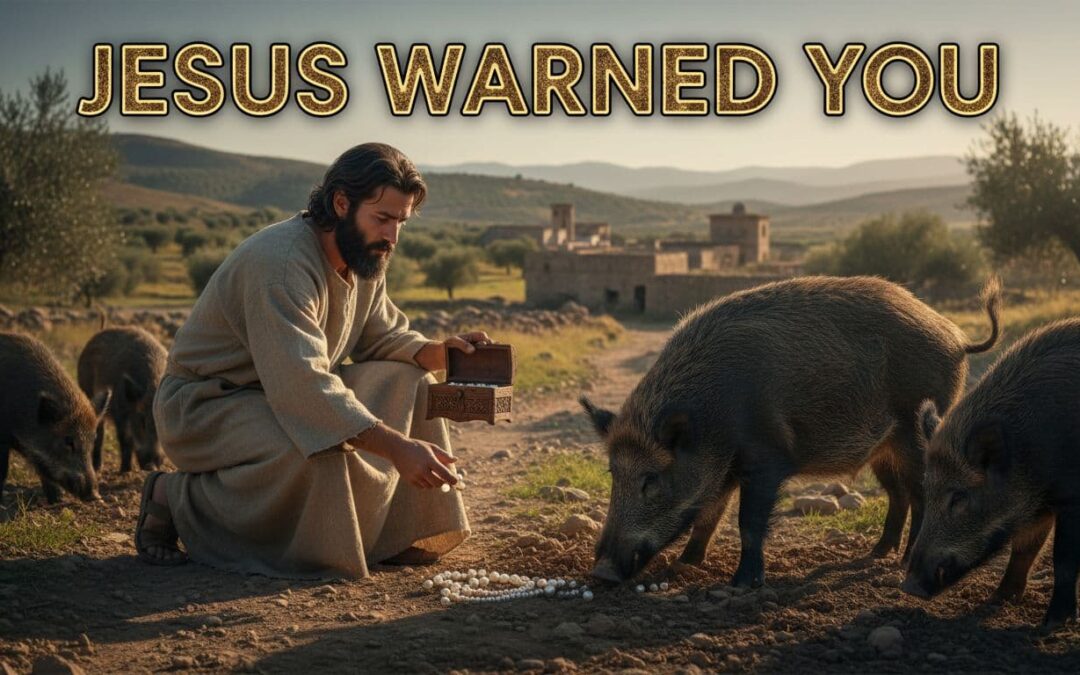

Pearls, Pigs, and the Kingdom: Why Jesus Warned Us (and Why It Still Matters)
A pearl is small enough to hold between two fingers, yet Jesus used it to talk about the Kingdom of God. That alone should make us slow down. In His world, pearls weren’t cute accessories, they were shocking wealth, the kind of value everyone understood without a lecture.
In this article, we’re going to walk through four key passages that keep showing up together: Matthew 13:45-46 (the pearl of great price), Matthew 7:6 (pearls before swine), Mark 5 (legion and the pigs), and Revelation 21:21 (pearl gates). Along the way, we’ll get clear on what we mean by pearls before swine today: sharing holy truth with people who only mock it, twist it, or use it as an excuse to attack.

If we get this right, we don’t just gain Bible trivia. We gain discernment, steadier emotions in hostile moments, and more peace when crowds get loud.
What a “pearl” meant in the Bible’s original language and world

When Jesus said “pearl,” His listeners didn’t picture a cheap bead. They pictured something rare, imported, and priced for the rich. Pearls were a portable fortune. You could carry massive value in a tiny object.
That’s why the “pearl” image lands so hard in Jesus’ teaching. He didn’t pick a random pretty thing. He picked an object that communicated worth right away, even to people who hadn’t studied theology a day in their life.
The Greek word margarites, and why Jesus picked an image everyone valued
The Greek word used in the New Testament is margaritēs (μαργαρίτης), translated “pearl.” It’s a straightforward word, but it carries a cultural punch: pearls were known, desired, and expensive.
So when we talk about pearls before swine today, we’re not talking about sharing something “kind of helpful.” We’re talking about handing over something precious, like the Gospel, holy wisdom, and God’s ways. Jesus chose pearls because His listeners already agreed on this point: some things are too valuable to treat casually.
(If you want a simple overview of Matthew 7:6, this explanation helps: meaning of “pearls before swine”.)
Pearls as a picture of beauty formed through pressure and pain
A pearl forms inside a living creature. Something irritating gets covered over time, layer by layer, until it becomes beautiful. We don’t have to get lost in biology to see why this connects with spiritual life.
God often grows faith this way. Pressure doesn’t feel holy, but God can turn it into fruit. The pearl image lets us say it plainly: what starts as trouble can become treasure.
That matters when we practice pearls before swine today, because the truth we’re sharing may have cost us something. Some of our “pearls” were formed in prayer, repentance, and hard obedience, not in comfort.
Why Jesus put pearls into Kingdom parables, and what “the pearl of great price” is really saying
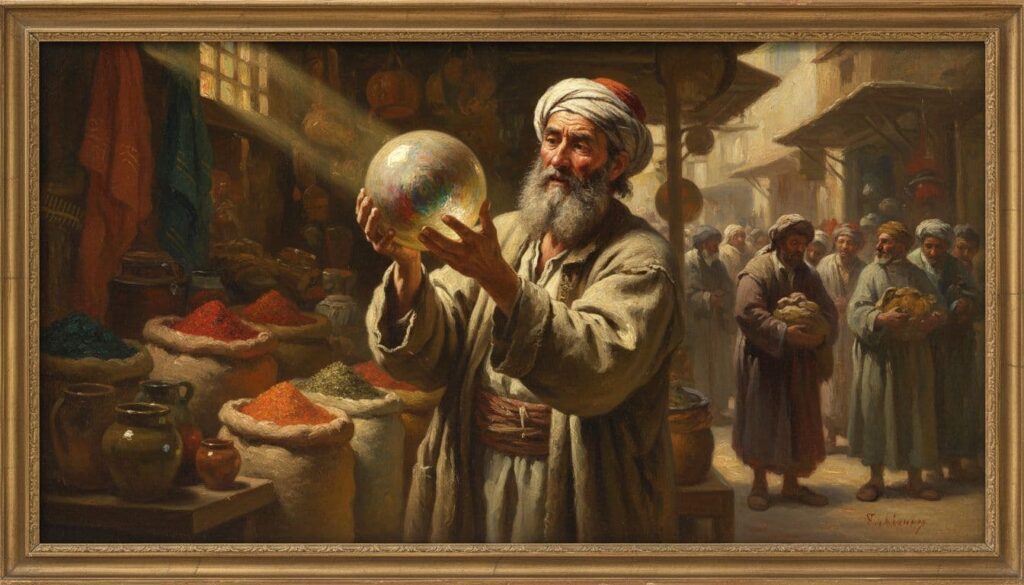
Matthew 13:45-46 is short, but it’s loaded: a merchant searches for fine pearls, finds one pearl of great value, sells all he has, and buys it.
This is not Jesus saying, “Hey, religion is nice.” This is Jesus saying the Kingdom is so valuable that once we truly see it, we can’t treat it like one hobby among many.
For a fuller walk-through of that parable, we can compare perspectives like parable of the treasure and the pearl and He sold all his pearls for one.
A seeker who recognizes true value, and why the Kingdom changes our priorities
The merchant is a seeker. He’s looking. He’s not asleep at the wheel. Then he finds the one pearl, and everything shifts.
That’s what happens when the Kingdom becomes real to us. We start protecting different things. We start saying “no” to stuff we used to excuse. We stop buying lies that look shiny.
It’s also why pearls before swine today is such a serious issue. Since the Kingdom is actually worth everything, we can’t toss its truths around like they’re disposable.
One resource we’ve found useful for keeping the Kingdom concrete (not vague) is Jesus’ teaching on entering the Kingdom of Heaven, because Matthew itself keeps pressing the point that not every “religious” response is real obedience.
What “sell all” does and does not mean
Jesus isn’t teaching that we can purchase salvation with money or good works. The point is surrender. The merchant reorganizes his whole life around what he now knows is priceless.
So when we’re thinking about pearls before swine today, we should ask ourselves: do we act like the Gospel is priceless, or do we treat it like a debate trick?
Sometimes we’re upset because people trample our “pearls,” but we were the ones tossing them out without wisdom.
What happens when we cast pearls before swine, and who the “swine” are in context
Matthew 7:6 is blunt: don’t give what’s holy to dogs, and don’t throw pearls before swine, or they’ll trample them and then turn and tear you up. Jesus isn’t being cruel. He’s being honest about how hardened contempt behaves.
In the Greek, “holy” is to hagion, language Jews used for what’s set apart for God, and in context it likely points to consecrated food from sacrifice, not just “holy stuff” in a vague sense. The “dogs” are kynes, not cute pets, but street scavengers that would rip and fight over meat, which makes the warning feel less like an insult and more like a realism check. Then Jesus pairs it with “pearls” (margaritas) and “pigs” (choirous), and pearls before swine today lands as a picture of something precious being treated like slop, then trampled.
The two images work together, holy to dogs is about what’s sacred being torn up, while pearls before swine today is about what’s valuable being despised and crushed. Either way, the end of the verse says the same outcome, they can turn and attack you, so the issue isn’t only wasted gifts, it’s also the danger of handing spiritual goods to people set on mocking them.
Pearls before swine today often gets used as a snobby mic-drop, but in its original setting Jesus isn’t training His disciples to sneer, He’s training them to practice discernment while they speak about God’s Kingdom. You can hear an echo of this elsewhere, like when Jesus tells the Twelve to move on from towns that reject them (not because they’re better, but because the message won’t be received).
Pearls before swine today, read this way, doesn’t cancel patience, forgiveness, or repeated witness, it just says there’s a time to stop throwing sacred things into a fight. So when you think pearls before swine today, pair it with “don’t give what’s holy to dogs” and you get a blunt rule for speech and ministry, treat holy things as holy, and don’t keep offering them to people who only want to shred them.
So what are the “pearls”? In context, they include holy teaching, correction offered in love, and the good news of the Kingdom. What are the “swine”? Not “people we don’t like.” Not “people who disagree.” Jesus describes them by behavior: trampling, then turning to attack.
That’s why pearls before swine today often looks like this: we share something sacred, they mock it, twist it, and then come after us personally.
A thoughtful visual explanation of this verse is also found in BibleProject’s “Pearls to Pigs”.
“Swine” are not “people we dislike”, they are people who repeatedly despise what is holy
Disagreement can be healthy. Honest questions can be holy. Even sharp debate can be useful if both sides want truth.
But in pearls before swine today, we see a different pattern:
- They don’t want clarity, they want content to ridicule.
- They don’t engage the point, they bait and mock.
- They trample the message, then “turn and tear,” meaning the conversation becomes personal and violent (at least verbally).
Before we label anyone, we can run a self-check:
- Are we correcting with humility, or showing off?
- Are we speaking to help, or to win?
- Are we ignoring obvious fruit and staying in a fight we don’t need?
How to stop casting pearls without becoming silent or fearful
We don’t fix pearls before swine today by going silent forever. We fix it by learning boundaries that Jesus Himself practiced.
Here’s a simple checklist we can actually use:
- Pray for discernment before hard conversations.
- Watch for fruit (do they listen, or only sneer?).
- Answer once or twice, then stop feeding the mockery.
- Leave the conversation when it turns into trampling.
- Invest more time in receptive people who want truth.
This isn’t fear. It’s stewardship.
The demon “legion” and the herd of pigs, what it shows about spiritual chaos and destructive crowds

Mark 5 shows a man tormented by many demons. The demons call themselves “Legion.” They beg Jesus not to send them away, and ask to enter a nearby herd of pigs. Jesus permits it. The herd rushes down a steep bank into the sea and drowns.
We need to keep our categories clean here. The pigs in Mark 5 are literal animals. The “swine” in Matthew 7:6 is a metaphor for people who despise holy things. Still, the narratives echo each other in a sobering way: what is unclean rushes toward destruction, fast.
In Mark, the pigs show up in a scene of open spiritual war, when Jesus casts out a legion of unclean spirits and they rush into a herd that then plunges into the sea (Mark 5:1-13). Those pigs don’t symbolize a hungry sinner trying to survive, they picture what happens when evil is given a place to settle, it drives things toward ruin. In the prodigal son, the pigs are part of the boy’s humiliation and poverty, since a Jewish son ends up feeding unclean animals and wishing he could eat their food (Luke 15:13-16). Same animal, different angle, one narrative shows demons seeking a host, the other shows a rebel learning what his choices buy him.
The pig slop in Luke isn’t just gross farm feed, it’s the taste of life apart from the Father, where even “food” can’t satisfy because it was never meant to (Luke 15:17). That’s why it connects so cleanly to false doctrine, which is religion away from the Father, because bad teaching works like pig slop, it looks like it will fill you up, but it has no life in it.
Paul warned that people with “itching ears” will stack up teachers who tell them what they already want, then they’ll turn from truth to myths (2 Timothy 4:3-4). Apostate voices can sound warm and Bible-ish, but they trade repentance for excuses and trade the cross for self-love, so listeners, likened to the prodigal son if he had never come to his senses then repented and instead acquired a reprobate mind, keep eating their pig slop and stay spiritually hungry, while also feeding the pig slop to anyone who will listen.
Mark’s pigs rush to destruction when the unclean spirits enter them, and that’s a sober picture too, because lies and false doctrine don’t just sit there, they pull people somewhere away from God, which is why the pigs in Mark ran from Jesus. So the question isn’t whether the slop is served with nice words, it’s whether it leads you home to the Father, or keeps you in the pigpen pretending you’re fine.
For deeper background on the Mark 5 account, these are helpful: The Gadarene Demoniac sermon and why Jesus allowed demons into pigs.
Are the “swine” demon-controlled people, or people with a reprobate mind
Matthew 7:6 does not require demon possession. Pearls before swine today can happen with ordinary human pride, bitterness, and hatred of God.
At the same time, the Bible does talk about spiritual blindness that deepens over time. Romans 1:28 describes a “reprobate” mind (a mind that keeps rejecting God until it becomes distorted). In plain language, it’s a person who keeps saying “no” until they can’t see straight.
So our balanced answer is this: pearls before swine today may involve spiritual warfare, but it often involves repeated moral choices. Only God knows hearts fully. We’re called to discern patterns, not pronounce final verdicts.
Why the pigs rushed to destruction, and what that teaches us about how evil works in groups
The text shows a sudden stampede, a violent rush to death. That fits the nature of evil throughout Scripture: it doesn’t build, it breaks. It doesn’t heal, it harms. It doesn’t slow down, it escalates.
This helps us understand pearls before swine today in group settings. Once a crowd gets stirred by deception, it can move like a single organism. People stop thinking clearly. Rage spreads fast. Truth gets trampled because trampling feels like belonging.
Multitudes in the Bible, trampling righteousness, and what “mob energy” looks like now
Scripture talks about “multitudes” and “crowds” often (in Greek you’ll see words like ochlos for crowd and plēthos for a great number). Crowds can be neutral, like people following Jesus to hear Him. But crowds can also become violent.
We see this pattern in:
- Psalm 2, where nations rage against the Lord’s Anointed.
- The Gospels, where crowds shout and pressure leaders to condemn Jesus.
- Acts 4, where opposition organizes against the apostles.
And we still recognize it in pearls before swine today: online pile-ons, coordinated mockery, and public pressure campaigns that reward deception over truth.
We also can’t ignore that crowds and armed groups still trample the vulnerable in the real world. Recent reporting out of Nigeria (late 2025 into January 2026) has described mass killings and large-scale kidnappings of Christian worshippers in places like Niger State and Kaduna State, including attacks during church services and abductions of many people at once. When we hear that, it should move us to prayer and clear-eyed courage, not panic.
How pearls become the gates of New Jerusalem, and why each gate is one huge pearl

Revelation 21:21 says the twelve gates of the New Jerusalem are twelve pearls, and each gate is made of one pearl. That’s wild on purpose.
John is describing the final city of God, where His people dwell with Him, where the curse is gone, and where access is secure. Gates aren’t just decoration. Gates are entry. Gates answer the question: who gets in, and how?
Helpful reference notes on this verse can be found at Revelation 21:21 explained and significance of the twelve gates.
Each gate “was of one pearl”, what that unity says about God’s finished work
Each gate being “of one pearl” paints unity, wholeness, and completion. Not a patchwork entrance. Not a cracked doorway held together by human effort.
When we connect this to pearls before swine today, we notice something important: the same truth that gets trampled in the world becomes the entrance of the eternal city. God doesn’t downgrade what is holy just because crowds despise it.
There’s also a quiet message here about solidarity. God’s work is not fragmented. He finishes what He starts.
If we want another angle on “doors” and access in Revelation, this ties in well with Revelation 3:7-8 and God’s open door.
Pearls as entrances, what is “precious” is also how we enter
A pearl is a fitting image for entry because it’s valuable and formed through suffering. That doesn’t mean the gate is “earned” by our pain. It means God loves to turn what’s costly into something glorious.
So we can live differently now. We can treat truth as treasure. We can refuse to cheapen it in pearls before swine today, even when mockery is loud. We can also remember that the Kingdom isn’t fragile, it’s coming. For a deeper dive into the Kingdom of God and how it relates to our life right now, check out our article on the Millennial Reign:

If we keep our eyes on the end of our history and focus on our eternity, we stop acting like every hostile moment is the final word.
Conclusion: Holding our pearls with courage, kindness, and wisdom
Pearls mattered in Jesus’ world because they were priceless, and He used them to show the Kingdom’s worth. He also warned us about pearls before swine today, because hostile hearts trample holy things and often turn to attack. Mark 5 shows how spiritual chaos drives destruction, and Revelation 21 shows the final reversal: the pearl becomes the gate, the entrance to the city of God.
Let’s keep it simple this week:
- Pray for discernment before we speak, and while we speak.
- Invest in receptive people, not endless mockery, especially in pearls before swine today moments.
- Hold holy truth with courage and kindness, trusting Jesus’ authority now and His coming Kingdom later.
The world can rage, but Christ is still Lord, and the gates are still pearl.
