
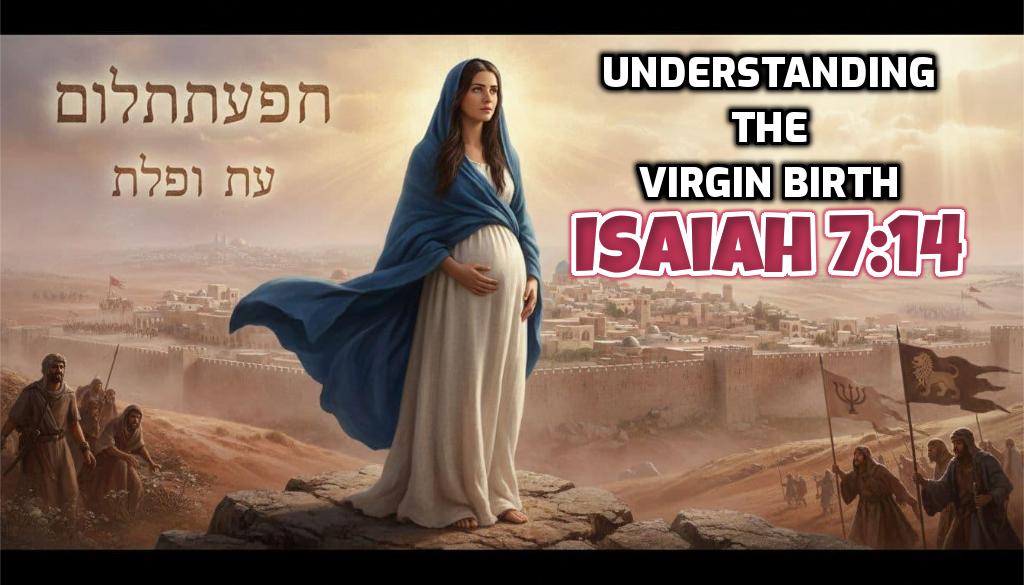

Isaiah 7:14, “Virgin,” and the Sign King Ahaz Needed
Isaiah 7:14 sits right at the center of a big question. Does the verse mean "virgin," or does it only mean "young woman"? That sounds like a small translation debate, but it changes how people read the whole prophecy, and it changes how they read the virgin birth of Jesus.
Why does this verse get so much heat? Because Matthew 1:23 quotes it when he talks about Jesus. So the question is not just, "What does one Hebrew word mean?" It is also, "What kind of sign was God giving, and how does it fit the birth of Christ?"
What is happening in Isaiah 7, and why Ahaz needed a sign?
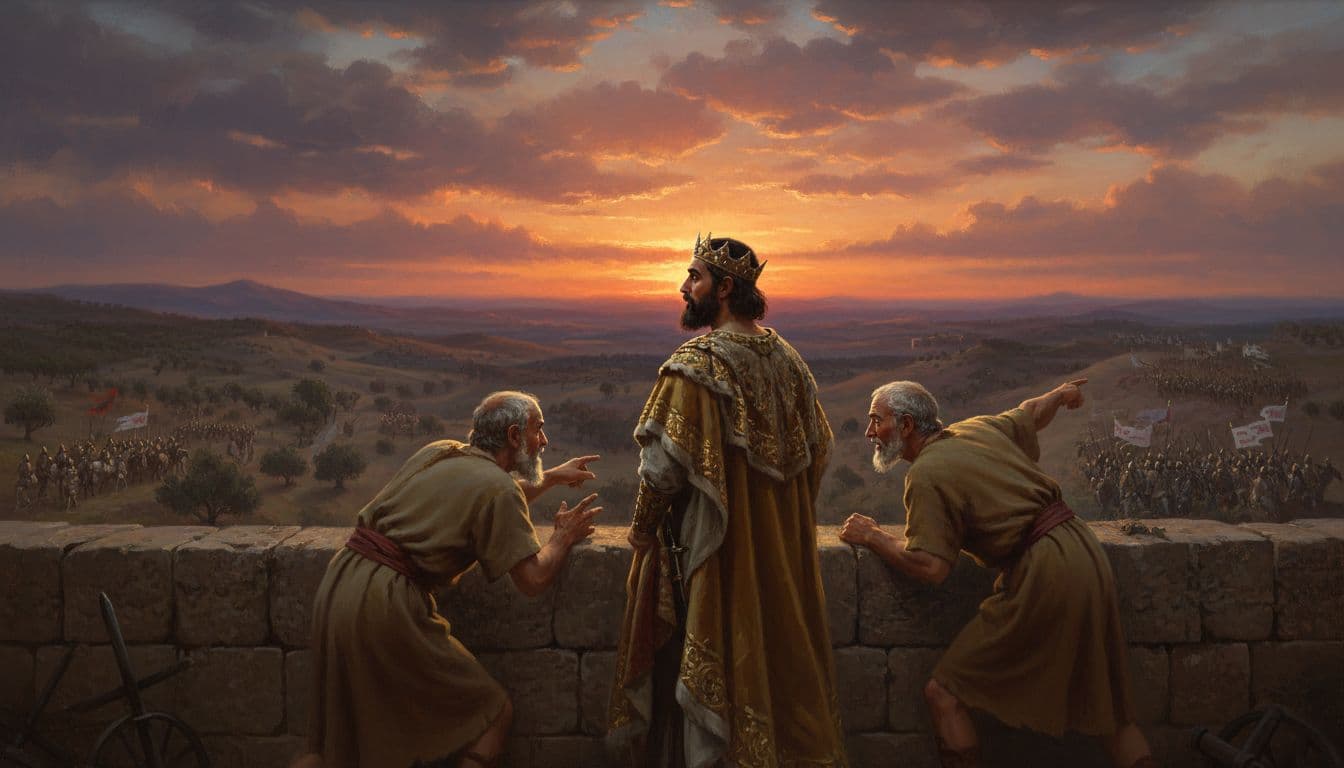
Isaiah 7 is not sitting there in a vacuum. Judah was under pressure, King Ahaz was scared, and God sent Isaiah to speak into a real political mess. Two enemy kings were threatening Judah, and Ahaz had every reason to panic.
The political crisis behind the prophecy
This was the Syro-Ephraimite crisis. Syria and the northern kingdom of Israel had joined forces, and Judah looked weak. Ahaz was the king, but he did not act like a man who trusted God. He looked around for human fixes, alliances, and escape routes.
In Isaiah 7:14, God gives King Ahaz a sign in the middle of the Syro-Ephraimite crisis, when Judah was scared of Israel and Aram joining forces against it. The sign is that "the virgin" or "young woman" will conceive and bear a Son, and His name will be Immanuel, which means "God with us."
In the immediate historical setting, that sign told Ahaz that the threat he feared would not last and that God was still with Judah, even though Ahaz was acting like a man who didn't trust Him.
As for historical records, there isn't an outside ancient record that directly confirms a miraculous birth tied to Ahaz in the way Isaiah 7:14 describes it, but the wider crisis itself fits the Assyrian period pretty well, and the Bible places the prophecy in that real political moment. So the sign is both a message to Ahaz then and a prophecy that points forward to Jesus.
That is the setting for Isaiah 7. God is not tossing out a random religious line. He is speaking to a frightened king in the middle of a national threat.
Why the setting matters for the meaning of the verse
Context matters because it tells you what kind of promise this is. Ahaz needed reassurance that God was still in control, even when enemy armies looked strong. The sign was meant to calm fear and expose unbelief.
So when you read Isaiah 7:14, you should hear the verse in that atmosphere. A weak reading of the text will miss the whole moment.
What does the Hebrew word almah really mean?
The word at the center of the debate is almah. In basic terms, it refers to a young woman of marriageable age. That is true. But the word does not stand alone in a vacuum, and that is where people start talking past each other.
Here is the short version: almah is broader than a technical dictionary word for virgin, but it does not rule virginity out. Context still matters.
| Hebrew word | Basic idea | Range of meaning |
|---|---|---|
| almah | young woman | a young woman, often presumed unmarried, sometimes understood as a virgin by context |
| betulah | virgin | the more direct word for virginity, though even it can need context |
That table helps, but it does not settle the issue by itself. Hebrew words work with context, not just by themselves in a row.
How almah compares with betulah
People often say, "If Isaiah wanted to say virgin, he should have used betulah." That sounds tidy, but Hebrew is not always that tidy. Betulah is the more direct word, yes. Yet almah can still carry purity and unmarried status depending on the setting.
For a closer look at how readers argue this point, see translation issues in Isaiah 7:14. The main point is simple: the debate is not over whether almah means "young woman." It is over whether that is all it means.
Why some people say almah only means young woman
That reading became popular among Jewish interpreters who did not want Isaiah 7:14 read as a prophecy about Jesus. Later, many critical scholars picked up the same line because they wanted to keep the verse inside Ahaz's day and out of miracle language.
That is the real pressure point. If the verse is only about a normal young woman having a child, the prophecy stays small. If it points to a miraculous birth, the verse points beyond itself.
Where the young woman idea came from, and why it spread
This did not start with one named inventor. It grew over time. The "young woman only" reading became stronger in Jewish-Christian debate, then later in modern scholarship that was suspicious of prophecy and miracle claims.
So yes, the issue is linguistic. But it is also worldview. If you do not expect God to do something extraordinary, you will almost always shrink extraordinary texts.
For a concise Christian defense of the verse, Isaiah 7:14 and Christ's Conception is a helpful companion reading.

Why the virgin reading fits the prophecy better
If you read Isaiah 7 as a whole, the virgin reading makes better sense of the promise. God offered Ahaz a sign, not a shrug. A normal birth is not much of a sign. Babies happen all the time.
A regular birth would not be much of a sign
This is where the word "sign" matters. If God says He will give Ahaz a sign, the event has to be something that points beyond ordinary life. A common birth would not shake a fearful king or prove divine control over history.
A sign in Isaiah is not a coincidence with religious language. It is God putting His Word on display.
That is why the virgin birth fits. It is not just unusual. It is the kind of thing no human can produce by planning.
How Matthew 1:23 uses Isaiah 7:14
Matthew does not treat Isaiah 7:14 like a random proof text. He says the birth of Jesus fulfills it. In other words, the New Testament writers did not apologize for the miracle. They built their reading around it.
That fits the whole picture of Jesus. If you want a deeper connection between the prophecy and the birth of Christ, the Virgin Birth Fulfilling Old Testament discussion is worth comparing with Matthew 1:23. Matthew reads Isaiah as a prophecy that reaches its fullest meaning in Jesus.
Why the prophecy points beyond Isaiah’s day
Could the verse have had a near-term meaning for Ahaz? Many Christians say yes. But the ultimate meaning is bigger. Isaiah often works like that. A near event can point forward to a larger fulfillment.
That is what happens here. The child is a sign in Isaiah's time, but Jesus is the one who matches the size of the promise without strain. A true virgin birth is not a side detail. It is the center of the sign.
What does the word for sign mean in Isaiah 7:14?
The Hebrew word is ot. It means sign, mark, token, proof, or wonder, depending on the setting. In Scripture, a sign is something God uses to confirm His Word with power.
Examples of signs in the Old Testament
Think about Moses. The staff becomes a serpent in Exodus 4. The plagues in Exodus 7 through 12 are signs too. God is not just talking there, He is showing.
Other examples are easy to spot. Gideon asks for a sign in Judges 6:17. He wants proof that God is truly speaking. In 2 Kings 19:29, Isaiah says a sign will come for Hezekiah, and it is tied to real deliverance.
The pattern is consistent. God speaks, then God confirms.
How the sign in Isaiah 7 works with the prophecy
That same pattern is in Isaiah 7. The sign is tied to the downfall of the enemy kings and to Judah's survival. The child is not a random baby. The child is a marker that God will keep His promise.
So the sign is not mainly about Ahaz feeling better. It is about God's faithfulness becoming visible in history. That is why the verse is so strong, and why the virgin birth fits its weight so well.
What does calling Him “the Lord” tell us about the prophecy?
Isaiah says, "the Lord himself" will give the sign. That word is not casual. It is Adonai, the sovereign Lord, the covenant God of Israel. This is the One who rules kings, nations, and future events.
The Lord as the God who speaks and acts
This title matters because it tells you who is behind the promise. Not a prophet. Not a man. Not a political helper. The Lord Himself speaks.
That means the sign has divine authority. When Jesus as Immanuel Foretold is preached, the point is not that Jesus came from a clever reading of a verse. The point is that the Lord wrote the verse in the first place.
Why the title matters for the virgin birth
If the Lord is the speaker, then the miracle makes sense. Only God can give a sign like this. Only God can promise a holy birth that is untouched by normal human power. That is why the virgin birth is not a problem for Isaiah 7:14. It is the best fit for it.
The title "the Lord" also keeps the prophecy from being reduced to human politics. Ahaz needed more than a military update. He needed a word from the God who keeps covenants.
A prophecy that fits the whole Bible
Isaiah 7:14 makes the most sense when you read it with its history, its Hebrew, and its New Testament fulfillment. Almah is not a throwaway word, ot is not a weak sign, and "the Lord" is not a small title. All three push the verse toward something greater than an ordinary birth.
That is why the verse is not best read as a plain young woman having a baby. The stronger reading is the one the New Testament takes up, the one that points to the virgin birth of Jesus, and the one that fits the kind of sign God says He will give.
