
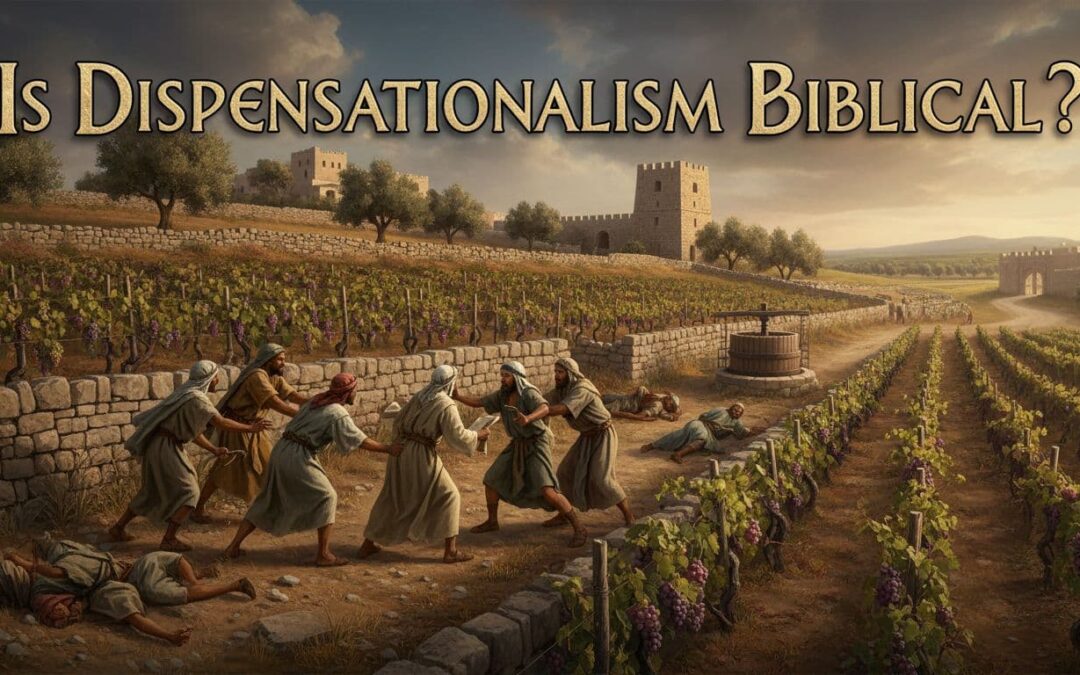

Dispensationalism: Israel, the Church, and Why God’s Promises Can’t Fail
If God can “re-label” a promise after He made it, what do promises even mean? That’s why Dispensationalism keeps coming back into the spotlight. It isn’t just about timelines and charts. It’s about whether God means what He says, especially when He speaks to Israel, and whether the New Testament changes the meaning of Old Testament covenants.
A lot of believers push back hard on Dispensationalism. Some say it’s new, some say it’s too literal, and some say it divides God’s people. We get it, and we won’t dodge the hard texts either. We’re going to stay close to context, use original-language word meaning where it helps, and keep the reading simple.
By the end, we’ll answer the big questions: What does “dispensation” mean in the Bible’s own words? Why do so many say Dispensationalism isn’t Biblical? What did Jesus mean in Matthew 21:43? Does that mean God is done with the Jews? How does 1 Peter 2:8-10 fit? And yes, what role did Darby and the Scofield Reference Bible play?

Dispensationalism in the Bible’s own words: what “oikonomia” really means
The English word “dispensation” sounds old-fashioned, but the Bible’s idea is pretty down to earth. The key Greek word is οἰκονομία (oikonomia), which carries the sense of household management, stewardship, or an administration. Think “assigned responsibility” and “ordered plan,” not “random eras.”
That matters because many critics hear Dispensationalism and assume it teaches different ways to get saved. Classic Dispensationalism has sometimes been taught sloppily, so the confusion is real. But at its best, Dispensationalism is a way of reading Scripture as one salvation by grace, unfolding through different administrations as God advances His plan in history.
A steward in a large household might manage food one way during famine and another way during harvest, but it’s still the same household, same owner, same goal. That’s the heartbeat of Dispensationalism.
If you want a quick overview of the word’s meaning and how it’s used, this summary of oikonomia is helpful: What does the word dispensation mean?
Key passages where the Bible uses “oikonomia” (with plain-English meaning)
The New Testament uses oikonomia several times, and the context is always about stewardship or administration, not “multiple gospels.”
- Ephesians 1:10 uses it for God’s “administration” in “the fullness of the times,” pointing to a planned, timed arrangement that culminates in Christ’s rule.
- Ephesians 3:2 speaks of “the stewardship of God’s grace” given to Paul for the Gentiles, meaning Paul had an assigned role in this stage of God’s program.
- Colossians 1:25 uses it for Paul’s stewardship to “fully carry out the preaching of the word of God.”
- 1 Corinthians 9:17 uses it for a stewardship entrusted to Paul, a responsibility he must discharge.
So our working definition is simple: a dispensation is a stewardship arrangement in God’s management of His plan, revealed across time.
For a detailed Dispensationalism-friendly explanation of this basic framework, see: Explain dispensational theology
What Dispensationalism claims, and what it does not claim
Dispensationalism (in its core ideas) claims a few straightforward things:
God’s promises to Israel are real: Land, nationhood, and Davidic kingship language means what it says, even if the timing is complex.
Prophecy should be read normally: We read figures of speech as figures of speech, but we don’t treat clear covenant statements as if they’re code.
The Church isn’t ethnic Israel: The Church includes Jews and Gentiles in one body in Christ, but it doesn’t erase Israel’s identity.
Romans 9-11 expects a future for Israel: Paul doesn’t sound like God is “finished” with the Jewish people.
Here’s what Dispensationalism does not have to mean (even if some have taught it poorly):
Two ways of salvation: Scripture is clear that salvation is by grace through faith in Jesus. That doesn’t change.
A Bible chopped into disconnected parts: Dispensationalism should highlight continuity in God’s character and promises, while still respecting real changes (like the end of the Mosaic covenant as a ruling authority).
People argue about “seven dispensations,” but the number isn’t the main issue. The main issue is whether God keeps covenant promises as promises.
Why so many Christians are against Dispensationalism, and why they say it is not Biblical
Dispensationalism gets criticized for reasons that are partly Biblical concerns, partly history, and partly bad experiences. In January 2026, the debate is still loud, and in many younger evangelical spaces Dispensationalism has less influence than it did in the late 1900s (with more interest in amillennial or postmillennial readings).
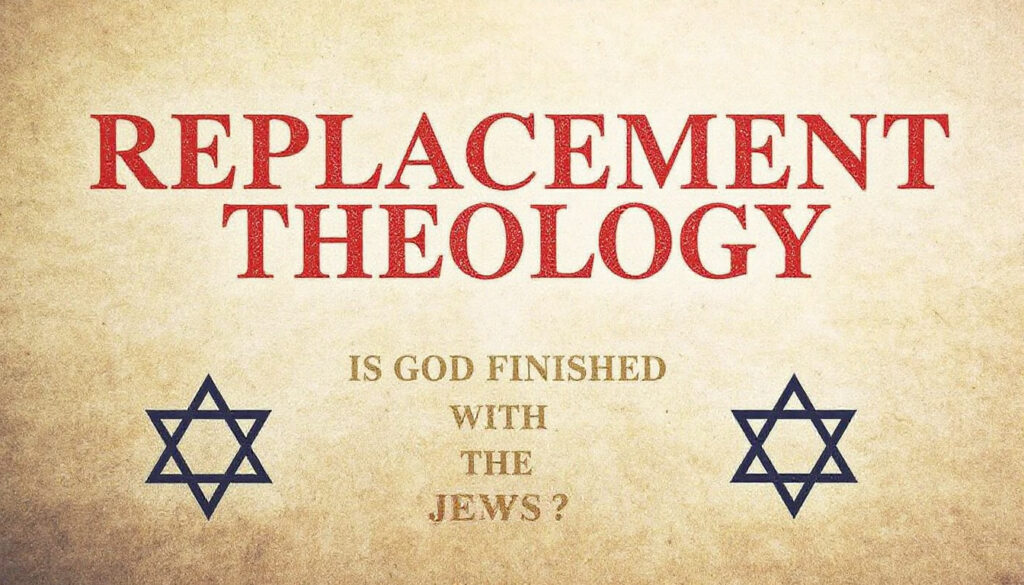
The loudest objections often come from covenant theology or supersessionist (replacement theology) approaches (the view that the Church replaces Israel). A basic comparison from a covenant theology perspective is here: Comparing Covenant Theology and Dispensational Theology
Check out our article about Replacement Theology here:
The top criticisms: “new theology,” “two peoples of God,” and “too literal”
We usually hear critiques like these:
“It started in the 1800s, so it can’t be right.” Darby matters historically, but “late systematizing” isn’t the same thing as “invented from nothing.”
“It teaches two peoples of God.” Critics fear Dispensationalism splits unity. Dispensationalists answer that there’s one redeemed people, but Scripture still has different roles for Israel and the Church.
“It’s too literal and turns prophecy into charts.” That’s a fair warning. Prophecy isn’t a toy. But “literal” really means “read according to genre,” and covenant promises are written like promises.
“It divides the Bible.” Dispensationalism does recognize real shifts (priesthood, temple, law). Critics respond that this threatens one unified story.
For an accessible “differences” overview that shows why people talk past each other, see: The difference between Dispensationalism and covenant theology
The “not Biblical” claim: what verses critics appeal to, and what they mean in context
Three texts show up a lot:
Galatians 3 (Abraham’s seed): Paul argues that Gentiles are included in Abraham’s blessing through Christ. Dispensationalism can affirm that fully, without claiming ethnic Israel stops being Israel. Sharing spiritual blessing doesn’t cancel national covenants.
Ephesians 2 (“one new man”): Yes, Jews and Gentiles are made one in Christ, with hostility removed. That’s about salvation and the Church’s unity, not a statement that Israel’s covenants have been redefined out of existence.
Galatians 6:16 (“Israel of God”): Some read this as “the Church is Israel.” Dispensationalists often read it as a reference to Jewish believers, or as a blessing formula that doesn’t overwrite Romans 11.
We don’t have to twist those passages to hold Dispensationalism. We just have to let each author make the point they’re actually making.
Proving Dispensationalism is Biblically accurate: promises, covenants, and Romans 9-11
The strongest case for Dispensationalism isn’t a timeline. It’s the logic of covenants, and the plain force of Romans 9 -11.
God’s promises are eternal, and our trust in Him is on the line
God’s covenant promises aren’t casual. They’re oath-like. Scripture ties God’s promise-keeping to His character.
- Numbers 23:19: God doesn’t lie or change His mind like humans do.
- Titus 1:2: God “cannot lie.”
- Hebrews 6:13-18: God’s promise and oath are meant to give strong assurance.
Now connect that to the Abrahamic and Davidic covenant stream:
Genesis 12, 15, 17: God promises land, offspring, and blessing through Abraham’s line. Genesis 15 is especially striking because God binds Himself to the promise.
2 Samuel 7: God promises David a lasting house and throne.
Jeremiah 31:31-37: The New Covenant includes forgiveness and a transformed heart, and then God says Israel’s continued identity is as fixed as the sun, moon, and stars (Jeremiah 31:35-37). That’s not a throwaway line. God anchors His promise to the created order.
So here’s the trust issue: if God can make oath-grounded promises and later “mean something else,” then the word promise becomes unstable. And if one promise can fail, then any promise can fail. Dispensationalism isn’t the only system that cares about this, but it puts the pressure point where it belongs, on God’s faithfulness.
Romans 9 -11: the New Testament’s clearest “future for Israel” argument

If we want a clean test case for “Is God done with the Jews?”, Romans 11 answers it head-on: “Has God rejected His people? By no means!” (Romans 11:1).
Paul’s flow matters:
Romans 9 lays out Israel’s privileges and explains that God’s Word hasn’t failed.
Romans 10 shows Israel’s responsibility and the tragedy of unbelief.
Romans 11 explains that Israel’s hardening is partial and has an until. That “until” language is hard to square with “God is finished with Israel forever.”
Paul uses the olive tree image: some natural branches were broken off (unbelief), wild branches were grafted in (Gentiles), and God is able to graft the natural branches back in again. He also warns Gentile believers not to boast.
This doesn’t mean every Jewish person is automatically saved. It means God’s covenant purpose for Israel isn’t canceled. That’s why Dispensationalism keeps pointing people back to Romans 9-11.

For a non-dispensational but helpful engagement with the question, see: Is there a future for Israel?
What Jesus meant in Matthew 21:43 and how it fits with 1 Peter 2:8-10

Matthew 21:43 is one of the most quoted verses in the Israel-Church debate: “Therefore I say to you, the Kingdom of God will be taken from you and given to a nation bearing the fruits of it.”
Some read that and conclude, “God replaced Israel with the Church.” But that conclusion depends on reading the verse as covenant cancellation, not as judgment on corrupt leadership and unbelief in that moment.
A helpful context discussion is here: Matthew 21:43: Who Will Receive the Kingdom of God?
Matthew 21:33-46 context: stewardship lost, not God’s covenant canceled
Jesus is in conflict with the chief priests and Pharisees. He tells the parable of the tenants (Matthew 21:33-46). The tenants (Jewish leadership) reject the servants (prophets), then kill the Son (Jesus). Jesus applies the point to the leaders who reject Him.
So what gets “taken”? In context, it’s stewardship and privilege tied to the Kingdom proclamation and leadership. The leaders are being judged. Their authority is going to be removed.
What gets “given”? The Kingdom message and its fruit-bearing stewardship will be entrusted to a “nation” (Greek ethnos) that produces fruit. That doesn’t have to mean “a new ethnic group replacing Jews.” It can mean a people defined by faithful response to Messiah, which includes believing Jews and believing Gentiles.
In other words, Dispensationalism can take Jesus’ warning seriously without turning it into “Abraham’s covenant has been revoked.”
Does Matthew 21:43 mean God is done with the Jews? No. It means that generation’s corrupt leadership was judged, and the privilege of representing God’s rule was transferred to those who believe and obey. Romans 11 still stands. Many people argue the Jews in Israel today are imposters, not the real Jews who have a covenant with God. See our article about that here:
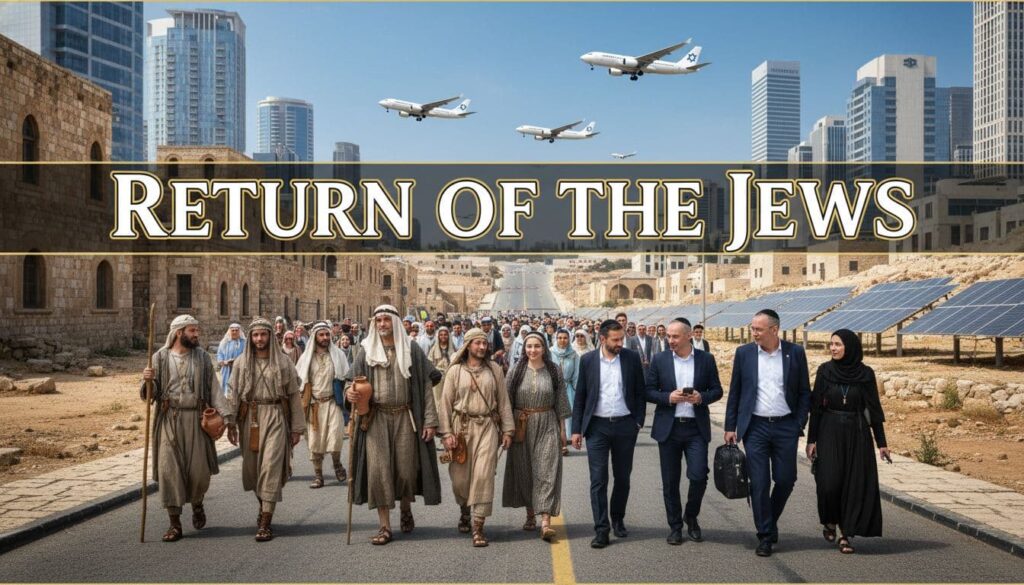
It will happen again. God is going to judge the corrupt leadership of today’s Church who are supposed to be carrying His Kingdom message, and that is when it goes back to the Jews, but that is prophecy for a later date.
1 Peter 2:8-10: “not a people” made God’s people, and what that does (and does not) prove
Peter calls believers “a chosen race,” “a royal priesthood,” “a holy nation,” “a people for God’s own possession” (1 Peter 2:9), and he says, “once you were not a people, but now you are God’s people” (1 Peter 2:10). He also speaks of Christ as the stone of stumbling for those who disobey (1 Peter 2:8).
So is Peter saying the Church replaces Israel? He’s doing something slightly different: he’s applying Old Testament identity language to the Messiah’s people to show our mission, holiness, and belonging. That’s beautiful, and it’s true.
But it doesn’t require the idea that ethnic Israel no longer matters to God. Dispensationalism can say, “We share spiritual covenant blessings in Christ right now,” and still say, “God’s national promises to Israel remain on His schedule.” The New Testament itself can speak in both registers, present unity in Christ, and future hope for Israel.
Was Dispensationalism invented by Darby and the Scofield Reference Bible, and did the Bible predict it would reappear near the end?

Dispensationalism didn’t drop from the sky in the 1800s, but modern Dispensationalism was shaped there in a big way. The question is what was systematized and popularized, versus what was created out of thin air.
Darby and Scofield: what they actually did, and what they did not do
John Nelson Darby (1800-1882) helped organize and spread a coherent dispensational framework, including a strong Israel-Church distinction and an end-times structure that influenced many English-speaking Christians. He didn’t “write the Bible,” and he didn’t invent every idea he taught, but he did systematize and network it.
For a broad historical sketch, this paper is a useful starting point: A Short History of Dispensationalism (Thomas D. Ice)
The Scofield Reference Bible came later as a study Bible with extensive notes and chain references. It became massively influential in American evangelicalism because it put a ready-made system in the margins, right next to the Biblical text. Read it here.
Here’s the key caution: Scofield’s notes are not Scripture, so a person has to study for themselves alongside the notes. Some readers treated those notes like an extra layer of inspiration, and that created problems and backlash. Still, the Scofield Reference Bible didn’t “create” Dispensationalism, it popularized it.
Today, many people of God have their own branded study Bibles with their own notes, but critics don’t make as big a deal out of those as they do Scofield’s study Bible. Why is that? The Scofield Reference Bible still draws heat because it wasn’t just “helpful comments,” it functioned like a built-in theology system that shaped how huge numbers of readers broke down the whole Bible.
Scofield was an influencer in his time, and what he taught made sense to enough people to stand the test of time. Today, influencers come and influencers go, but not many influencers stand the test of time and make it past their time in the spotlight. Some ideas stick, but most go up in flames.
Scofield’s notes popularized a dispensational framework, with sharp lines between Israel and the church, and a strong end-times map, and because those notes sat right under the inspired text, many ordinary readers treated them as if they carried the same weight as Scripture (even though they don’t). That’s the key difference, most personal notes are clearly personal, but Scofield’s were published, standardized, and widely distributed through a major press, so they formed a shared lens for pastors, churches, and Bible schools for decades.
Critics also push back because some of the big interpretive moves connected to Scofield touch hot-button doctrines, like prophetic timelines and how we read passages about Israel, the nations, and the last days (compare how people argue over Romans 11, Matthew 24, and 1 Thessalonians 4). So the critics argue it’s not that notes are “bad,” we all interpret when we read, it’s that Scofield’s notes became a quiet authority in the pew, and once a study Bible starts acting like a second voice on the page, people will argue about which voice they’re really following (and 2 Timothy 2:15 still applies to all of us).
Even critics of Darby-era Dispensationalism admit the rise is tied to history and publishing. For a critical (but informative) read from outside that camp, see: Darby, Dispensationalism, and the Rise of Evangelical…
Did God say Dispensationalism would come to light near Jesus’ return? What we can say Biblically
Scripture doesn’t predict a named system called “Dispensationalism.” We shouldn’t claim it does. But the Bible does teach that, as the end approaches, God’s people will have increased understanding of previously “sealed” prophetic matters.
Daniel says the words are “sealed up until the time of the end,” and that knowledge will increase (Daniel 12:4). He also says the words remain shut up and sealed until the time of the end, with refining and clarity coming through testing (Daniel 12:9-10).
Dispensationalism often argues that Israel’s re-emergence as a major prophetic topic makes sense in that kind of framework. Whether someone is dispensational or not, the New Testament itself tells us to watch God’s ongoing work with Israel carefully, because Romans 11 builds expectation, not closure.


If you really want to understand the purpose of the rapture as it’s tied to what you do with your life on earth, our article on the Millennial Reign explains all that.

Conclusion
Dispensationalism is strongest when it sticks to the Bible’s own categories: oikonomia as stewardship, real covenant promises, and a storyline that moves through distinct administrations without changing the way anyone gets saved. Many objections to Dispensationalism are really objections to how it’s been taught, or to the Israel-Church distinction, and those concerns deserve a fair hearing.
Still, Romans 9-11 is hard to escape: God is not done with Israel, even while He builds one united Church in Christ. Matthew 21:43 is a severe warning about fruitless leadership and rejected Messiah, not a cancellation of Abraham’s covenant, and 1 Peter 2 celebrates our identity without erasing Israel’s future hope.
When we read carefully, we don’t end up trusting a system, we end up trusting a Person, Yahweh. See our article below about who Yahweh is:

God’s promises are reliable because God is faithful, and that’s the ground we stand on when the debates get noisy.
