
Anointing, the Holy Spirit, and Biblical Church Order
When people speak about anointing, do they mean God’s Holy Spirit at work, or a special power one Christian can pass to another? That question matters, because churches can put a lot of weight on a certain preacher, apostle, prophet, or ministry moment.
As Pentecostal believers, we don’t want to dismiss the real power of the Holy Spirit. We also don’t want experience to outrun Scripture. Let’s look at the words, the passages, and the first-century church so you can test every claim with an open Bible.
Anointing in the Bible Begins With Oil, Calling, and the Holy Spirit
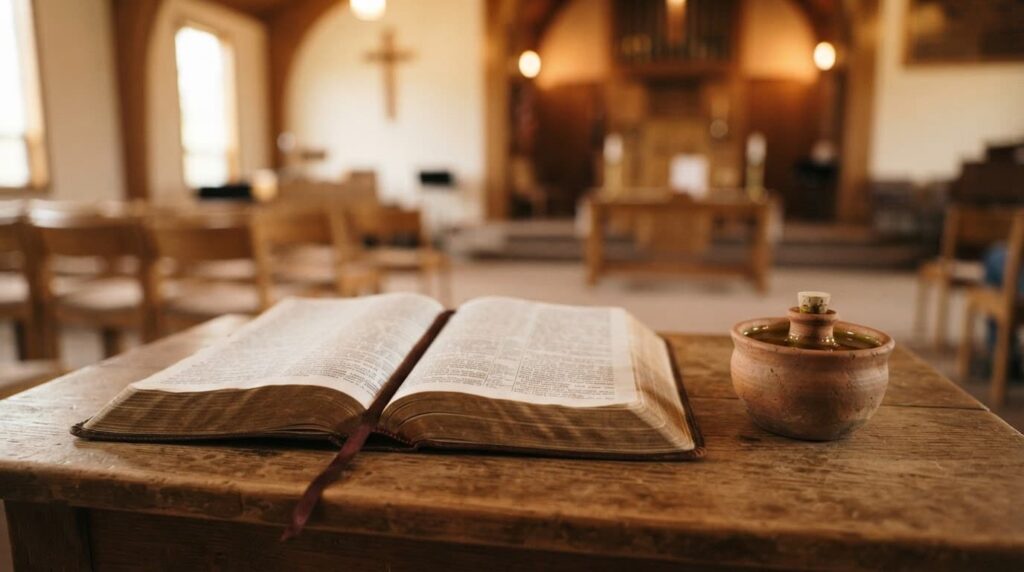
In Scripture, anointing begins with actual oil. God used oil to set apart people and objects for His purposes. Yet oil was never the power itself. The Holy Spirit is God’s presence, power, and calling at work in a person.
Mashach, mishchah, and Messiah
The Hebrew verb mashach means to anoint by smearing or pouring oil. Mishchah refers to anointing or anointing oil. From that same word family comes mashiach, “anointed one,” which gives us Messiah.
Exodus 29:7 and Leviticus 8 show priests being anointed for service. Exodus 40:15 speaks of anointing Aaron’s sons. In 1 Samuel 16:13, Samuel anointed David, and the Spirit of the Lord came upon him. Daniel 9:26 later speaks of the coming Anointed One.
Anointing set someone apart, but it didn’t make that person sinless, untouchable, or greater in human worth. Saul was anointed king and still disobeyed God. The sign pointed to God’s call.
Christ and the personal Holy Spirit
The Greek chrio means “to anoint,” and chrisma means an anointing. Christos, Christ, means “Anointed One.” Jesus read Isaiah 61 in Luke 4:18 and said the Spirit of the Lord had anointed Him. Acts 10:38 says God anointed Jesus of Nazareth with the Holy Spirit and power.
Jesus is the Messiah in a way no Old Testament king ever was. Hebrews 1:9 calls Him anointed above His companions. Then 1 John 2:20 and 1 John 2:27 speak of believers receiving an anointing that remains in them.
John wasn’t building a celebrity class of leaders. He was protecting believers from deceivers. The Spirit teaches God’s people to remain in Christ.
The Holy Spirit is not an invisible force we can use. He speaks, teaches, guides, gives gifts, intercedes, and can be grieved. Jesus called Him “another Helper” in John 14:16 and said He would teach believers. Acts 5:3-4 identifies lying to the Holy Spirit as lying to God. He is God and personal.
The Holy Spirit’s Anointing Empowers Believers in Different Ways
The Spirit’s anointing is for witness, holiness, ministry, and the building up of the church. It isn’t a badge that says one believer is more loved by God than another.
Pentecost gave power for witness
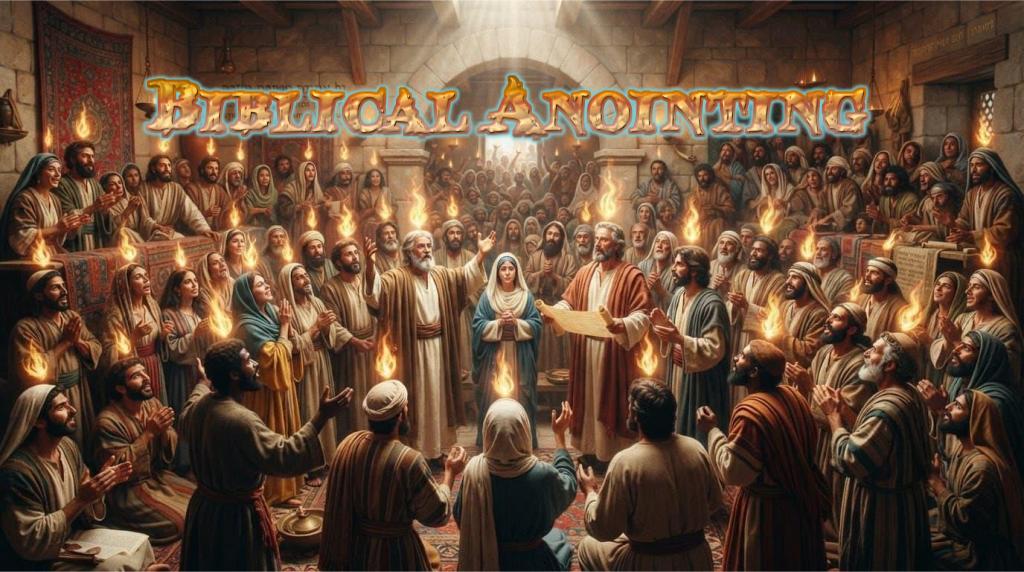
Jesus said in Acts 1:8 that believers would receive power when the Holy Spirit came upon them, and they would be His witnesses. Acts 2 shows the result: bold preaching, prophetic speech, praise, conviction, and thousands hearing about Jesus.
Pentecost was not about creating spiritual celebrities. It formed a witnessing community. Peter, who had denied Jesus, stood up and preached Christ without fear. That’s what the Spirit does. He points people to Jesus.

Acts shows different Spirit manifestations
The Book of Acts doesn’t give one mechanical formula. At Pentecost, the Spirit came upon gathered believers. In Acts 4:31, believers prayed and were filled again, then spoke God’s Word boldly.
In Acts 8:14-17, Peter and John prayed and laid hands on Samaritan believers. In Acts 10:44-46, the Holy Spirit fell on Cornelius’s household while Peter was still preaching. In Acts 19:1-6, Paul baptized disciples and laid hands on them, and they spoke in tongues and prophesied.
You can read these events across the full account of Acts 1 through 28. The order changes, but the center never changes: Jesus is preached, and the Holy Spirit works as He wills.
Gifts are for the common good
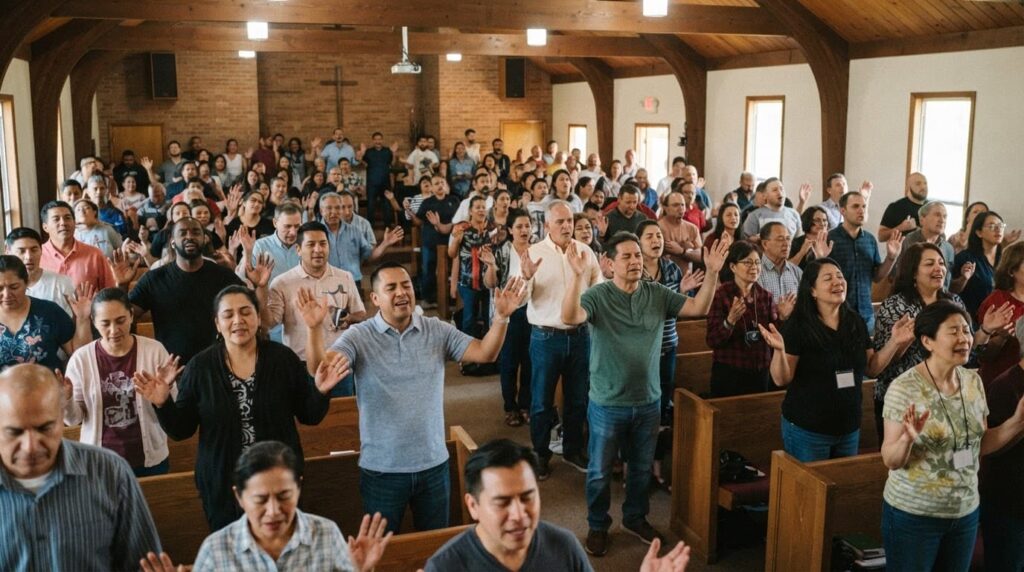
1 Corinthians 12:4-11 names wisdom, knowledge, faith, healing, miracles, prophecy, discernment, tongues, and interpretation. These are different gifts, but they come through the same Spirit.
Verse 7 gives the test many people skip: a manifestation is given for the common good. Gifts aren’t for showing off. 1 Corinthians 13 puts love at the center, and chapter 14 calls for order when gifts operate in the gathering.
A spiritual gift that draws people into loyalty to a person instead of love for Jesus needs to be tested.
No Human Minister Owns a Superior Anointing
God may use a pastor, evangelist, apostle, prophet, or elder to pray with you. We believe that. Scripture also teaches that no minister owns the Holy Spirit or controls God’s power like personal property.

Laying on of hands has real Biblical purposes
Laying on of hands can accompany healing, prayer, commissioning, recognition, and spiritual gifts. Peter and John laid hands on Samaritan believers in Acts 8. The church prayed and laid hands on Barnabas and Saul in Acts 13:1-3 before sending them out.
Paul laid hands on believers in Acts 19:6. He reminded Timothy about a gift connected with prophetic ministry and the elders’ hands in 1 Timothy 4:14. 2 Timothy 1:6 also connects Timothy’s gift with Paul’s laying on of hands.
Those passages matter. Still, they don’t say the minister is the source. God gives the Spirit. God gives the gift. God confirms the calling.
Acts does not give one transfer formula
Acts 2, Acts 8, Acts 10, and Acts 19 have different sequences. That should slow us down before making rules God didn’t make.
In Samaria, the apostles prayed and laid hands on baptized believers. In Cornelius’s home, the Spirit fell before water baptism. In Ephesus, baptism and laying on of hands both appear. These are real events, but they don’t give us permission to sell, rank, or chase anointing.
2 Corinthians 1:21-22 says God establishes us in Christ, anoints us, seals us, and gives the Spirit in our hearts, which is where asking God into our heart during the Sinner’s Prayer is at in Scripture. Different callings and visible gifts don’t mean a better Holy Spirit.
Famous names can become a spiritual distraction
Corinthians had already divided around personalities: “I follow Paul,” “I follow Apollos,” and “I follow Cephas.” Paul corrected them in 1 Corinthians 1:12-17 and 3:4-9. He even thanked God he had baptized only a few there, so nobody could claim baptism in his name.
Paul also refused to make ministry about impressive human wisdom. His message stayed centered on Christ crucified, as 1 Corinthians 2 makes clear.
1 Timothy 5:22 warns against laying hands on someone hastily. Healthy believers don’t reject prayer. They reject manipulation, pressure, and the idea that a famous minister gives a superior version of God’s Spirit.
The First-Century Church Had Order Without Spiritual Castes
The early church was not random. Jesus was Lord, the apostles carried foundational authority, and local churches recognized qualified leaders. But leadership was for serving people, guarding doctrine, and equipping saints.
Apostles, elders, deacons, teachers, and prophets
Acts 1:15-26 records the Twelve replacing Judas. Acts 6:1-6 shows the church recognizing men to help with practical needs. Acts 14:23 says Paul and Barnabas appointed elders in churches.
1 Timothy 3 and Titus 1:5-9 give qualifications for overseers, elders, and deacons. Acts 13 names prophets and teachers in Antioch. These ministries had different jobs, but they were connected to one mission: follow Jesus and make disciples.
There was authority, but not a pyramid where everyone existed to promote one leader. Elders shepherded locally. Apostles planted, corrected, and strengthened churches. Deacons helped meet real needs.

Acts 15 models shared discernment
The Jerusalem Council faced a major dispute about Gentile believers. Peter testified about God’s work among the Gentiles. Paul and Barnabas reported what God had done. James spoke from Scripture. Apostles and elders discussed the matter together.
The final letter said, “It seemed good to the Holy Spirit and to us.” Judas and Silas then encouraged the believers prophetically. That is not one man’s personal control. It is Scripture, witness, prayer, discussion, and submission to the Holy Spirit.
Apostles and Prophets Equip the Body
We believe the five-fold ministry is Biblical. Ephesians 4:11-13 names apostles, prophets, evangelists, pastors, and teachers. Their purpose is to equip believers for ministry and build up Christ’s body.
An apostle is one sent by Christ
Apostolos means one sent or commissioned. The Twelve had a unique role as witnesses of Jesus’ resurrection and the foundation of the church. Acts 1 required a replacement for Judas to be a witness of Jesus’ ministry and resurrection.
Paul defended his apostleship in 1 Corinthians 9:1, Galatians 1:1, and Galatians 1:11-12 because he had seen the risen Lord and received the Gospel by revelation. The original apostles carried foundational authority that no modern leader can copy.
We still see apostolic function in missionaries, church planters, and leaders who establish works and protect doctrine. But an apostle is not more saved than the rest of the body. 1 Corinthians 12:28 lists functions, not levels of human value.
Prophecy strengthens and must be tested
Acts 11:27-30 records Agabus predicting a famine. Acts 13:1-3 includes prophetic ministry in Antioch. Acts 21:9-11 shows prophecy through Philip’s daughters and Agabus.
1 Corinthians 14:3 says prophecy strengthens, encourages, and comforts. Verses 29-33 tell the church to weigh what prophets say. No prophetic word outranks Scripture. No prophet gets to control marriages, money, church decisions, or conscience through fear.
The Father, Son, and Holy Spirit in Apostolic Faith
The apostles didn’t use the later word “Trinity,” but they repeatedly spoke of the Father, Son, and Holy Spirit together. Matthew 28:19 gives baptism in the singular name of the Father, Son, and Holy Spirit.
The three are distinct and fully divine
2 Corinthians 13:14 names the grace of Jesus, the love of God, and the fellowship of the Holy Spirit. Ephesians 4:4-6 and 1 Corinthians 12:4-6 also use this Father, Son, and Spirit pattern.
The Father is God. John 1:1 says the Word was with God and was God. Thomas called Jesus, “My Lord and my God,” in John 20:28. Acts 5:3-4 calls the Holy Spirit God. Philippians 2:6-11 shows Jesus sharing God’s nature and receiving worship.
The Son is not the Father, and the Holy Spirit is not merely another name for the Father. They are distinct in Scripture, yet there is one God. Later Nicene language organized this Biblical witness. It did not replace apostolic teaching.

Keep the Focus on Jesus
Biblical anointing moves from oil and commissioning to Jesus the Messiah and the Holy Spirit dwelling in believers. The Spirit gives gifts, power, boldness, and direction, but always for love, service, and the common good.
We should honor healthy leaders, welcome prayer and laying on of hands, and receive the Spirit’s work with faith. But we must never place a minister between us and Christ.
Test teaching by Scripture. Follow Jesus. Let every gift, every prophetic word, and every act of ministry lead back to the Holy Spirit’s glory to Christ.