
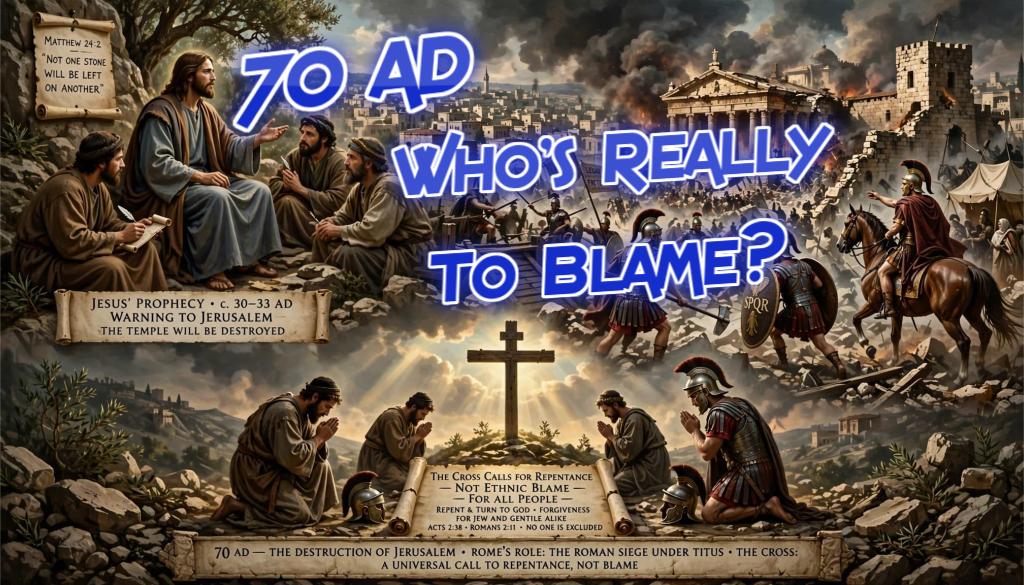

Jerusalem’s Fall in 70 AD: Prophecy, Judgment, and Jesus
Jerusalem and the Second Temple fell in 70 AD through Roman action under Titus, yet Scripture presents Rome as the historical instrument of God's judgment. Jesus warned Jerusalem more than once, including His statement that the Temple's stones would not remain together (Matthew 24:2), and His fuller warnings about siege, destruction, captivity, and desolation (Luke 21:20-24). The Gospel passages don't name the year 70 AD, so we'll separate what the text clearly says from interpretations connected to that destruction.
We'll also examine how Rome later renamed Judaea Syria Palaestina around 135 AD, after the Bar Kokhba revolt, and why people often blame Rome for Israel becoming Palestine. Rome carried out the destruction and changed the province's name, but Scripture presents God as the One who judged Jerusalem, while Hadrian's exact motives remain debated. Finally, we'll address why blaming all Jewish people for Jesus' death is wrong: Jesus is God, He willingly laid down His life for our sins, and the Father, Son, and Holy Spirit are each associated with His resurrection. Baptism in Their singular name means belonging under Their one divine authority, as we explain alongside the Father, Son, and Holy Spirit.
God’s Warnings About Israel’s Coming Destruction in 70 AD
The Bible's warning about Jerusalem's destruction doesn't begin with the Roman army. The Old Testament already gives us a pattern: God warns His people, calls them back to obedience, and allows judgment when rebellion continues. These passages focus on covenant responsibility, Jerusalem's leaders, and the loss of the sanctuary, not on hatred toward every Jewish person.
How Deuteronomy and the Prophets Describe Siege Judgment
Deuteronomy 28:15-68 describes the covenant curses that would follow persistent disobedience. An invading nation would come from far away, consume the land, shut the people inside their cities, and bring famine, terror, and humiliation. A city once blessed by God would become trapped under siege. Families would face desperation, the nation would be scattered, and the sanctuary-centered life of Israel would collapse.
That language gives us the Biblical idea of a covenant curse. It isn't a random disaster without meaning. It is judgment connected to rebellion against God's covenant. Deuteronomy does not give us a simple one-to-one prediction that every detail must refer only to 70 AD. Still, many Christian interpreters see its siege pattern echoing in Jerusalem's destruction under Rome.
Jeremiah preached the same warning before Babylon destroyed Jerusalem. In Jeremiah 7, the people trusted the Temple while practicing injustice and disobedience. The Temple wasn't a guarantee that God would protect a rebellious city. Jeremiah 26 shows the danger of rejecting that message, even when religious leaders and people wanted the prophet silenced.
The Hebrew idea of desolation points to a place being left ruined, emptied, or abandoned. It connects with the loss of the Temple, the center of Israel's worship and national life. Daniel 9:24-27 also speaks about the city, the sanctuary, and desolation, but its timing and referents remain debated among Christians.
The prophetic pattern is clear, even when interpreters disagree about the exact fulfillment: warning comes before judgment, and religious privilege doesn't cancel covenant accountability.
Jesus Warns Jerusalem Before the Temple Falls
Jesus stood in that same prophetic tradition. He lamented Jerusalem because it rejected God's messengers, then warned that judgment was coming. Read Matthew 23:37-24:34 alongside Mark 13:1-30. Jesus said the Temple's buildings would be torn down, and not one stone would remain upon another.
The Greek vocabulary supports the physical setting without settling every interpretation. Oikodomē refers to a building or structure, while lithos means stone. In Luke 19:41-44, Jesus wept over Jerusalem and said its enemies would surround it, wall it in, and tear it down. Luke's wording uses a form related to kyklō, meaning to encircle or surround.
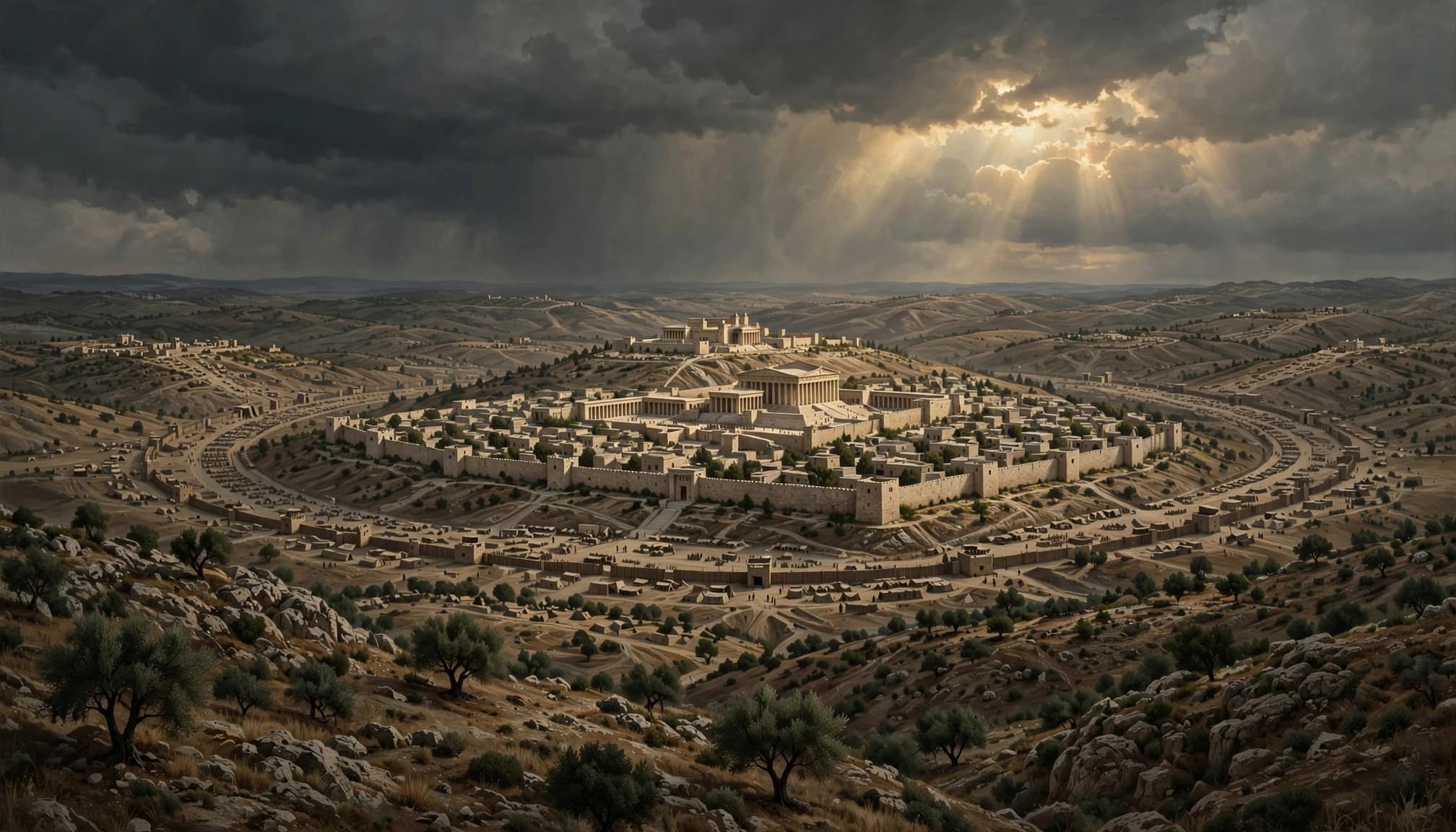
Many Christians understand these warnings as referring substantially to Jerusalem's fall in 70 AD. Others see a near fulfillment in that event alongside a future dimension. The historical connection is especially strong in Luke 21:20-24, where armies surround Jerusalem, the city falls, and the Gentiles trample it.
The Key Phrases That Shape the 70 AD Interpretation
Several phrases control the debate. Matthew and Mark mention the abomination of desolation, while Jesus also says, "this generation will by no means pass away till all these things take place" (Matthew 24). Many readers understand "this generation" as Jesus' contemporaries, but other Christian traditions apply the language differently.
Luke's reference to armies around Jerusalem gives the clearest historical connection to the Roman siege. Still, "all these things" and "the days of vengeance" raise questions about the full scope of the discourse. We can affirm the destruction of Jerusalem and the Temple in 70 AD without claiming that every statement has only one possible meaning.
For additional historical context, compare this Biblical foundation with the Roman destruction of Jerusalem.
Why Jerusalem Fell in 70 AD and How Rome Carried Out the Judgment
Jerusalem fell because a Jewish revolt against Rome met a Roman campaign designed to crush it. Historically, Rome was the immediate cause. In the theological reading of Scripture, however, God used Rome as an instrument of judgment. We need to hold both truths together without confusing military responsibility with divine meaning.
The Roman Siege, Starvation, and Destruction of the Temple
The First Jewish Revolt began in 66 AD after growing hostility toward Roman rule, taxation, and local administration. Vespasian led Rome's campaign through Galilee and Judea, capturing rebel strongholds before Nero's death in 68 AD interrupted the operation. Vespasian then became emperor, and his son Titus took command of the final campaign against Jerusalem in 70 AD.
Josephus's Jewish War, especially Books 5 and 6, is our major near-contemporary account. His narrative describes Titus arriving to besiege Jerusalem, while rival Jewish factions led by Simon bar Giora and John of Gischala fought inside the city. Internal violence weakened Jerusalem before the Roman army broke through its defenses.
Titus brought several Roman legions and supporting forces against the city. Roman soldiers built siege works, raised embankments, attacked the walls, and eventually constructed a circumvallation wall around Jerusalem. This outer wall cut off movement, supplies, and escape. People who tried to leave faced capture or death, while those trapped inside faced hunger.
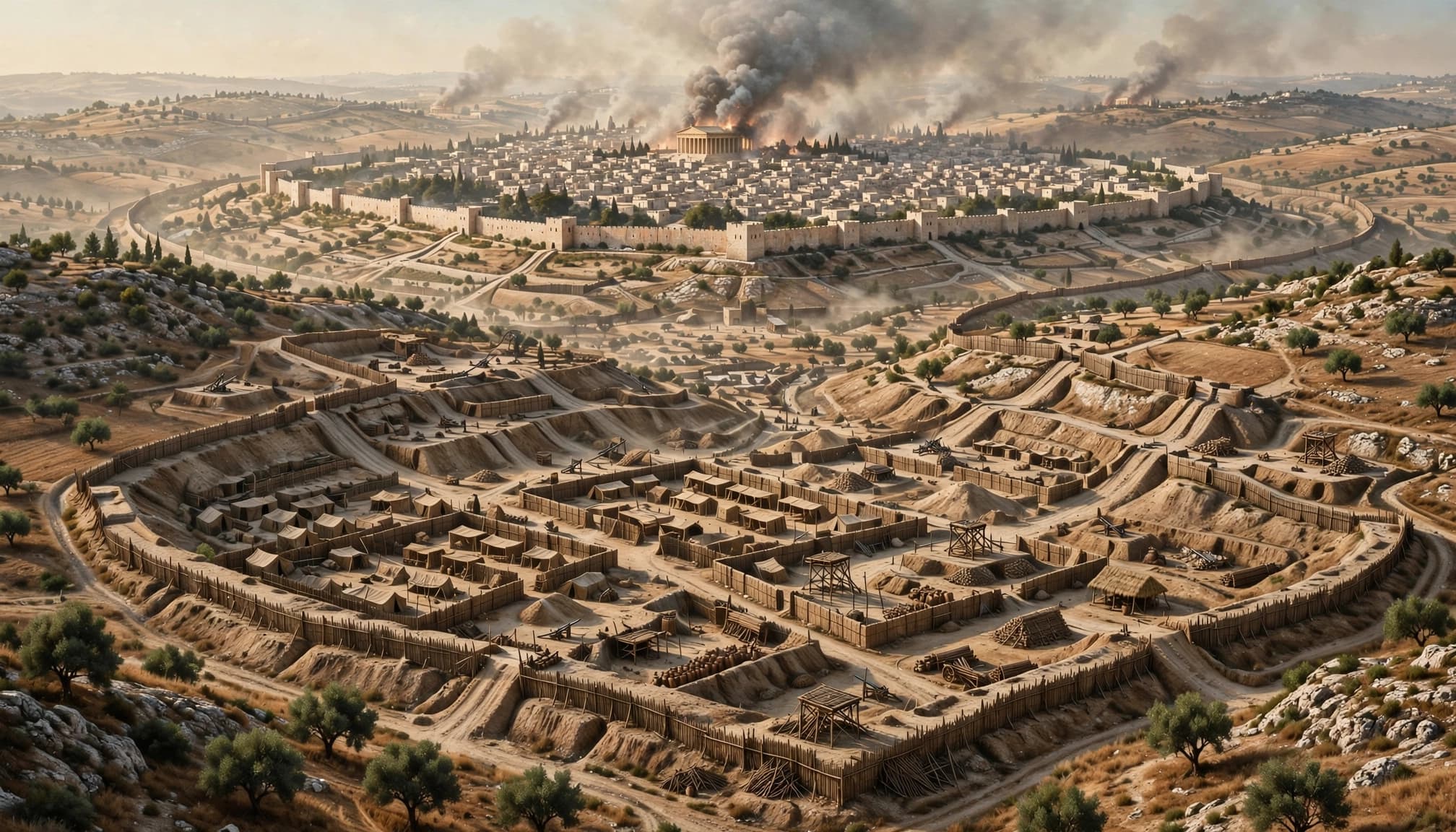
Josephus describes the starvation in horrifying detail. Food disappeared, prices rose, and desperate people searched for anything they could eat. The exact number of deaths cannot be independently verified. Josephus reports enormous casualty and captivity figures, but he wrote under Flavian patronage and used dramatic rhetoric, so modern historians accept the scale of suffering without treating every total as certain. His account of the Roman destruction of Jerusalem remains essential, but it must be read with care.
The Romans captured Jerusalem, killed many inhabitants, enslaved others, and scattered survivors. The sanctuary was burned during the fighting. Josephus says the fire began against Titus's wishes, but that detail reflects his presentation and cannot be confirmed with certainty. The destruction itself is beyond serious doubt. The Temple was not merely another building. Its loss meant the collapse of Israel's central place of sacrifice, worship, national memory, and public identity.
Josephus places the burning on the tenth day of the month of Av. Later Jewish tradition remembers the destruction on the ninth of Av, Tisha b'Av. That connection remains an important part of Jewish memory, but exact dating claims should recognize the difference between Josephus's report and later liturgical tradition. Readers can compare Josephus's Book 6 account, which covers the final month and capture of Jerusalem.
Human Responsibility and Divine Judgment Are Not Opposites
Rome caused the destruction through armies, siege tactics, killing, and enslavement. Roman commanders and soldiers were responsible for those actions. Jewish factional violence, rebellion, corruption, and internal conflict also shaped the disaster, but those facts never justify blaming all Jewish people. Collective ethnic blame is neither historical analysis nor Biblical faithfulness.
The Bible distinguishes between an immediate cause and an ultimate theological meaning. Deuteronomy 28:15-68 describes siege, famine, defeat, and scattering as covenant judgment. Jesus wept over Jerusalem and warned that its enemies would surround and destroy it (Luke 19:41-44). He also spoke of Jerusalem surrounded by armies and its people falling by the sword (Luke 21:20-24).
God can judge through human nations without approving every act those nations commit. That truth should produce humility, repentance, and faithfulness, not ethnic hostility or political triumphalism. Rome carried out the judgment, but Scripture presents God as the final Judge.
How Judea Became Known as Syria Palaestina Under Rome
The destruction of Jerusalem in 70 AD and the later name change under Emperor Hadrian were separate events. Titus destroyed the city and Temple during the First Jewish Revolt. Hadrian renamed the province decades later, after the Bar Kokhba revolt, commonly dated from 132 to 135 AD. Those events are connected by Roman rule, but we shouldn't collapse them into one moment.
What Rome Changed, and What the Historical Record Actually Shows
Before Hadrian's reorganization, Judaea was the common Roman provincial name. After the revolt, the province appears as Syria Palaestina, while Jerusalem was refounded as the Roman colony of Aelia Capitolina. The new name is visible in later inscriptions, coins, and military documents. A military diploma dated to 139 AD is especially important because it already uses Syria Palaestina, showing that the new provincial name was established by that time.
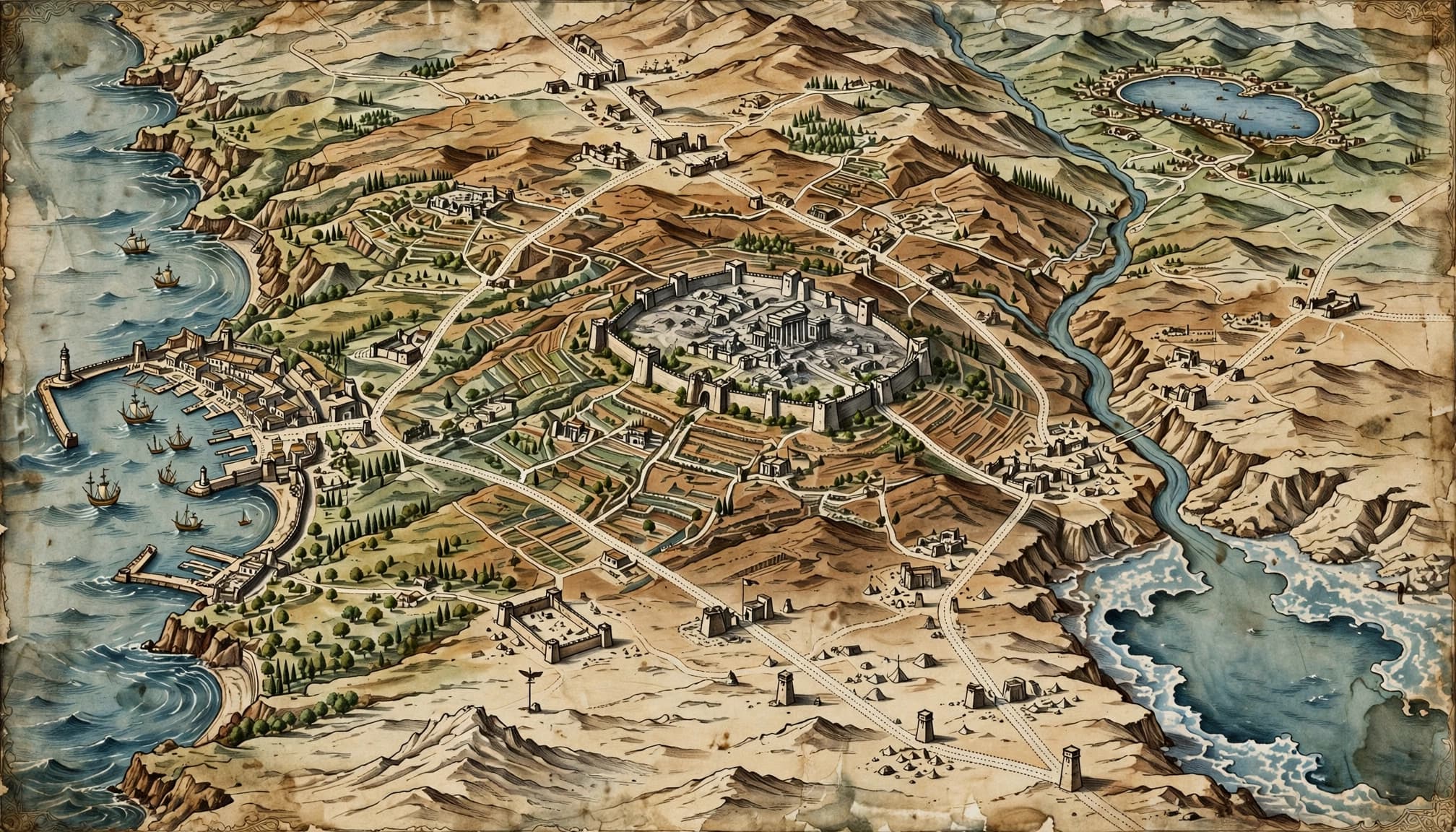
The timing is clearer than the motive. Scholars generally place the change during or shortly after the Bar Kokhba revolt, but no surviving Roman document says, "Hadrian changed the name for this exact reason." Some historians see an administrative reorganization. Others think Rome connected the province with an older regional term or tried to weaken the public association between the land and Jewish national identity. The political symbolism is plausible, but it shouldn't be presented as proven fact.
The word Palestine itself wasn't invented by Hadrian. It comes through Greek and Roman forms connected with Philistia and earlier regional usage. Rome changed the official provincial name, but Rome didn't create every use of the geographic term. That distinction matters.
The Roman name change is historical evidence of imperial administration, not proof that Rome invented every later Palestinian identity.
The word continued in different settings after the Roman period. Byzantine administrators used names such as Palaestina Prima, Palaestina Secunda, and Palaestina Tertia. After the Arab conquest, Muslim rulers used Palestine as a regional term within changing Islamic administrations. Crusader writers used it geographically, while the Ottoman Empire governed the area through larger imperial districts rather than one modern nation-state called Palestine.
Modern political meanings developed much later, especially through British Mandate history, Israeli statehood, and Palestinian national identity. We shouldn't assign those modern identities directly to ancient populations. For a scholarly discussion of the revolt from the Roman side, see the Roman point of view on the Bar Kokhba revolt.
Why Some Christians Say God, Not Rome, Had the Final Say
Rome explains how Jerusalem was destroyed. Christian theology asks why judgment came. Jesus connected Jerusalem's coming desolation with its rejection of God's messengers and its failure to recognize the time of God's visitation (Matthew 23:37-24:2). He wept over the city, so His warning wasn't detached from compassion.
In this reading, the destruction was connected to covenant unfaithfulness, not Jewish ethnicity. God permitted Rome to act as an instrument of judgment, but Roman commanders, soldiers, and political leaders still carried responsibility for killing, enslavement, and destruction. God's sovereignty doesn't erase human guilt.
We also need to avoid fatalism. Saying God judged Jerusalem doesn't mean every Roman action was good or that human choices were meaningless. It means we Christians believe God can direct history while people remain accountable for what they choose to do.
The same distinction protects us from antisemitism. Jesus' warnings concern Jerusalem's response to God, not permission to condemn Jewish people as a whole. As we explain in the historical roots of the Christian church, the early church grew out of a Jewish setting, and the Gospel cannot be used to excuse hatred against the people from whom the Messiah came.
Who Crucified Jesus, and Why the Cross Was His Willing Sacrifice
The Passion narratives identify several human actors in Jesus' death. Roman authority approved the sentence and carried out crucifixion, while certain Jewish leaders opposed Jesus and pressed for action against Him. The New Testament doesn't erase either fact, but it also refuses to reduce the cross to one ethnic group.
Roman Power, Jewish Leadership, and the Sin of the World
Crucifixion was a Roman form of execution. Pontius Pilate had the authority to approve the sentence, and Roman soldiers carried it out. At the same time, some Jewish leaders accused Jesus, handed Him over, and urged the Roman governor to act. Acts 2:23 holds these truths together: Jesus was delivered according to God's plan, yet human beings were still responsible for putting Him to death (Acts 2:23).
Acts 4:27-28 names Herod, Pontius Pilate, the Gentiles, and the peoples of Israel as participants in the opposition against Jesus. Yet the passage also says they did what God's hand and purpose had determined beforehand (Acts 4:27-28). God's sovereignty doesn't make their actions righteous. Human responsibility and God's purpose remain together.
We must also be careful with the phrase "the Jews." It is too broad, and it has often been used to justify hatred against Jewish people. Jesus was Jewish. His apostles were Jewish. The first disciples and the earliest church were Jewish. Even the leaders who opposed Jesus cannot be turned into a charge against every Jewish person, then or now. We explain this more fully through the Jewish roots of the church.
The cross doesn't give Christians permission to attack another people. It gives us reason to confess our own need for grace.
Sinful humanity stands in need of forgiveness. Christians should approach the cross with repentance, not ethnic blame.
Jesus Laid Down His Life Instead of Having It Taken From Him
Jesus described His death before it happened. In John 10:11-18, the Good Shepherd says He lays down His life for the sheep. He also says that no one takes His life from Him. He has authority to lay it down and authority to take it up again (John 10:11-18).
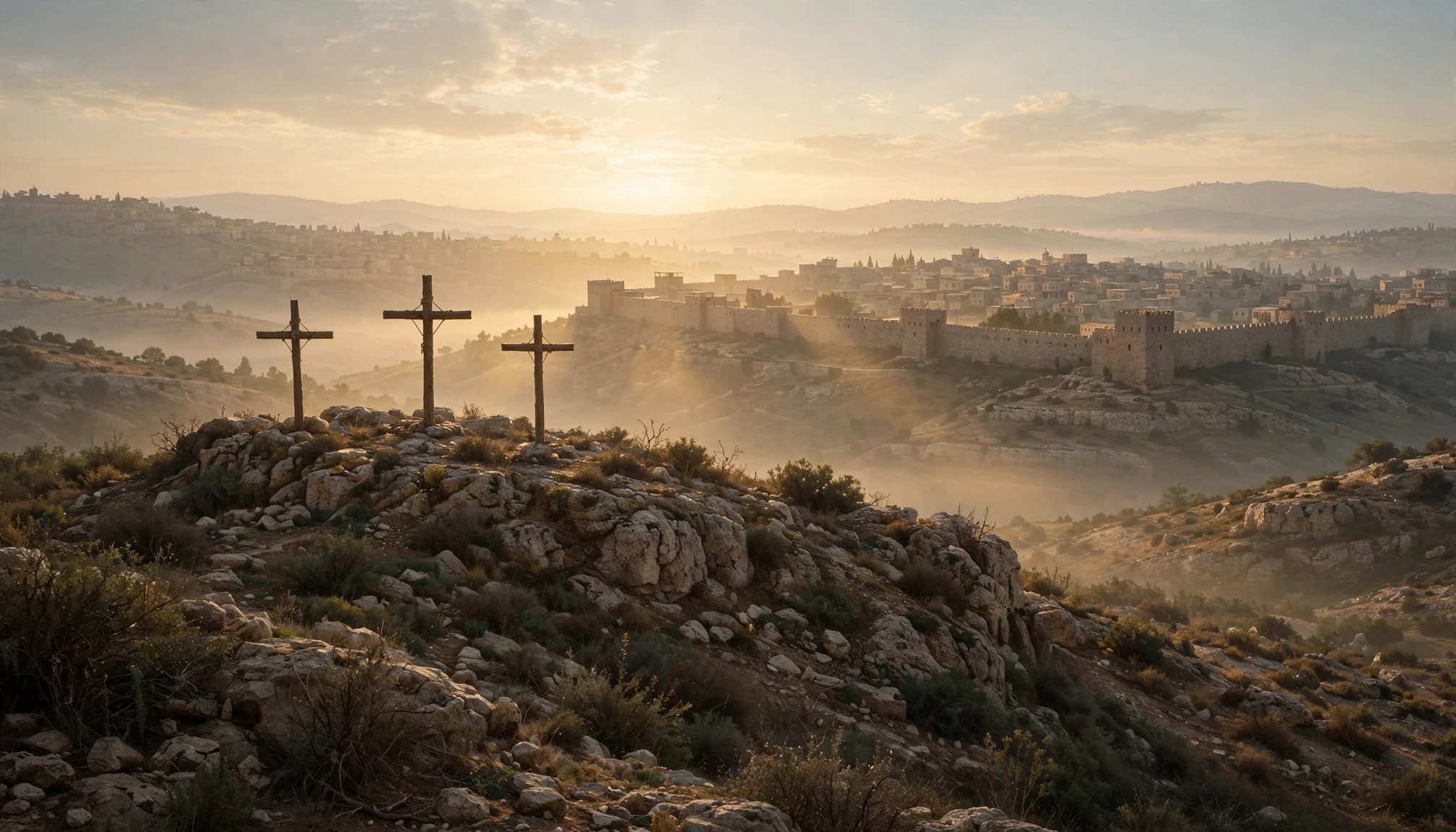
That changes how we understand Calvary. Rome used violence, and the leaders who sought Jesus' death acted unjustly. Still, the cross was not an accident that defeated Him. Jesus accepted the cross as the willing offering He gave in obedience and love. He came to give His life as a ransom for many (Mark 10:45), and when His suffering was complete, He said, "It is finished" (John 19:30).
The cross includes substitution, because Jesus bore our sins in His body (1 Peter 2:24). It includes forgiveness and reconciliation, because His death brings sinners back to God. Christian traditions describe the atonement through several complementary models, but we agree that the cross defeats sin and opens the way to restored fellowship with God. Paul makes it personal: the Son of God "loved me and gave Himself for me" (Galatians 2:20).
Why the Cross Requires a True Divine Savior
The New Testament presents Jesus as more than a human victim. John begins by calling Him the Word who was with God and was God, then says the Word became flesh (John 1:1-18). Jesus says, "Before Abraham was, I AM" (John 8:58), and Thomas worships the risen Christ as "My Lord and my God!" (John 20:28).
Paul describes Christ as the image of the invisible God, the Creator and Sustainer of all things, through whom God reconciles sinners by the blood of His cross (Colossians 1:15-20). Hebrews says the Son reveals God's glory, upholds all things, and makes purification for sins (Hebrews 1:1-4).
The Father sends the Son, the Son willingly gives Himself, and the Holy Spirit applies salvation. The Father and Son aren't opposing parties, with Jesus forced to satisfy an angry Father. The cross reveals God's holy justice and gracious love together. God turned the sinful actions of human beings into the saving act He intended.
How the Father, Son, and Holy Spirit Are United in the Resurrection
The resurrection is not an isolated miracle added to the Gospel afterward. It is the Father's vindication of the Son, the Son's victory over death, and the Holy Spirit's life-giving work. Different passages highlight different divine persons, but they do not teach three separate gods.
The Resurrection Is the Father’s Vindication of the Son
Peter preached that God raised Jesus from the dead because death could not hold Him (Acts 2:24). Paul made the same point when he described God the Father as the One "who raised Him from the dead" (Galatians 1:1). The resurrection showed that the Father accepted the Son's sacrifice, confirmed Jesus is Lord, and defeated the power of death.
Paul gives us the central resurrection testimony in 1 Corinthians 15:3-8. Christ died for our sins, was buried, rose again on the third day, and appeared to Cephas, the twelve, more than five hundred believers, James, the apostles, and Paul. Those are the basic claims. The empty tomb and the testimony of witnesses are historical claims, while later debates often concern how that evidence should be interpreted.
That distinction matters. Someone may disagree with the Christian explanation of the evidence, but that is different from saying the earliest Christians had no resurrection message, no empty-tomb claim, or no witnesses to Jesus alive after His death. We shouldn't blur the evidence and its interpretation.
The resurrection also reaches into every part of salvation. Because Jesus lives, forgiveness is not wishful thinking, judgment belongs to the risen Lord, and Christian hope is more than comfort at a funeral. Paul explains the full argument in 1 Corinthians 15: if Christ wasn't raised, faith is empty. If He was raised, believers will also be raised.
One God, Three Divine Persons, One Saving Work
Jesus spoke about His death and resurrection with authority. He said He would raise the temple of His body (John 2:19-21), and He said He had authority to lay down His life and take it up again (John 10:17-18). The Son wasn't a helpless victim. He willingly gave His life and acted with God's authority.

The Holy Spirit is also connected to resurrection life. Paul says that the Spirit who raised Jesus from the dead gives life to believers (Romans 8:11). The Father raises the Son, the Son exercises authority over His life, and the Spirit gives life. These statements fit together because the one God acts through three personally distinct divine persons.
We see the same pattern at Jesus' baptism, where the Son is baptized, the Spirit descends, and the Father speaks (Matthew 3:16-17). Paul names the grace of Christ, the love of God, and the fellowship of the Spirit together (2 Corinthians 13:14). This is why we understand the Trinity in Scripture as one saving work carried out by the Father, Son, and Holy Spirit, not three gods competing with one another.
What Baptism in the Name of the Father, Son, and Holy Spirit Means
Baptism connects directly to Jesus' final command before His ascension. In Matthew 28:18-20, the risen Jesus says that all authority in heaven and earth belongs to Him. Then He commands His disciples to make disciples, baptize them, and teach them to obey everything He commanded.
The setting matters. Jesus isn't offering a private religious ceremony. He is sending His followers to the nations under His universal authority. Baptism identifies people with the one God who is revealed as Father, Son, and Holy Spirit.
Baptism Places Believers Under Shared Divine Authority
Jesus says believers are baptized in the singular "name" of the Father, Son, and Holy Spirit. In Scripture, a name can point to authority, ownership, allegiance, and identity. To enter someone's name is to come under that person's recognized authority. Christian baptism, then, isn't merely about repeating certain words over water. It announces that the baptized person belongs to God and trusts His saving work.

The singular wording joins the Father, Son, and Holy Spirit under God's One Divine Authority while still naming each person distinctly. It doesn't teach three competing authorities, and it doesn't erase the distinction between the three persons. The Father isn't the Son, and the Son isn't the Spirit. Yet Christians confess one God, not three gods.
Paul explains baptism's meaning through union with Christ. In Romans 6:3-5, baptism points to being buried with Jesus and raised to walk in newness of life. Galatians 3:27 describes those baptized into Christ as having put on Christ. 1 Corinthians 12:13 connects baptism with the Spirit's work of bringing believers into one body.
Different Christian traditions explain baptism as a sacrament or ordinance, and they disagree about some practices. We don't need to turn this section into a debate over baptismal mode or denominational custom. The shared confession is clear: baptism expresses trust in the crucified and risen Christ, repentance, union with Him, and belonging to God's people. For more on the relationship between baptism and salvation, those distinctions need careful attention.
Why Acts Says “In Jesus’ Name”
Acts sometimes describes baptism as being performed "in the name of Jesus Christ" (Acts 2:38; Acts 8:16; Acts 10:48; Acts 19:5). These shorter statements identify the believer's allegiance to Jesus and confess His authority as Lord. They don't require us to treat Acts as a contradiction of Matthew 28:19.
Matthew gives the full baptismal commission. Acts highlights the central confession that Jesus is the crucified, risen, and reigning Messiah. The two descriptions fit together. Baptism identifies us with Christ while placing us under the authority of the Father, Son, and Holy Spirit. That unified message leads us away from blame and toward repentance, faith, humility, and hope.
Conclusion
Scripture gives repeated warnings before Jerusalem's destruction, beginning with the covenant judgments in Deuteronomy and the prophetic warnings about Jerusalem's desolation. Jesus gave the clearest warnings, describing the Temple's destruction, Jerusalem surrounded by armies, suffering, captivity, and the Gentiles trampling the city (Matthew 24:2; Luke 21:20-24). Rome carried out the siege under Titus, but Christians can understand the fall as God's judgment while still recognizing Roman violence and human responsibility.
Syria Palaestina was a later Roman provincial name, connected with the period after the Bar Kokhba revolt. Rome's exact motive remains debated, so we shouldn't claim more than the evidence allows. The same care matters at the cross. Specific Roman and Jewish authorities acted against Jesus, but no ethnic group can be blamed for His death. Jesus is God the Son, and He willingly laid down His life for our sins (John 10:17-18).
The Father raised Him, the Son had authority to take up His life, and the Holy Spirit gives resurrection life (Romans 8:11). Baptism in the singular name of the Father, Son, and Holy Spirit places believers under their shared divine authority (Matthew 28:19). The warnings call us to repentance, and the resurrection gives us Christian hope.
