
Was America Founded on Christianity? The Mayflower Compact and U.S. Government
Christian faith shaped many early American communities, but what does that prove about the United States government? The Mayflower Compact used Christian language to organize a colony. What does that language tell us about their story?
We'll separate documented history from belief and interpretation as we look at the nation's constitutional timeline, Biblical teaching about earthly rulers, and the Pentecostal premillennial view of the Antichrist and Jesus' thousand-year reign. To understand where faith influenced American life, we first need to look at what the Mayflower Compact actually said.
What the Mayflower Compact says about faith and self-government
The Mayflower Compact joined religious purpose with a practical agreement about how the settlers would govern themselves. To understand what it tells us about Christianity and American government, we need to keep those two parts together, while also remembering that this was a colonial document, not the later U.S. Constitution.
Faith is part of the Compact’s stated purpose
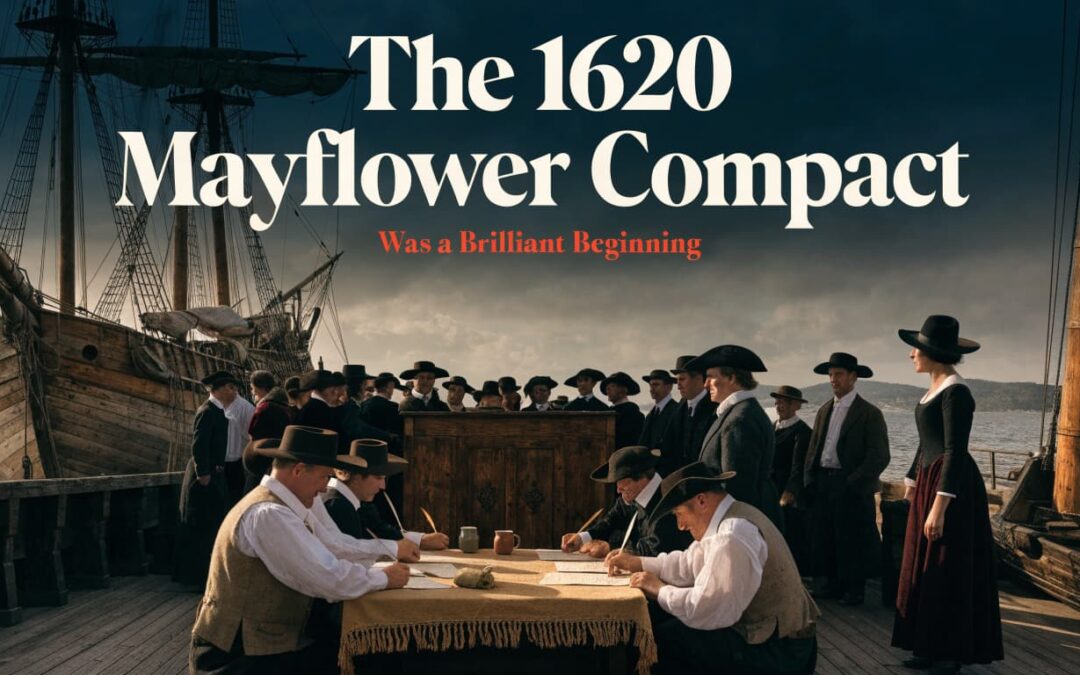
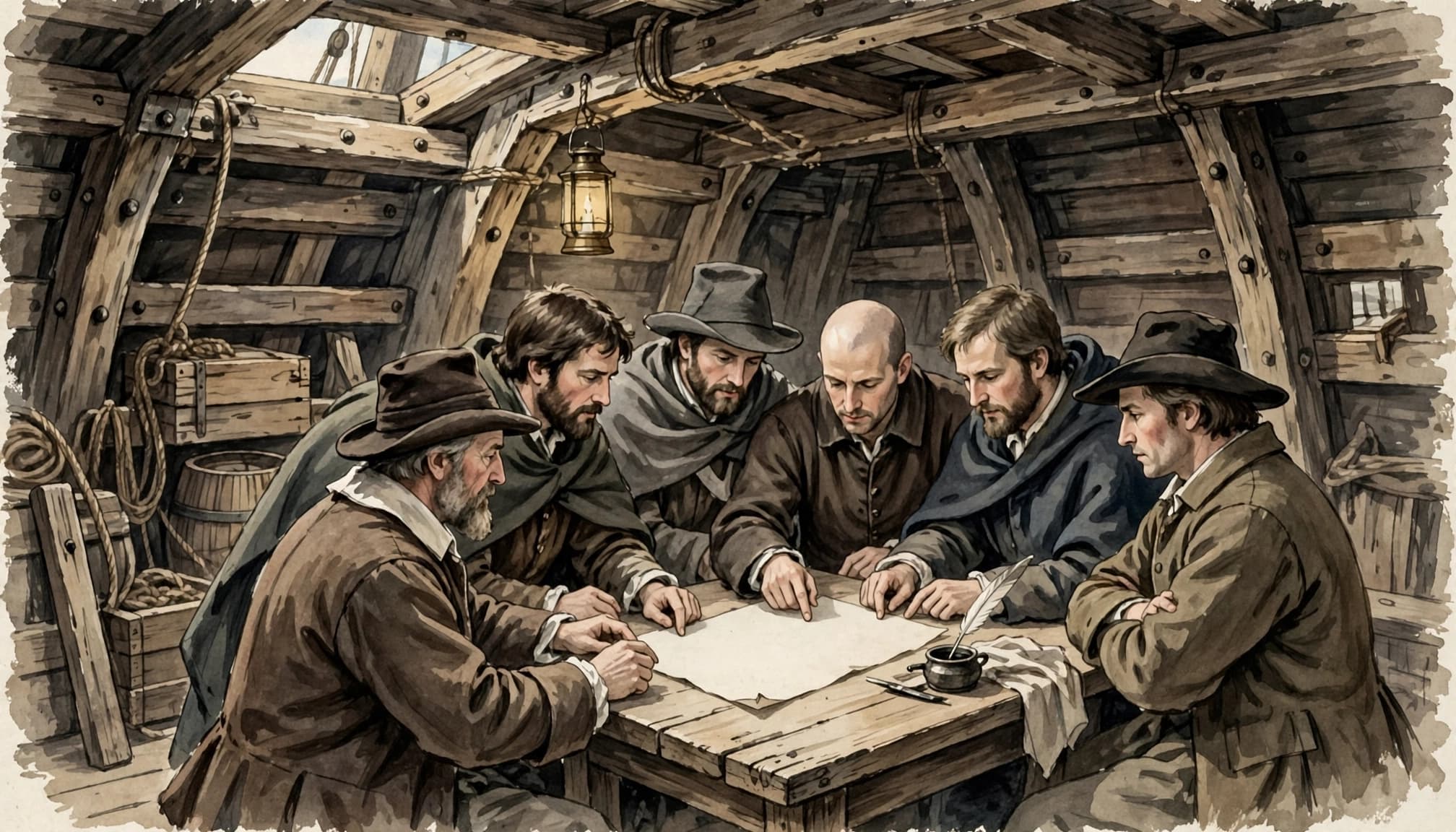
The Compact was signed aboard the Mayflower in 1620, before the settlers went ashore. Its opening says they had undertaken their voyage for "the Glory of God, and Advancement of the Christian Faith." That wording makes the document openly religious. The settlers understood their undertaking as connected to their faith, not only to their survival or political needs.
We can read the Mayflower Compact's original text and see that its Christian language appears in the preamble, before the agreement describes how the group will organize itself. The wording tells us something important about the signers' stated purpose. But one religious preamble cannot, by itself, prove that the later United States government was founded as a Christian government.
The Compact was made by people who wanted to worship according to their convictions. That matters. It also matters that this was a colonial group making an agreement for its own community, not a national body establishing rules for the entire country.
Self-government had an immediate purpose
After the preamble, the signers agreed to form a "Civil Body Politick." They promised to make laws and offices for the colony's "general Good." In plain language, they were agreeing to recognize a common authority and follow rules made for their community.
Why was an agreement like this needed? The settlers had arrived at Cape Cod rather than at their intended destination in Virginia. They needed a way to organize their community and maintain order. So the Compact was religious in language and practical in purpose. Its faith language did not replace its political function.
We should also be careful with the phrase "self-government." The Compact describes the signers' agreement among themselves. It does not mean that everyone living in the region had an equal voice in the colony's government.
The Compact was not the U.S. Constitution
The Mayflower Compact is an early example of colonists agreeing to govern their community. It is not the single source of American government, and it did not establish the federal system created much later under the Constitution. The Articles of Confederation came first as the nation's initial constitution; the current Constitution was drafted and signed in 1787 and the new federal government began in 1789.
So what can we say about the Compact? It shows that Christian belief was explicit in the stated aims of these settlers, and that they used an agreement to organize civil government. The later Constitution and its protections for religious liberty raise a different question, one we can examine through the First Amendment and the separation of church and state.
Was the United States founded on Christianity?
The answer depends on what we mean by "founded on Christianity." Many settlers were Christians, and Christian beliefs shaped their communities and public life. But a nation's religious culture and its legal government are not the same thing. We need to look at both before answering.
Christian faith shaped communities, not one uniform nation
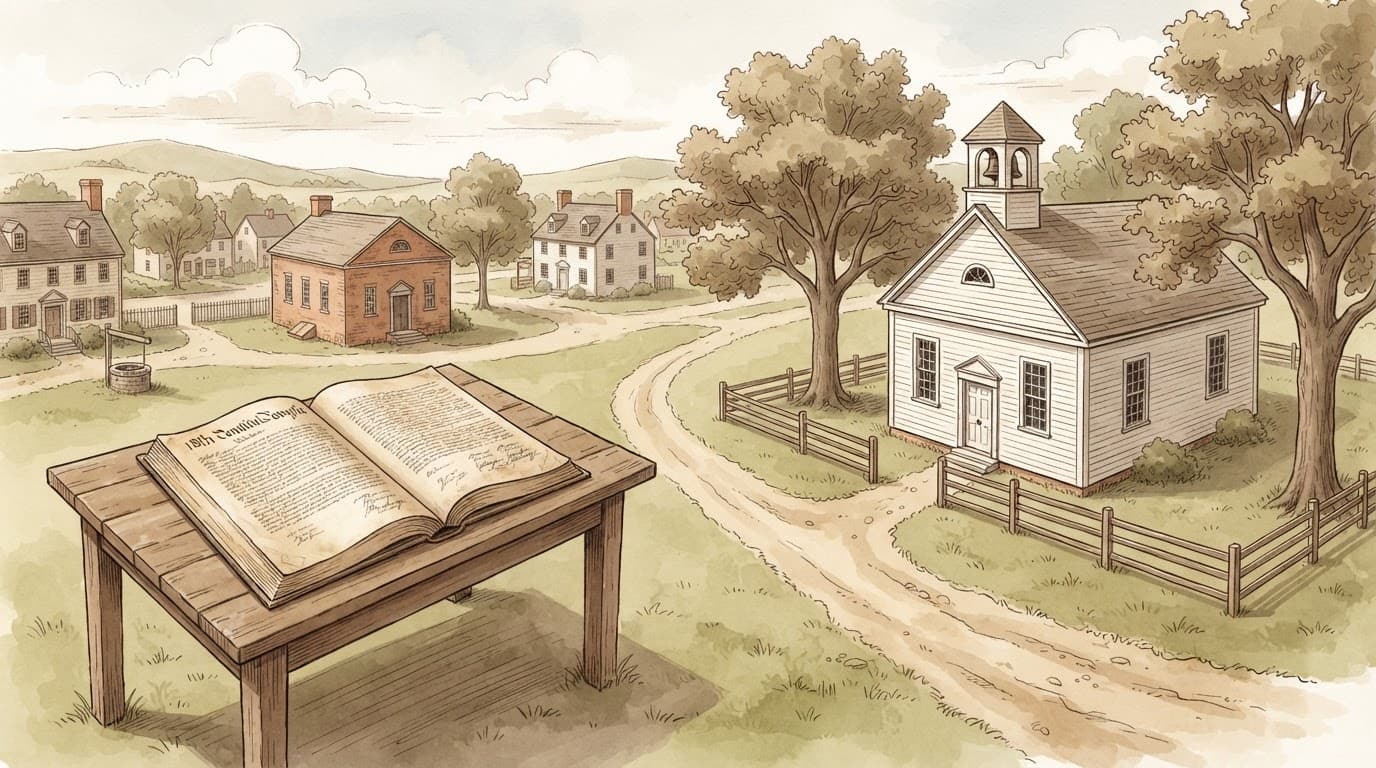
Early America was made up of colonies with different religious traditions, laws, and political arrangements. Christianity influenced how many people understood morality, education, worship, and public responsibility. The Mayflower Compact is one clear example of religious language in a colonial document, but it speaks for its signers and their community, not for every colony or the future federal government.
The Pilgrims' religious convictions also belonged to a longer history of debates about worship and conscience. We can look at the Pilgrims' influence on American religious freedom without treating their experience as the sole source of the nation's political system. Their faith mattered. So did the many other communities, beliefs, and political circumstances that shaped the colonies.
The Constitution created a civil federal government
The United States government took shape through a different set of documents and political decisions. The Constitution was signed in 1787, ratified by the required states in 1788, and the new federal government began operating in 1789. Its text does not establish Christianity as the nation's official religion.
Instead, Article VI says federal officeholders may not face a religious test for public office. The Constitution's text at the National Archives lets us read that provision directly. It matters because the Constitution defines the structure and powers of the federal government, rather than requiring its leaders to profess a particular faith.
The First Amendment later set limits on Congress regarding religion. It prohibits laws establishing religion and protects its free exercise. We can read the wording in the National Archives' Bill of Rights transcription. These provisions do not mean that the people who formed the government lacked religious beliefs. They show that the federal Constitution did not make Christian belief a legal qualification for citizenship or office.
Faith’s influence and the government’s legal identity are distinct
So, was the United States founded on Christianity? If we mean Christian people and communities influenced the country's early life, yes. If we mean the Constitution established a Christian federal government, the document's structure points to a different answer.
We don't have to deny Christianity's influence to recognize that distinction. Personal faith can shape the choices people make, and religious ideas can influence public debate, without turning the government itself into a church or requiring citizens to follow one religion. That difference helps us read founding-era religious language carefully, without making one colonial document speak for the entire nation.
When the United States government began, and what its design set out to do
The Mayflower Compact was a colonial agreement made in 1620. The United States government came later, through a series of political changes, and its design addressed a different question: how could the states form a national government without giving one authority unchecked power?
The government took shape over several years
The first national framework was the Articles of Confederation. The Continental Congress adopted them in 1777, and they took effect on March 1, 1781, after Maryland ratified them. Under the Articles, the states kept considerable authority, while the national government had no separate executive branch to enforce its decisions. The National Archives' account of the Articles of Confederation explains their place as the country's first constitution.
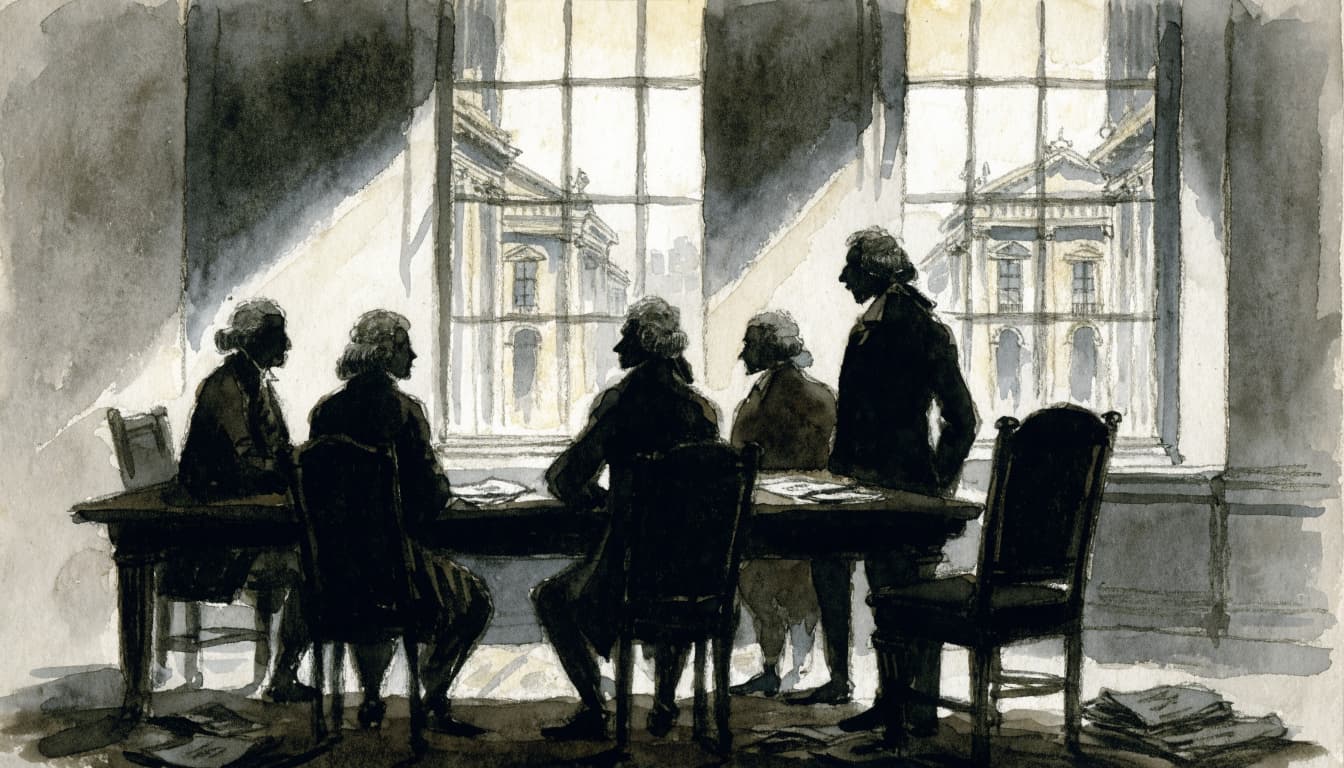
In 1787, delegates met in Philadelphia to revise the Articles, but they drafted a new Constitution instead. The Constitution was signed on September 17, 1787. Signing did not instantly create the government we have today: New Hampshire's ratification on June 21, 1788, supplied the ninth state required, and the First Federal Congress opened on March 4, 1789. The U.S. House history of the Constitution outlines this transition.
The Constitution divided power among institutions
The new system divided federal power among Congress, the president, and the federal courts. Congress makes federal laws, the president carries them out, and the courts interpret the law in cases before them. Each branch has its own responsibilities, and each can limit some actions of the others.
Those basic institutions still exist today, though the federal government's work and reach have expanded over time. The Constitution's design did not make political leaders morally perfect, or remove conflict among branches. It created a structure for governing a union of states while placing limits on federal authority. That is a different project from a community's agreement to make local rules, like the Mayflower Compact.
The Constitution's Preamble states its purposes: to form a more perfect union, establish justice, provide for the common defense, promote the general welfare, and secure liberty. We can read those as civic goals, not as proof that the document's specific clauses were copied from Scripture.
Biblical themes can inform our view of government
Scripture speaks about earthly rulers in more than one way. Government can preserve order and restrain wrongdoing, but human rulers can also misuse authority. That gives us ethical themes to consider when we look at any system of government: justice, restraint, responsibility, and the limits of human power.
We should be clear about what that comparison can and cannot establish. A Christian may see moral principles in a government's concern for justice or limits on authority. That does not prove the Constitution's three branches were taken from a Biblical model, or that the United States government is itself a Christian institution. Our discussion of Biblical themes and American government considers one interpretation of that relationship; we still need to distinguish theological reflection from documented constitutional history.
How corruption can weaken a government built with safeguards
The Constitution divides power because human beings can misuse it. Congress, the president, and the courts each have defined responsibilities, and the system gives each branch ways to check the others. But safeguards can limit abuse; they cannot make leaders morally perfect or guarantee that every official will act honestly.
Checks and balances depend on people using them
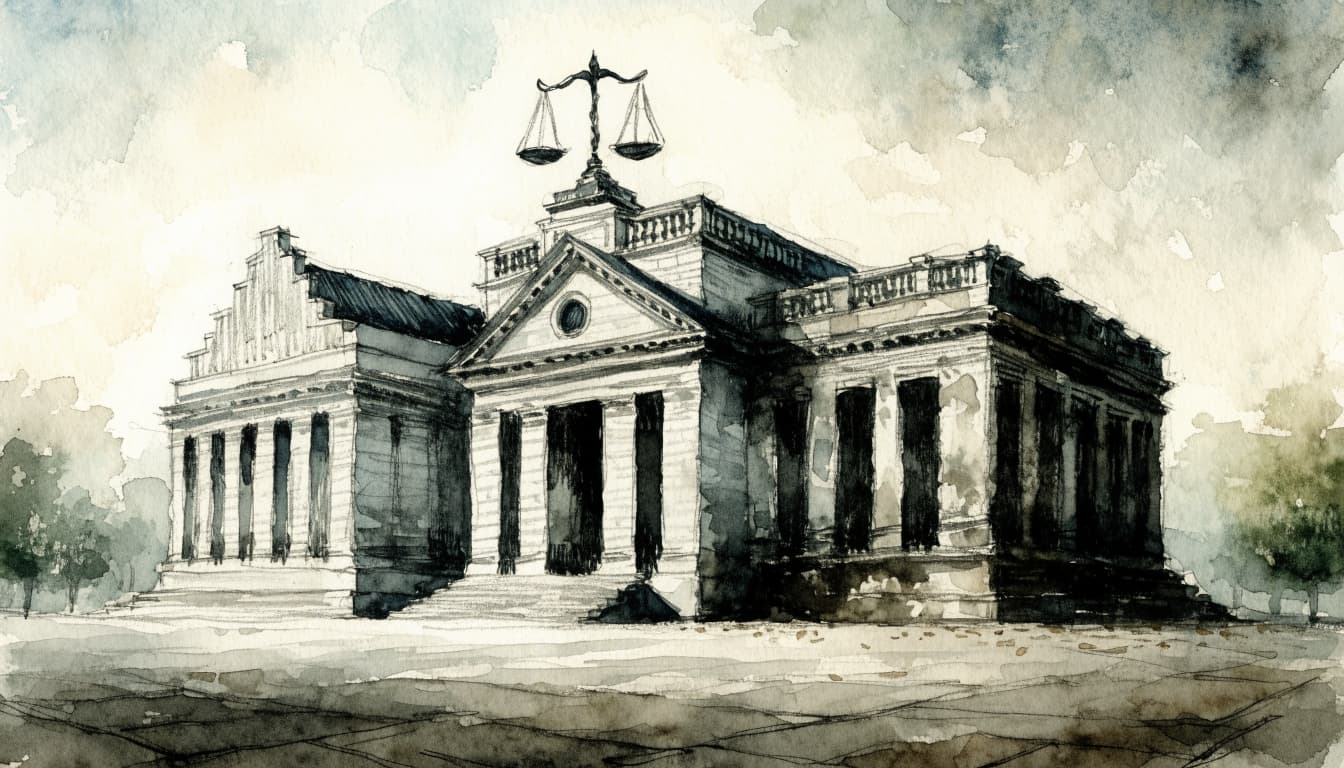
The Constitution does not place all federal power in one set of hands. The Constitution Annotated explanation of checks and balances describes how the branches have authority to limit certain actions by the others. That structure matters. Still, a written rule cannot force officials to respect it if they choose to evade, weaken, or ignore it.
Corruption can work through ordinary institutional patterns, not only through a single dramatic abuse of power. Officials may use public office for private benefit, shield allies from accountability, or treat oversight as an obstacle instead of a duty. When those habits spread, safeguards may remain on paper while their practical force shrinks.
We should be careful not to assume corruption whenever we disagree with a government decision. A serious claim needs evidence. But we can recognize the risk: when those responsible for enforcing limits are unwilling to do so, the checks become less effective.
Public trust and accountability matter
A government depends on more than laws. It also depends on officials who follow those laws, institutions that investigate misconduct fairly, and citizens who can criticize their leaders without fear. If people believe rules apply to some officials but not others, trust in government can erode. That loss of trust makes it harder for institutions to do their work.
The Biblical view also reminds us that earthly authority has limits. Government can restrain wrongdoing and protect the public, but human rulers remain accountable to God. We see that tension in Scripture: civil authority has a purpose, yet no ruler is above God's judgment. For Christians, that means we can respect lawful authority without treating political leaders as infallible.
This is also why constitutional safeguards and moral character belong in the same discussion. The Constitution can divide power, establish procedures, and give institutions tools to challenge unlawful actions. It cannot create justice in the heart of a person determined to serve himself. We can read more about God's Kingdom and the limits of human government while keeping the constitutional question distinct from theological belief.
Safeguards are limits, not guarantees
The Constitution's design gives citizens and public institutions ways to resist concentrated power. Those protections matter, but they do not promise that corruption will never occur. We should neither dismiss the safeguards nor assume they enforce themselves.
That distinction helps us understand the government's structure without turning it into a claim of perfection. A government built with checks can still be weakened when officials abandon accountability. And from a Biblical perspective, no political system can replace God's rule or make human beings sinless.
What the Bible teaches about earthly rulers and political trust
The Bible speaks about earthly authority with both respect and caution. Government has a purpose, but no human ruler is above God or worthy of our ultimate trust. We need to hold both truths together when we consider what Scripture says about political leaders.
Scripture calls Christians to respect civil authority
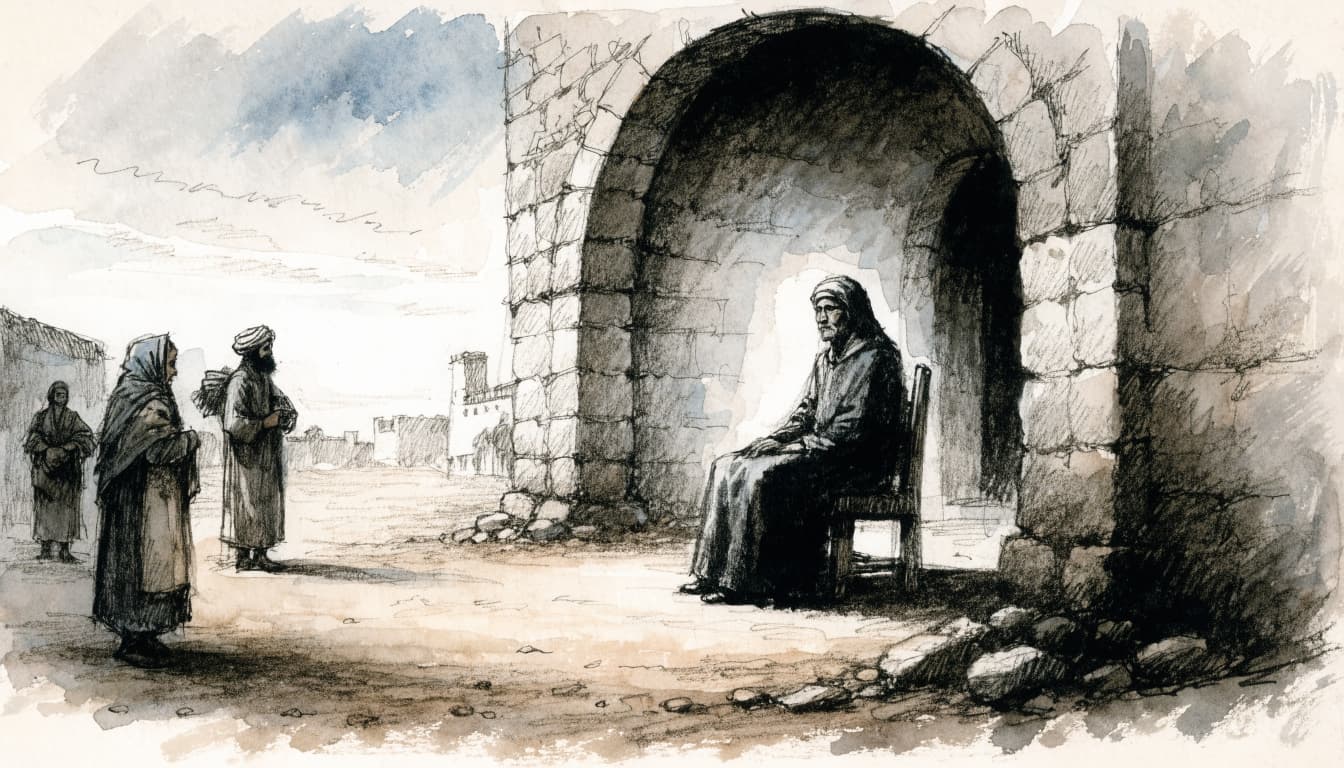
In Romans 13:1-7, Paul tells Christians to be subject to governing authorities. He describes civil rulers as having a role in restraining wrongdoing and maintaining public order. That does not mean every ruler acts justly, or that every government decision is good. It means public authority has a legitimate place in society.
So, should Christians respect a government even when they disagree with its leaders? Respect for lawful authority does not require us to call evil good or to stop speaking truth. It does call us to take public order seriously and not treat every disagreement as a reason to reject authority.
We can also pray for those in authority without treating them as our hope or saviors. Our Christian view of political leaders keeps that distinction clear: earthly rulers may hold real responsibility, but Jesus alone is King.
Obedience to God sets a limit on political trust
Scripture also shows that obedience to human authority has a limit. When the apostles were ordered to stop preaching, Peter answered, "We ought to obey God rather than men". They did not use that conflict as an excuse to disregard every civil rule. They refused a command that directly opposed what God had told them to do.
That distinction matters. Christians may disagree about where, exactly, a modern government crosses this line, and different traditions interpret these passages in different ways. But Scripture does not teach that political leaders have unlimited authority over our conscience or our obedience to God.
The Bible also warns against placing ultimate trust in rulers. Human leaders can be wise or corrupt, fair or self-serving. They remain human, and their power does not make them infallible. We can recognize what government is meant to do while remembering that no political system can bring the perfect justice of God's Kingdom.
This gives us a careful way to discuss the United States and Christianity. Biblical teaching can shape how Christians judge authority, public order, and justice. But those teachings do not by themselves prove that the Constitution established a Christian government. The political structure is a historical question; how Christians understand their duties under that structure is also a matter of Biblical interpretation.
The Antichrist, the thousand-year reign, and the hope Christians place in Jesus
The question of who should rule is not only political. Scripture also points us toward a future when evil will be judged and Jesus will reign. From our independent, Spirit-filled Pentecostal, premillennial perspective, that promise keeps us from placing our final hope in any earthly government.
The Antichrist does not solve the world’s problems
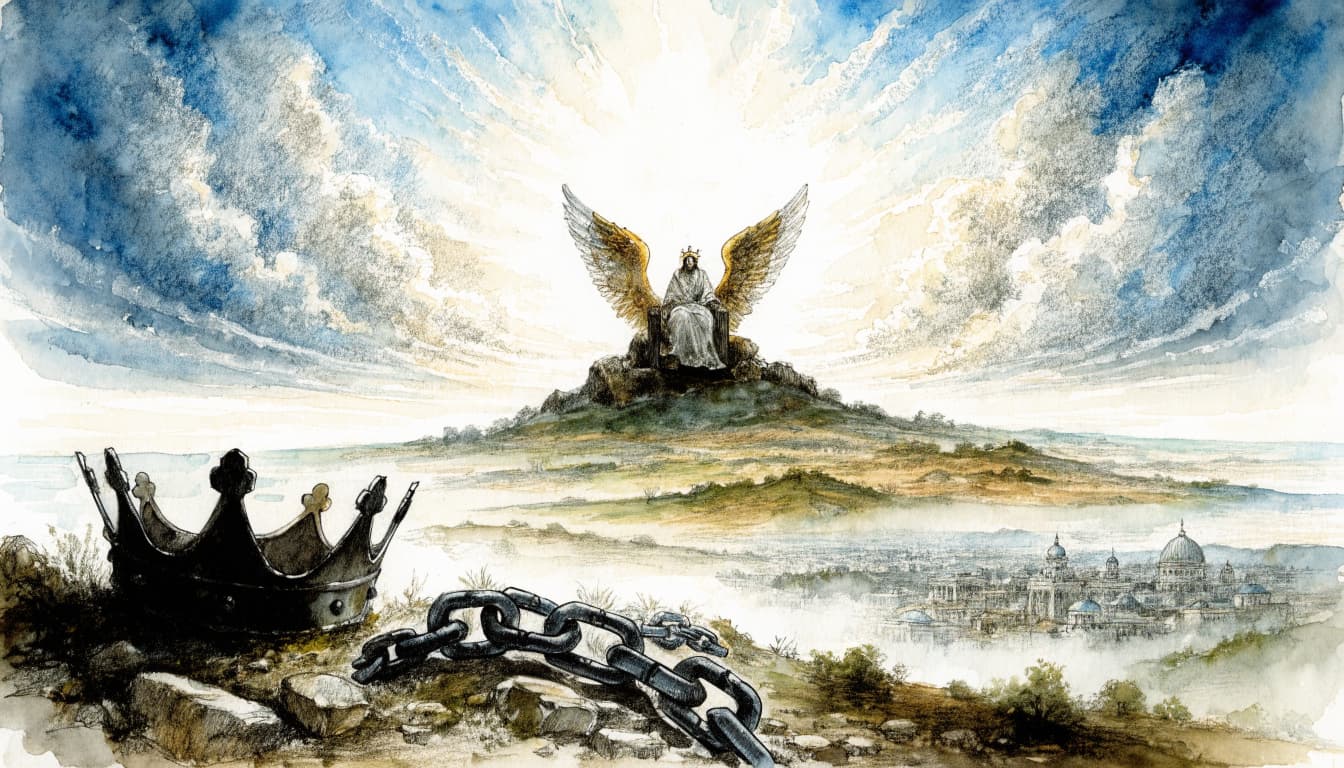
John writes that "even now many antichrists have come" (1 John 2:18). In a premillennial reading, Scripture also warns of a coming Antichrist who will oppose God and deceive people. We understand this figure as a real end-times ruler, not the answer to the world's deep problems. His promises and authority may persuade many, but they cannot bring lasting justice or peace.
Christians disagree about how the end-times passages fit together. Some read the millennium as a future period after Jesus returns; others understand it symbolically or expect it before His return. So the timing and details are not shared doctrine across all Christian traditions. We hold the premillennial view while recognizing that difference. For more on our understanding, see the Antichrist in Biblical prophecy.
Jesus’ thousand-year reign is a future hope
Revelation describes Satan being bound and the saints reigning with Christ for a thousand years (Revelation 19-20). In our premillennial understanding, Jesus returns before this reign and establishes righteous rule. The passage presents a Kingdom under Christ, not a human political system that finally gets everything right.
That distinction matters when we discuss America or any nation. A constitutional structure can limit power, and laws can restrain wrongdoing, but neither can remove sin from the human heart. No president, party, or government can take the place of Jesus. We see the thousand-year reign as part of God's promise, not as a claim that earthly governments will gradually become perfect.
You can read more about Christ's thousand-year reign in Revelation 20. Christians interpret this passage differently, but its focus is clear: Christ has authority over evil, and His people reign with Him.
Our hope rests in Jesus, not a nation
Does this mean Christians should ignore government or stop caring about justice? No. We can respect lawful authority, pray for leaders, and speak against wrongdoing. But our faith does not depend on America becoming a Christian nation, or on any government fulfilling God's promises.
We believe lasting righteous rule belongs to Jesus. That hope shapes how we view political power: governments matter, but they are temporary and accountable to God. The United States has a constitutional history we can examine through its documents. The promise of Christ's Kingdom is a matter of faith, and it points beyond every nation's borders and every human ruler.
Conclusion
The Mayflower Compact shows that Christian faith shaped the Pilgrims' stated purpose, while its agreement to form a civil government was a colonial arrangement, not the U.S. Constitution.
The national government took shape through several stages, and Biblical influence on people and public life is different from proof that the Constitution established a Christian government. We can recognize the value of laws and safeguards while also knowing that earthly rulers remain accountable to God and can fail in their duties.
As independent, Spirit-filled Pentecostals, we believe the Antichrist comes before Jesus' thousand-year reign, but he cannot bring the lasting justice only Jesus can establish. Our hope rests in Him, not in any nation or ruler. We explore related Biblical themes in King Solomon and the Antichrist.
