
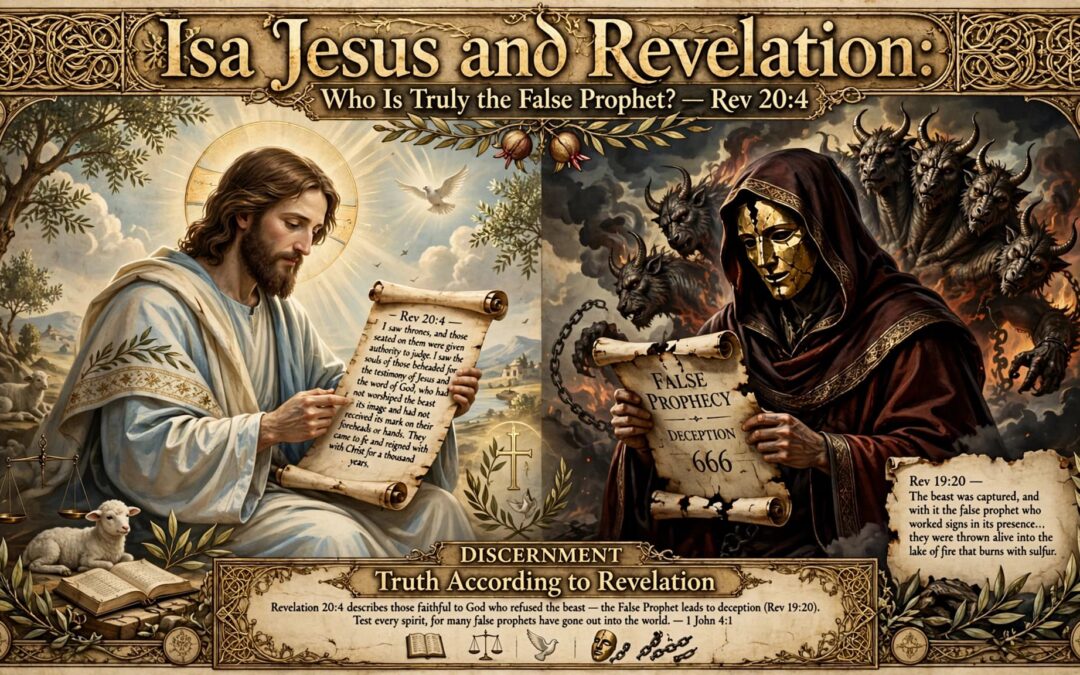

Isa, Jesus, and Revelation: The False Prophet Question Examined
Does the Quranic figure Isa describe the same Jesus revealed in the Bible? The Quran and New Testament overlap on several details: Jesus is born of the virgin Mary (Quran 3:45-47, Luke 1:32-35), performs miracles, is called the Messiah (Quran 3:45, Matthew 16:16), and has a future role in God’s plan. But the differences aren’t small. The Quran denies Jesus’ crucifixion in the usual Christian understanding (Quran 4:157-158), while the New Testament centers his death, resurrection, divine identity, and saving work (John 1:1-18, John 20:28).
We’ll trace the Arabic name Isa, every major Quranic reference, and how this figure came to be presented, then compare him with the Biblical Jesus. We’ll also examine Revelation’s first seal, the conqueror who advances without the weapons described in Revelation 6, Christ’s judgment in Revelation 19, and the reign described in Revelation 20:4. Identifying Isa with Revelation’s false prophet is a theological argument, not an explicit statement from either text, so we need to separate direct Biblical teaching from interpretation as we examine the evidence and the antichrist spirit visible in Europe today. Our discussion of the Antichrist in Bible prophecy begins with the texts themselves.
What Does Isa Mean in Arabic, and Where Does the Name Appear?
The Quran uses the Arabic form ʿĪsā, usually written Isa in English, for Jesus. It often calls him Isa ibn Maryam, meaning “Isa, son of Mary.” The name itself needs careful treatment. Its linguistic origin is debated, and the Quran doesn’t provide an explanation that settles how the Arabic form developed. We shouldn’t claim a certain etymology without a scholarly source.
Reference counts also vary. Narrow indexes may identify about 54 direct verses, while broader studies place Isa across roughly 15 surahs and more than 90 verses. The difference comes from counting exact name occurrences, verses about Isa, or passages that discuss his mission without repeating his name. Our best approach is to follow the themes rather than force every list into one number.

The Main Quran Passages About Isa and Mary
A useful study path begins with the annunciation and birth. In Quran 3:45-47, angels announce to Mary that she will have a son named the Messiah, Isa, son of Mary. The passage describes him as honored in this life and the next. Quran 19:16-36 gives a longer account of Mary, the angelic announcement, Isa’s birth, and his first words as an infant. You can compare these passages in the Quran’s account of Isa’s birth and the Maryam passage on Isa and Mary.
The next group concerns Isa’s signs and message to Israel. Quran 3:49 says he forms a bird from clay, heals the blind and lepers, and raises the dead, but each sign happens “by Allah’s permission.” The same verse identifies him as a messenger to the Children of Israel. Quran 5:110 repeats these signs and places them within God’s direct power.
Then read Quran 5:112-115, where the disciples ask for a heavenly table. Isa asks God to send it as a sign and a feast. This passage gives the reader a glimpse of his relationship with his disciples and the limits placed around divine signs.
Finally, place Isa among the earlier prophets. The Quran names him alongside figures such as Moses, Abraham, Ishmael, Isaac, Jacob, David, Solomon, Jonah, and Aaron in 2:87, 2:136, 2:253, 6:85, 33:7, and 42:13. For a wider reference list, the NAMB Quran study guide on Jesus and Isa is helpful, though readers should verify wording in a primary Quran translation.
Two later passages matter for the debate ahead. Quran 43:57-65 presents Isa as a sign of the Hour and records his call to worship God. Quran 61:6 has Isa announce a messenger to come after him, named Ahmad. That claim becomes important when we compare the Quran’s Isa with the Jesus revealed in the New Testament.
The Quranic Claims That Shape the Isa Debate
The Quran calls Isa the Messiah, a messenger, a servant, a sign, and a word from God. Quran 3:45 calls him “a Word from Him,” while Quran 19:30 records Isa saying, “I am truly a servant of Allah.” These titles honor him, but they don’t identify him as God.
The distinction becomes direct in Quran 4:171, which rejects saying that God is three or that the Messiah is God’s son. Quran 5:72 condemns the claim that the Messiah is God, and 5:75 describes both Jesus and Mary as people who ate food. Islam therefore reveres Isa while rejecting the fact that we Christians know Jesus is God. This is the same conflict discussed in our comparison of Jesus, Isa, and Islamic prophecy.

The sharpest disagreement concerns the cross. Quran 4:157 says they did not kill or crucify Isa, though it was made to appear so. Quran 3:55 says God would take him and raise him to Himself. The common Islamic reading is that Jesus wasn’t crucified in the Christian sense, was saved from death, and was raised by God. Some interpreters understand 3:55 differently, but the mainstream view connects it with 4:157-158.
That directly conflicts with the New Testament, where the cross and resurrection are central, not incidental. The New Testament account of Jesus’ death and resurrection presents the crucifixion as a real event followed by an empty tomb. The question isn’t whether Isa and Jesus share details. They do. The question is whether their identities and missions can remain the same after these claims are placed side by side.
Isa Compared With the Real Jesus Revealed in the Bible
The difference between Isa and the Biblical Jesus becomes clearest at the cross and the empty tomb. These aren’t minor disagreements about historical details. They involve Jesus’ identity, His mission, the meaning of forgiveness, and the hope of eternal life.
The New Testament presents Jesus as the promised Christ who died for sinners, rose bodily, appeared to witnesses, and will return to judge the living and the dead. The Quran honors Isa as a messenger but gives a different account of his death and authority.

The Cross and Resurrection Are the Decisive Difference
The New Testament doesn’t describe Jesus’ death as a rumor or an illusion. Roman authority crucified him. He was buried, and on the third day, God raised him from the dead. The Gospel accounts connect the empty tomb with a real bodily resurrection, not merely the survival of Jesus’ teaching.
Paul gives the message in a compact form in 1 Corinthians 15:3-8: Christ died for our sins, was buried, was raised, and appeared to Peter, the Twelve, more than five hundred believers, James, the apostles, and Paul. The point is clear. Christianity rests on an event that witnesses claimed to see, not simply an idea passed down through generations.
Why does that matter for forgiveness? Jesus’ death is presented as the sacrifice that deals with sin. His resurrection shows that death didn’t have the final word and that God’s saving promise was accepted and completed. Without the resurrection, Paul says, Christian preaching is empty and faith has no foundation.
The cross explains how sinners can be reconciled to God, while the resurrection shows that Jesus has conquered death.
The Quran’s wording differs sharply. Quran 4:157-158 says that Jesus was not killed or crucified, though it was made to appear so, and that Allah raised him to Himself. The verses don’t name a substitute victim or explain exactly how the event appeared to Jesus’ opponents. Those details come from later Islamic explanations and interpretations, not from the bare wording of the Quran itself.
We should be fair here. Muslims don’t all explain the crucifixion question in exactly the same way. Still, the Quranic account cannot be combined with the New Testament truth that Jesus truly died, was buried, and rose again. For us Christians, removing the cross removes the center of the Gospel. Readers can also compare this with our discussion of Jesus’ resurrection and future resurrection hope.
The Returning Christ Is More Than a Prophet
The Bible identifies the returning Jesus through titles and actions that belong to God’s authority. In Acts 1:9-11, Jesus ascends into heaven, and the angels promise that He will return in the same way. His return is personal, visible, and connected to the body that was raised.
Jesus also receives the honor given to the Father. In John 5:22-29, the Father gives all judgment to the Son so that everyone may honor the Son just as they honor the Father. Jesus calls the dead from their tombs and determines the outcome of resurrection and judgment.
Revelation 19:11-21 reveals Jesus as Faithful and True, the Word of God, and King of kings and Lord of lords. He judges, makes war against evil, rules the nations, and defeats the beast and the false prophet.
The Quran presents Isa as God’s servant and messenger. The Bible presents Jesus as the risen Lord, universal judge, conquering King, and the one who destroys evil. That contrast prepares us to examine Revelation’s characters carefully, without assuming that Isa is automatically the same as any figure mentioned in its visions.
Does Revelation Identify Isa as the False Prophet? Read the Text Before the Theory
Revelation never names Isa, Islam, or the Quran. It doesn’t directly say that Isa is the false prophet. So before connecting these figures, we need to read what Revelation actually says about the second beast and compare that description with the Quranic Isa.
The sequence matters. Revelation gives us actions, authority, signs, deception, worship, and judgment. That evidence must come before the theory.
What the False Prophet Is Prophesied to Do
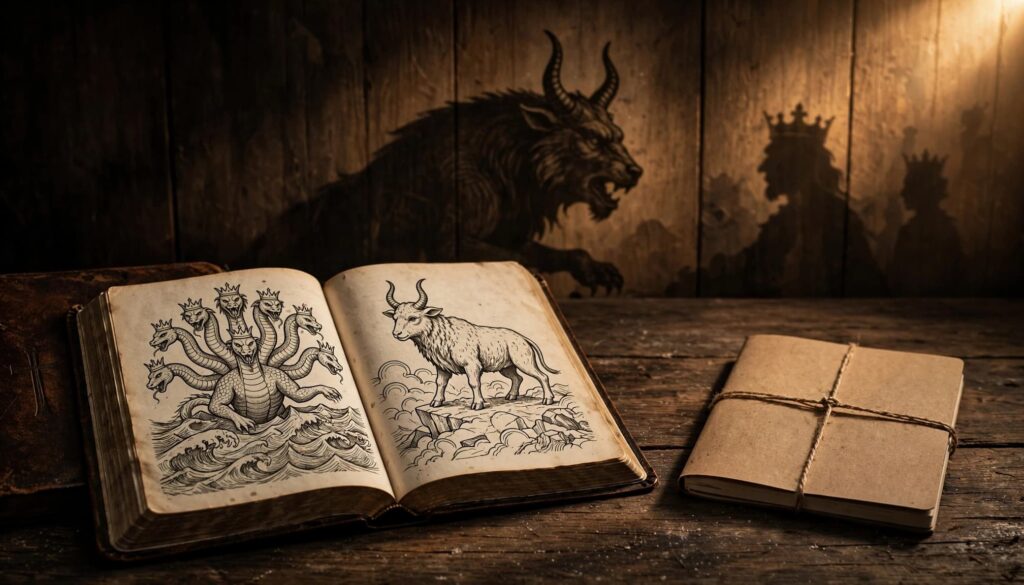
Read Revelation 13 in the NKJV in order. At first, John sees another beast coming up out of the earth. It has two horns like a lamb, but it speaks like a dragon (Revelation 13:11). Its appearance seems gentle, but its voice reveals its true source.
The second beast exercises the first beast’s authority and directs people to worship the first beast, whose deadly wound was healed. Then it performs great signs, including calling fire down from heaven in front of the people (Revelation 13:13).
That supernatural display isn’t presented as harmless. The signs deceive those who live on the earth and persuade them to make an image to the beast. The second beast receives power to give breath to the image so it can speak, and those who refuse to worship it are threatened with death (Revelation 13:14-15).
The pressure grows beyond public worship. The second beast causes people from every social class to receive a mark on their right hand or forehead. Without the mark, the beast’s name, or the number of his name, people can’t buy or sell (Revelation 13:16-18).
Revelation 19:20 repeats the central charge. The beast is captured, along with the false prophet who worked signs in his presence. Those signs deceived people who received the beast’s mark and worshiped his image. The Revelation 19:20 text and commentary can help with the wording, but the Biblical passage itself remains our foundation.
Many Christian interpreters identify Revelation’s second beast as the false prophet because chapter 13 describes the program, while chapter 19 gives the title. That is a reasonable interpretation based on the sequence. Still, verse 13:11 doesn’t use the title “false prophet,” and no verse says Isa is this figure.
How Revelation 20:4 Connects to the Beast’s Opponents
Revelation 20 in the NKJV shifts from deception to judgment and vindication. John sees believers who were killed for their testimony about Jesus and God’s Word. He also sees those who refused to worship the beast or his image and refused to receive his mark (Revelation 20:4).
These people resisted the false prophet’s program. They would not trade faithfulness for safety, public approval, or access to commerce. The verse says they lived and reigned with Christ for a thousand years.
But Revelation 20:4 doesn’t identify Isa, the beast, or the false prophet. It identifies the people who opposed them. That distinction keeps us from turning a verse about faithful believers into proof for a theory the text never states.
Later, Revelation 20:10 gives the final outcome: the devil is cast into the lake of fire, where the beast and false prophet already are. Their punishment is eternal. The text is clear about their actions and destiny, but it never connects either title with Isa. The Quranic Isa isn’t described as serving the beast, promoting his worship, empowering his image, or enforcing his mark. That textual objection must be taken seriously only if Islamic prophecy is 100% accurate and from God, which it is neither.

The Antichrist, the First Seal, and Conquest Without Open War
Before we connect the first rider with the Antichrist, we need to separate terms that readers often merge. 1 John uses “antichrist” for people who deny the Father and the Son, and for the wider spirit of opposition to Christ. Revelation uses different titles, including the beast and the false prophet. Many Christians connect these figures, but the passages don’t use the words in exactly the same way.
Why the First Rider May Be a Counterfeit of Christ
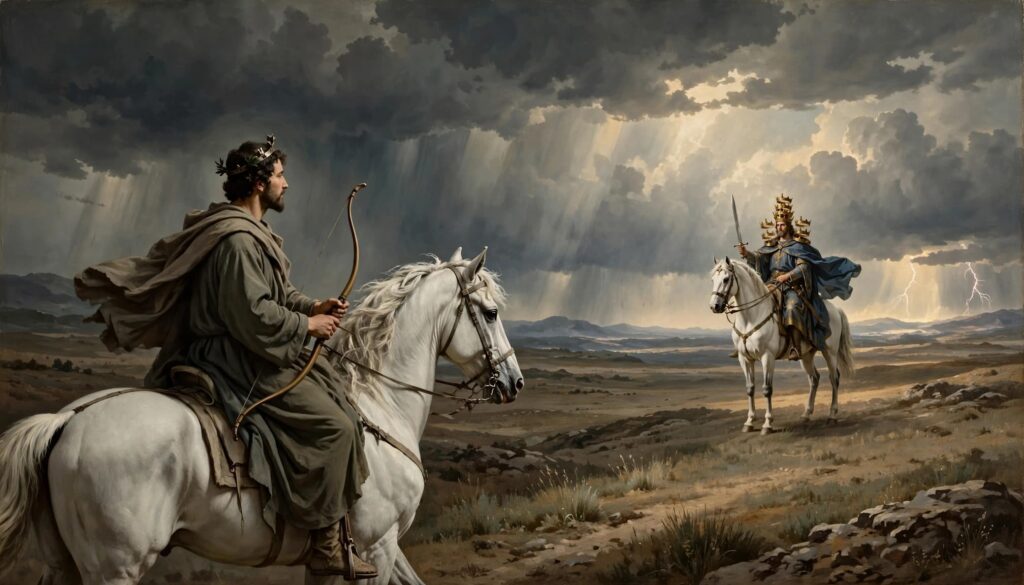
In Revelation 6:1-2, the Lamb [Jesus] opens the first seal. Then one of the living creatures says, “Come,” and John sees a white horse. Its rider [the Antichrist] carries a bow, receives a crown, and goes out conquering and to conquer.
Notice the order. The Lamb [Jesus] opens the seal, and the rider [the Antichrist] appears afterward. The text doesn’t say Jesus is the rider. We shouldn’t confuse the one who opens the judgment with the figure revealed by that judgment.

Why does this rider seem connected to Christ? The white horse and crown can suggest victory, authority, and righteousness. Yet the details are incomplete. This rider has a bow, but no arrows are mentioned. His crown is given to him, while the rider in Revelation 19 wears many crowns. Revelation 6 describes conquest, but it doesn’t call the rider Faithful and True, the Word of God, or King of kings.
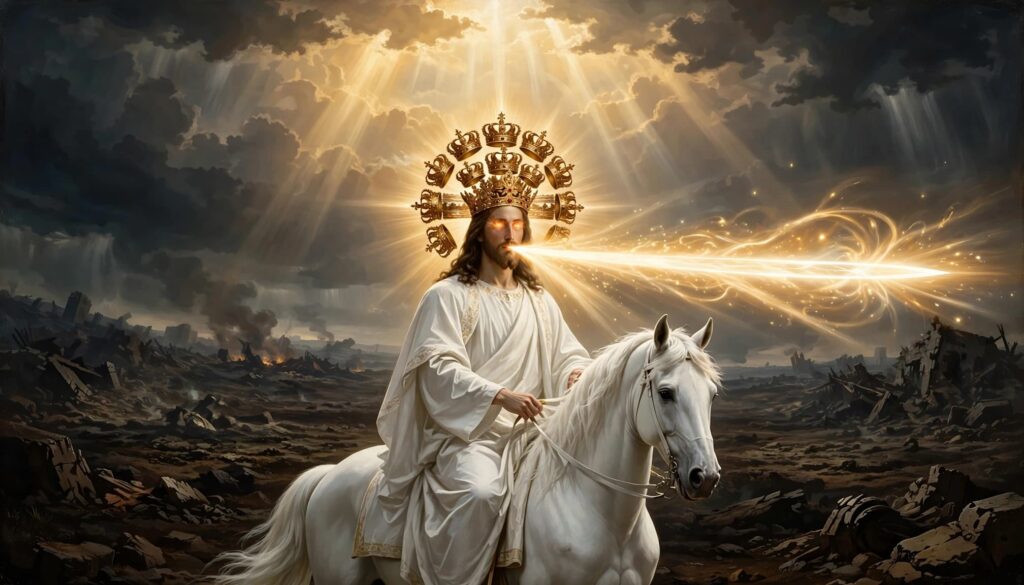
The contrast becomes clearer in Revelation 19:11-16. Heaven opens, and the Rider [Jesus] is explicitly identified through His names and actions. He judges with righteousness, wears many crowns, is called the Word of God, and has “King of kings and Lord of lords” written on His robe and thigh. A sharp sword comes from His mouth, showing that His victory comes through His authority and judgment.
That difference explains the counterfeit-Christ interpretation. The first rider looks victorious and receives authority, but he lacks the names, identity, and judgment described in Revelation 19. Most of us therefore see him as the Antichrist, a false savior who gains power through promises of order and peace. Others read him as imperial conquest, political domination, or a repeated pattern of deception. We can also compare this view with the first seal and the Antichrist’s conquest.
How Power Can Conquer Through Laws, Pressure, and Public Allegiance
Revelation 13 expands the picture beyond open warfare. The beast receives authority, while the second beast, later called the false prophet, persuades people to worship the first beast. Through signs, public pressure, and deception, false worship becomes part of the ruling system. Read the details in Revelation 13.
The mark in Revelation 13:16-18 also connects allegiance with ordinary economic life. People cannot buy or sell without the mark, the beast’s name, or the number of his name. This is more than a military invasion. It is control enforced through rules, access, public loyalty, and punishment.
Still, we shouldn’t label every government, law, or public policy as antichrist. The Biblical pattern is narrower and more serious: coerced worship, deceptive signs, economic exclusion, and punishment for refusing false allegiance. If you have eyes to see, you can see all of these patterns happening openly today.
Revelation 20:4 describes believers who refused to worship the beast or his image and refused his mark. Their resistance costs them safety and, for some, their lives. Yet they live and reign with Christ.
The beast’s final defeat doesn’t come through a human political reform. In Revelation 19:20, Christ’s authority brings judgment on the beast and false prophet. The false system conquers through deception for a time, but it cannot withstand the returning King.
Europe’s Secular Shift and the Antichrist Spirit: What the Data Can and Cannot Show
Europe’s religious changes deserve careful attention, but statistics cannot identify Revelation’s beast. They can show secularization, changing religious identity, lower attendance, and different views about religion in public policy. They cannot prove that prophecy has been fulfilled.
The Christian concern is still serious. Are people turning away from Christ, truth, worship, and moral obedience? That is a question of cultural direction and personal allegiance, not a claim that an entire continent is antichrist, but it will be someday.

Secularization, Religious Identity, and Christian Discernment Are Not the Same Thing
A person may identify as Christian because of family, baptism, history, or personal conviction, even without attending church regularly. Another person may support a secular state because government should not control worship, while still loving Jesus and believing the Gospel. A third person may reject organized religion after a painful experience without supporting the beast.
This is why we must separate four different questions:
- Does someone identify as Christian?
- Does that person believe Christian teaching?
- Do they attend worship and practice the faith?
- What role should religion have in government policy?
Pew Research Center found that, across 15 Western European countries, the median share of adults attending religious services at least monthly was 22%. The same study found that a median of 60% preferred keeping religion separate from government policy. Those findings describe religious practice and political preference. They don’t prove hatred of Jesus or allegiance to the beast. See the full Pew study on Western European Christianity.
The European Values Study religion findings show a similar gap between identity and practice. More people describe themselves as religious than attend services weekly. Atheists are still a minority in much of Europe, although France and Sweden report figures near 20%. These numbers show changing belief and attendance patterns, not the identity of Revelation’s false prophet.
Statistics can measure religious behavior. They cannot measure every person’s love for Christ, private prayer, repentance, or moral allegiance.
We should also reject careless scapegoating. Muslims, immigrants, atheists, and ordinary Europeans aren’t one unified spiritual block. People within every group hold different beliefs, motives, and levels of faithfulness. Calling whole populations antichrist replaces Biblical discernment with suspicion and unfair judgment. Our discussion of Bible-based discernment of apostasy must remain focused on teachings and actions.
Testing the Antichrist Spirit by the Bible Rather Than by Headlines
John gives us the first test. The antichrist spirit denies the Father and the Son and refuses the truth about Jesus Christ (1 John 2:18-23). He also tells believers to test spiritual claims, because not every spirit comes from God. The true confession is that Jesus Christ has come in the flesh (1 John 4:1-3).
Paul adds another warning. The lawless one exalts himself, uses deceptive signs, rejects truth, and draws people toward unrighteousness (2 Thessalonians 2:3-12). Revelation 13 describes a system that demands worship, uses signs to deceive, controls buying and selling, and punishes those who refuse allegiance (Revelation 13).
That gives us a clearer framework. We should ask whether a teaching:
- Confesses the Biblical Jesus, including His death and resurrection.
- Honors truth instead of manipulating people through lies.
- Rejects coerced worship rather than loving control and public power.
- Protects faithful witness, even when witness becomes costly.
- Submits every ruler and institution to God’s judgment.
Political events may raise questions, but no current country or leader should be declared the beast or false prophet without clear evidence from Scripture. Revelation 20:4 honors believers who refused the beast’s worship and remained faithful to Jesus (Revelation 20:4). Our task is not to force headlines into prophecy. It’s to hold fast to Christ, test every claim, and stay ready for his return.
Revelation 19 Shows Who the Real Jesus Is
Revelation gives us a sequence that keeps the characters distinct. The Lamb, the first rider, the beast, the false prophet, and the rider in Revelation 19 aren’t interchangeable figures. When we follow the order of the visions, the identity of Jesus becomes much clearer.
The Lamb Opens the Seals, and the King Brings Final Judgment
In Revelation 5:1-10, John sees a scroll in the hand of the One seated on the throne. No one in heaven or on earth is worthy to open it until John sees the Lamb. The Lamb takes the scroll because He was slain and redeemed people for God by His blood.
That matters. The Lamb has authority over the scroll and its seals. He isn’t one of the judgments released by the seals. He is the one who opens them.
When the Lamb opens the first seal, John sees a rider on a white horse (Revelation 6:1-2). This rider receives a crown and goes out conquering. The passage doesn’t call him Jesus, the Word of God, or King of kings. He appears after the Lamb opens the seal, so we shouldn’t confuse the rider with the One who controls the vision’s sequence.
The contrast reaches its fullest point in Revelation 19:11-21. Heaven opens, and the rider is called Faithful and True. He judges and makes war in righteousness. His eyes are like a flame of fire, and on His head are many crowns (Revelation 19:11-12).
His name is called the Word of God (Revelation 19:13). A sharp sword comes from His mouth, showing that His spoken authority brings judgment (Revelation 19:15). His robe and thigh carry the title King of kings and Lord of lords (Revelation 19:16).
This is not the description of a mere prophet. John 1:1-18 says the Word was with God, was God, and became flesh. Philippians 2:5-11 adds that Jesus humbled Himself, died on the cross, and received the name above every name.
The beast and false prophet use signs, authority, and political power to deceive people, but none of it saves them. Christ captures both and casts them into the lake of fire (Revelation 19:20). Later, Revelation 20:4-10 shows Christ reigning while His enemies face final judgment.
We can debate how Isa relates to these passages, but Revelation brings us back to Jesus. The true Christ is the slain Lamb, the risen Word, and the returning King who defeats every false system. For more context, see our discussion of Revelation 19 and the returning Messiah.

Conclusion
Isa and the Biblical Jesus share important details, including the virgin birth, miracles, and the title Messiah. But the differences remain decisive. Isa is presented in the Quran as a servant and messenger who wasn’t crucified in the Christian understanding. The Bible presents Jesus as the Son of God who died for sins, rose from the grave, and offers salvation through His blood.
Revelation clearly teaches that the beast and false prophet will deceive people, demand worship, control economic access, and face judgment. Some interpreters connect Isa with the false prophet, and others connect the first rider in Revelation 6 with the Antichrist because he conquers without the full description of Christ’s return. But Revelation never names Isa, Islam, or Europe. Europe’s declining Christian share, lower church attendance, and rising religious non-affiliation describe real cultural changes, but they don’t prove a prophetic identity. We can also compare these concerns with Biblical warnings about false prophets.

The strongest evidence points us back to the real Jesus. He is the slain Lamb who opens the seals, the risen Word of God, and the King who returns in Revelation 19 to defeat every false power. We should compare the Quran, the Bible, and the cited data for ourselves, while holding firmly to the crucified, risen, reigning Christ revealed in Scripture.
